
Stay strong and injury-free with these four orthopedic tips to help you get the most out of your CrossFit workouts.
Since its debut in 1996, CrossFit has become a go-to workout for people who love pushing their limits. It combines cardio, endurance, strength, and speed in a high-intensity format that keeps things exciting. With more than 5,000 CrossFit “boxes” (gyms) across the U.S., it’s easy to see why so many people are hooked.
Still, CrossFit has a bit of a reputation for being intense—and yes, it can be. But that doesn’t mean it’s only for elite athletes. CrossFit workouts can be scaled and customized for any age or fitness level. The key is to train smart and take care of your body along the way.
However, CrossFit does come with an increased risk of injury if you’re not careful. One study reported that of the 132 CrossFit athletes who responded to an online questionnaire, 73.5% sustained a CrossFit injury during training. The good news? With the right approach and a little guidance, you can dramatically reduce your risk.
The orthopedic specialists at New York Bone & Joint Specialists see a lot of CrossFit athletes and know what works when it comes to staying injury-free. Read on to learn four orthopedic-approved tips to help you train safely, recover faster, and keep crushing your workouts.
Understanding why CrossFit injuries happen
CrossFit training sessions are structured in four distinct parts:
- Warm-up. Usually consists of five to 15 reps of three to five dynamic stretches (leg swings, walking lunges).
- Strength or skill. Focused sets of lifts, such as six rounds of power snatches.
- Workout of the day (WOD). Lasting between five to 15 minutes, the WOD includes as many reps as you can complete performing a particular exercise.
- Cool down. Stretching or light movement to relax your muscles and prevent soreness.
Although CrossFit workouts vary, most exercises involve repetitive movements that can strain the back, elbow, and shoulder muscles and tendons over time. While this can lead to injuries, other risk factors come into play as well:
- Poor form. Rushing through movements or skipping proper technique leads to unnecessary strain.
- Fatigue. Tired muscles can’t support your joints as well, which increases your injury risk.
- Starting too fast. New athletes sometimes try to keep up with more experienced CrossFitters—don’t! Progress at your own pace.
- Forgoing rest. Failure to incorporate rest days or scaling down the intensity of the workouts can lead to injury.
- Ignoring pain. Exercising through pain will not make it go away. If you experience pain or limited mobility, take time off or consult with an orthopedist if the discomfort persists.
What are the most common CrossFit injuries?
CrossFit can be a safe and fun way to build strength, improve mobility, and improve overall physical health. But it can also be strenuous and cause injuries if you’re not careful. The most common include:
Lower back pain. In one survey of 885 athletes, 32.2% reported lower back pain. This injury can be traced to exercises like squats, deadlifts, medicine ball throws, and abdominal crunches if they’re not performed correctly. Twisting or bending too much, using poor form, or lifting too heavy too soon can all contribute to back strain.
Shoulder pain. Coming in second, about 20.7% of CrossFit injuries involve the shoulder, according to the aforementioned study. Overhead presses, pull-ups, rope slams, and throwing movements can all put stress on the rotator cuff and shoulder joint, especially without proper mobility or technique.
Knee injuries. Knee injuries are common in CrossFit, with one study finding 15% of CrossFit athletes reporting an injury in the area. Many CrossFit movements depend on knee strength and stability. Squats, box jumps, and running can all cause strain, while sudden direction changes or awkward landings can lead to more serious injuries like ACL tears.
Elbow pain. The repetitive motions used in CrossFit, especially during pull-ups or bar work, can irritate the tendons in your elbow. This condition, known as lateral epicondylitis or tennis elbow, causes pain along the outside of the joint.
Achilles tendinitis. Your Achilles tendon connects your calf muscles to your heel, and overworking it can lead to pain, swelling, or stiffness in your foot and ankle. Jumping, sprinting, or repetitive explosive movements often play a role.
How can I avoid getting hurt doing CrossFit?
CrossFit doesn’t have to be risky. With better bodily awareness and recovery habits, you can enjoy the benefits without the burnout. Here’s how:
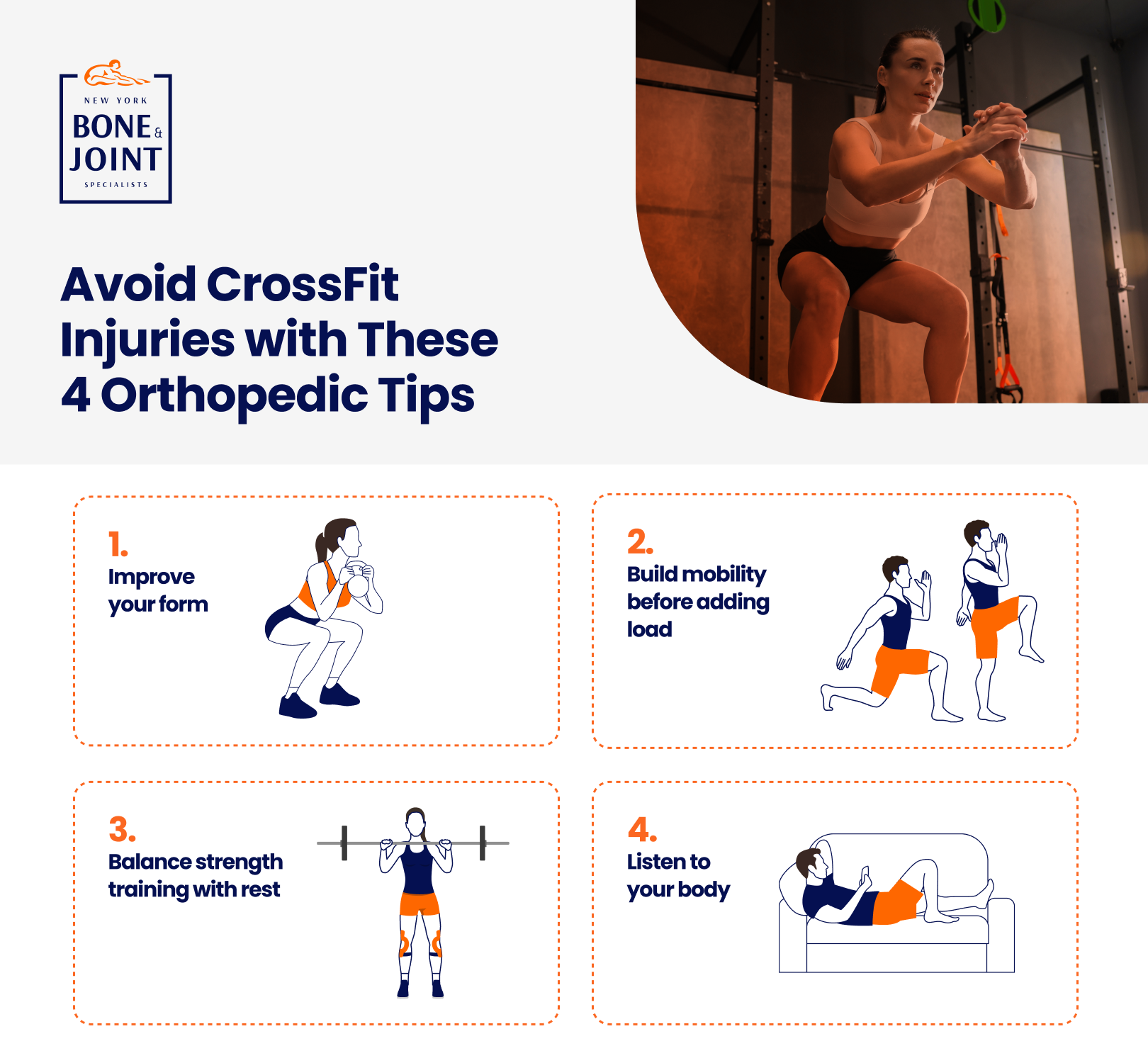
1. Improve your form
Improper form is a leading cause of CrossFit injuries as it can cause unnecessary strain on joints and tendons. Olympic lifts and complex movements take practice, so give yourself time to learn them well. Perfect your technique by:
- Working with a certified coach or trainer. Choose a CrossFit facility, or box, with experienced instructors to help you find the right form. Don’t increase intensity until you’ve perfected your technique.
- Use video feedback. Film your lifts or use motion-analysis tools to spot what your body’s really doing during push-ups, lunges, or deadlifts—then tweak and improve.
2. Build mobility before adding load
Mobility (how well your joints move) isn’t the same as flexibility (how far tissues stretch), and both matter. However, mobility is going to be your green light for heavier, faster work for these reasons:
- Reduces the risk of injury. Mobility allows you to efficiently move through CrossFit workouts, whether you’re power lifting or tumbling through gymnastics movements. Good joint mobility decreases the risk of injury by reducing the strain on muscles and tendons.
- Improves performance. Greater mobility generates more power and enhances overall execution.
Two steps to better mobility include:
- Dynamic warm-ups. Dynamic movements (leg swings, arm circles, torso twists) increase blood to the muscles prior to an intense workout, relaxing and getting them ready for movement.
- Mobility exercises. Exercises focused on mobility can boost your strength. A good place to start is your hips with simple movements such as leg crossovers, hip circles, and deep lunges to improve your ability to perform squats and deadlifts.
3. Balance strength training with rest
Progress happens when you recover. Plan 2–3 rest or active recovery days each week, adjusting based on how you feel. Make the most of your rest days by:
- Doing “lighter” workouts. Taking a day or two off doesn’t mean you have to skip exercise. Just switch to less strenuous workouts, such as yoga or walking. These “recovery” workouts can recharge the body for the next WOD.
- Getting enough sleep. Aim for 8–9 hours a night to support hormone balance, tissue repair, and mental focus.
- Fueling your body. Healthy, nutritious foods power your body through intense workouts. Try to eat two hours before exercising, and stay hydrated by drinking 16 ounces of water before working out.
4. Listen to your body
“No pain, no gain” is outdated. Discomfort that feels like hard work is fine, but pain is a stop sign. Some tips for protecting yourself:
- Be aware of the warning signs. Sharp or sudden pain, popping or snapping sounds, swelling, prolonged aches, persistent stiffness, and clicking joints all indicate something is wrong.
- Know when to see a medical professional. If symptoms last more than a week or make you change how you move, see an orthopedic specialist or physical therapist.
- Track your workouts. Keep a journal of your workouts and how you are feeling, both mentally and physically. These entries will help you spot patterns in your progress and identify whether you may be over-training.
Ready for CrossFit?
CrossFit is all the rage among athletes and workout enthusiasts who demand a high-intensity, all-around exercise routine. It’s a great way to build muscle strength, mobility, and cardiovascular health.
However, CrossFit’s vigorous workout regimen can, at times, raise the chance of injury, especially to the lower back, shoulder, and knees. If something’s bothering you or you’re coming back from an injufy, the orthopedists and physical therapists at New York Bone & Joint Specialists can help you return to the box safely and confidently. Book an appointment today and get back into the action.
FAQs
What is the most common injury in CrossFit?
Lower back pain tops the list, followed by shoulder and knee injuries.
How to avoid injuries during CrossFit?
Working with a trainer or coach to perfect your form while working out is the best way to prevent injuries. Proper technique takes the strain off of vulnerable muscles and joints. Rest, including adequate sleep, are also vital for restoring muscle strength. Stop training anytime you experience pain or stiffness that doesn’t go away, and see a medical professional for evaluation.
What is the downside of CrossFit?
CrossFit has been in operation since the mid-1990s and has gained many loyal practitioners. However, CrossFit is based on powerful workouts, which increases injury risk. But with proper training and recovery, it’s an incredibly effective fitness program.
Why do I keep getting injured in CrossFit?
You might be skipping recovery time or using poor technique. A physical therapist or coach can assess your movement patterns and help correct problem areas.