
What you eat after an injury plays a major role in how quickly your body heals. Here’s how simple nutrition choices can help you recover faster and feel stronger.
When you’re dealing with an injury or recovering from surgery, it can feel like everything slows down. You might be resting more, moving less, and waiting for your body to cooperate. What many patients don’t realize is that your nutrition can make a real difference in how quickly you heal.
Proper nutrition fuels tissue repair, reduces inflammation, and restores strength. If you’re sidelined with an injury, follow your physician’s advice and use these nutrition tips to help you body heal and get back to your sport feeling strong.
Why nutrition matters for injury recovery
Research shows that nutrition for sports injury recovery plays a major role in how quickly and completely your body heals. After an injury or surgery, your body actually needs more calories, not fewer—often around 20% more—to repair muscles, bones, and connective tissue. Eating too little can slow healing and lead to muscle loss.
Recovery happens in stages, and each one relies on specific nutrients:
- Inflammation stage (first few days): Anti-inflammatory fats like olive oil, nuts, seeds, avocado, and vitamin C-rich foods can help calm swelling.
- Proliferation stage (early rebuilding): At this point, your body needs vitamin C and zinc to produce collagen to repair damaged tendons, ligaments, and surgical wounds.
- Remodeling stage (months after): You continue rebuilding tissue, so steady nutrient intake remains important long after the initial injury.
Working with a sports nutritionist can help you create a food plan that fits your recovery timeline and activity level.
Protein: Your most important nutrient
When patients ask which nutrient matters most during recovery, the answer is almost always protein. It plays a central role in repairing damaged tissue, preventing muscle loss, supporting the immune system, and helping your body make collagen.
Even 10 days of low protein intake can reduce muscle rebuilding by nearly 20%, which can slow down your recovery significantly.
Protein for injury recovery helps you:
- Repair damaged tissue
- Maintain muscle while you’re less active
- Support your immune system
- Produce collagen to rebuild tendons and ligaments
How much protein do you need during recovery?
How much protein you need during recovery depends on your body weight and activity level. Most people recovering from an injury need 1.5-2 grams of protein per kilogram of body weight—almost double what they normally need.
As a guide, aim for:
- 25-30 grams per meal
- 10-15 grams per snack
Foods rich in leucine, an important amino acid for muscle healing, include cheese, chicken, pork, tuna, salmon, nuts, and seeds. Try to include leucine-containing protein every few hours throughout the day.
Best protein sources for injury recovery
When it comes to protein, the goal is simply to give your body steady, high-quality building blocks throughout the day. One helpful thing to understand is the difference between complete and incomplete proteins.
- Complete proteins contain all nine essential amino acids your body needs to repair tissue. These are usually animal-based foods like chicken, fish, eggs, dairy, whey protein, and soy.
- Incomplete proteins are mostly plant-based options such as beans, lentils, whole grains, nuts, and seeds. They don’t contain the full set of amino acids on their own, but pairing them (like rice and beans, or hummus and whole-grain pita) creates a complete protein.
If you follow a plant-based diet, you can absolutely meet your needs. It just takes a little mixing and matching.
Simple ways to add more protein
- Start your day with eggs, yogurt or cottage cheese
- Choose high-protein snacks such as raw nuts, yogurt, cheese, or boiled eggs
- Add legumes to soups, stews, or salads
- Go for high-protein carbohydrates such as legumes or quinoa instead of pasta or rice
- Top your food with chia seeds, flax seeds, or raw nuts
Essential vitamins and minerals for injury recovery
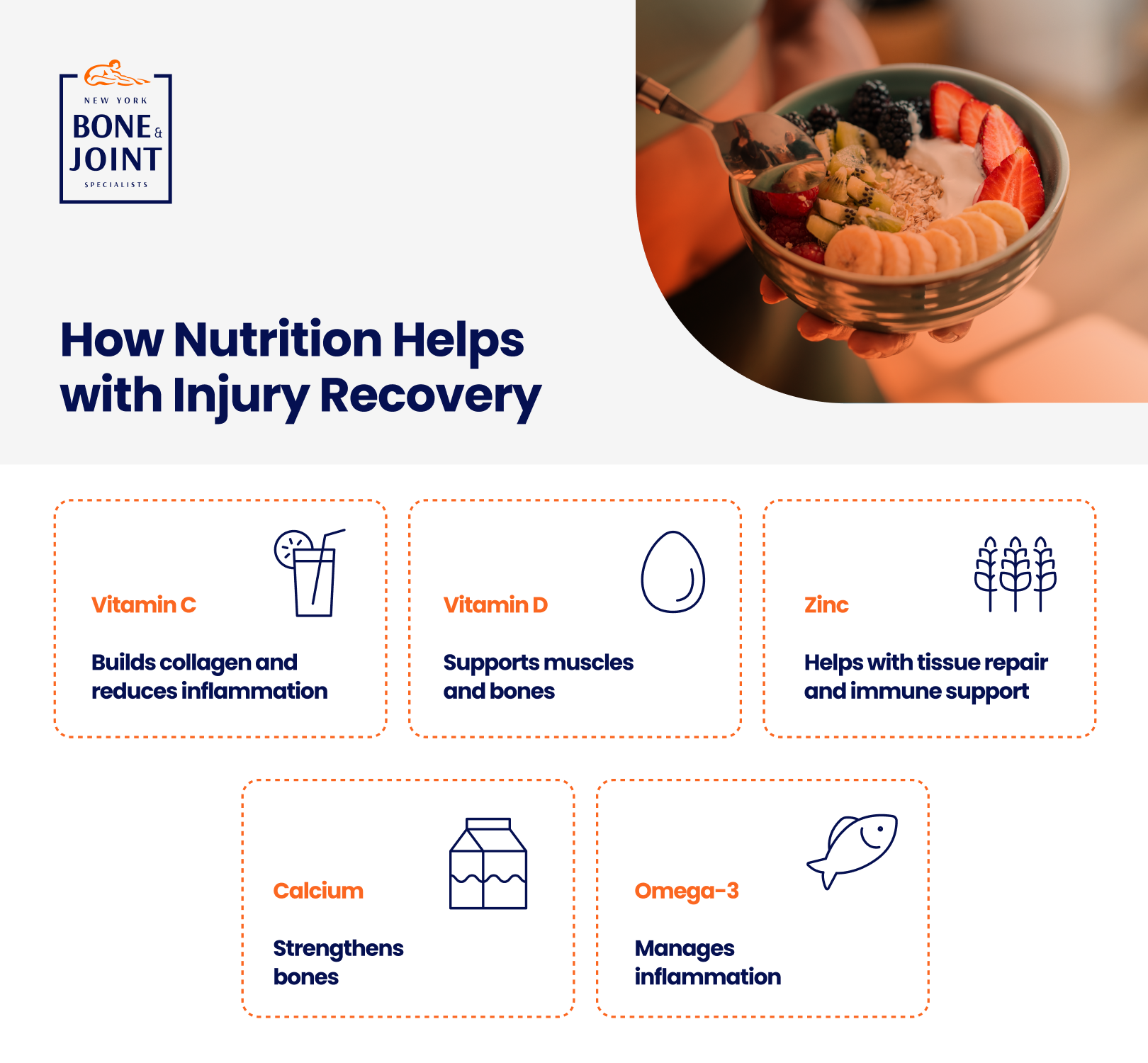
Although protein is the essential nutrient for injury recovery, other vitamins and minerals are just as important in your healing. Food should be your first source of nutrients, but supplements can help if your needs increase. Always check with your doctor or a nutritionist before starting any supplement.
Here are the best vitamins for injury recovery.
Vitamin C to build collagen
Vitamin C helps your body make collagen, which is essential for repairing damaged tendons, ligaments, and skin. It also helps reduce inflammation.
Food sources: citrus fruits, berries, peppers, broccoli
Vitamin D for bone and muscle support
Vitamin D helps you absorb calcium and supports both bone healing and muscle strength. Many people need a supplement, especially in areas with limited sunlight.
Food sources: egg yolks, tuna, sardines, salmon
Zinc for a healing boost
Zinc plays an important role in wound healing and supports a healthy immune response.
Food sources: meat, fish, poultry, dairy, whole grains, legumes, nuts
Check with your doctor before taking zinc supplements, especially since high doses can cause side effects.
Calcium to strengthen bones
Calcium is essential for repairing fractures and plays a role in muscle and nerve function. It works best when paired with vitamin D.
Food sources: dairy products, leafy greens, fortified cereals, bread
Omega-3 fatty acids to manage inflammation
This is a “good” fat that helps calm inflammation and supports soft tissue healing. They can be especially beneficial after ligament, tendons, or muscle injuries.
Food sources: salmon, walnuts, chia seeds, flaxseed, olive oil, avocados, nuts
Best supplements for injury recovery
Most people consume all the nutrients they need with a balanced diet. However, supplements may be necessary if:
- Your appetite is low
- You have difficulty obtaining nutrients in food alone
- You have special nutritional needs after surgery
New York Bone & Joint Specialists offers a full line of supplements, from collagen complexes and omega-3 nutritional aids to vitamin K2 and D3 tablets. These doctor-recommended supplements are formulated to support bone, joint, and muscle health, and are made with ingredients backed by orthopedic experts.
Evidence-based supplement options
If you’re thinking about adding supplements to support your recovery, here are a few options patients commonly use. Always check with your doctor or nutritionist to make sure they’re right for you.
- Protein powder. A simple way to boost your protein intake if you’re not getting enough from food. You can choose animal-based options like whey or casein, or plant-based versions made from soy, rice, or hemp. Whey isolate is a particularly concentrated form that can help you meet your protein needs during healing.
- Vitamin D3. Boosts calcium absorption for bone health and repair.
- Omega-3 fish oil. Contains omega-3 fatty acids essential for muscle function and cell repair.
- Creatine. Creatine helps your muscles produce energy and may support strength during rehab. Talk with your healthcare professional before starting creatine to make sure it’s a good fit for your recovery plan.
Note on supplement safety and quality
Nutritional supplements can be a helpful way to support your recovery, especially when your body needs more than you can get from food alone. For the best results, choose high-quality products that have been reviewed by trusted third-party organizations (such as USP, NSF, or ConsumerLab). And as with any supplement, it’s always a good idea to check with your doctor or nutritionist—especially if you take other medications or have specific health needs.
Injury recovery nutrition tips: Practical strategies
Dealing with all the aspects of your recovery can be overwhelming at times, but these simple, practical tips can help you stay on track and give your body what it needs.
1. Meal plan
Prepare a few protein-rich meals before surgery if you can. If mobility is limited, consider using a meal delivery service and choose options high in protein. Cooking larger batches of food and freezing portions can also make things easier when you’re tired or short on time. And if your appetite is low, eating smaller meals or snacks throughout the day can help ensure you’re still getting enough nutrients.
2. Prioritize hydration
Staying hydrated is key during recovery. Drinking regularly throughout the day helps your body deliver nutrients to healing tissues, and you may need even more water in warmer weather or on days you’re more active. If plain water isn’t appealing, try adding fruit or choosing lightly flavored water to make it easier to sip consistently.
3. Time your nutrient intake
Paying attention to when you eat can support your healing just as much as what you eat. After physical therapy, choose a mix of protein and healthy carbohydrates, such as a rice cake with nut butter or Greek yogurt with fruit, to help with muscle repair. A casein-rich snack before bed, like cottage cheese or yogurt, can also give your muscles a steady supply of amino acids overnight to support recovery.
What to avoid during recovery
- Restricting calorie intake. Your body needs more, not less, nutrition to fuel your recovery. Maintain an adequate caloric intake while eating a balanced, low-fat, low-salt diet.
- Alcohol. Impairs healing and leads to dehydration.
- Smoking. Interferes with blood flow and slows the healing process.
- Highly processed fatty foods. These foods can increase inflammation and offer little nutritional benefit.
The bottom line: Nutrition as medicine
Nutrition is one of the most powerful tools you have during recovery. The more you give your body the fuel it needs, the better it can repair tissue, maintain strength, and help you feel like yourself again. A thoughtful, food-first approach paired with the right supplements can make your healing process smoother and more effective.
Every injury and recovery journey is different, so it’s normal to have questions about what your body needs. From diagnosis to recovery, the team at New York Bone & Joint Specialists are experts for managing injuries and supporting your healing journey. Contact us today to start feeling your best.
FAQs
How much protein do I need for injury recovery?
Most people need more protein than usual while healing—generally around 1.5 to 2 grams per kilogram of body weight. Spread your intake throughout the day to support steady muscle repair, and choose protein sources you enjoy, whether plant-based or animal-based.
What are the best foods to eat for injury recovery?
Lean proteins, leafy greens, dairy, fruits, vegetables, and fortified grains all support healing. Foods high in calcium, vitamin C, and anti-inflammatory nutrients can help your body rebuild bone, repair soft tissue, and manage swelling.
Do I need supplements to recover from an injury?
Not always. Many people meet their needs through food, but supplements can help fill gaps—especially for nutrients like vitamin D. Talk to your healthcare provider before starting any supplement to make sure it’s right for you.
Should I eat less while recovering from an injury since I’m not training?
No. Your body actually needs more nutrition during recovery, not less. Eating too little can delay healing and contribute to muscle loss, so work with a nutritionist if you need help balancing your intake.