
Seeing an orthopedic doctor for the first time can be stressful. Relax and get the information you need by asking the right questions.
Your knee has been aching for days, and every step brings pain. So you finally booked an appointment with an orthopedist. But after the first visit, you leave confused about your diagnosis and treatment. You feel that many of your questions went unanswered. What could you have done differently? It could be that you didn’t ask the right questions.
We get it. Meeting with a doctor — any doctor — can be stressful and overwhelming. It doesn’t have to be that way. These key questions for an orthopedic doctor will make your initial consultation less frustrating and will give you the answers you seek. That way, you’ll get a clear understanding of your path to recovery and a life with no pain.
Why the Right Questions Matter at an Orthopedic Visit
These questions for an orthopedic doctor can make all the difference in getting the right diagnosis, understanding your treatment options, and probable outcomes. More than merely medical information, the first visit also establishes the comfort level and trust between you and the orthopedist. You should feel comfortable asking questions and satisfied with the answers.
But first you must know what orthopedic questions to ask. Write the questions down on a piece of paper if that helps. Getting the answers to the key questions at your first orthopedic appointment is the first step to successful treatment and rehabilitation.
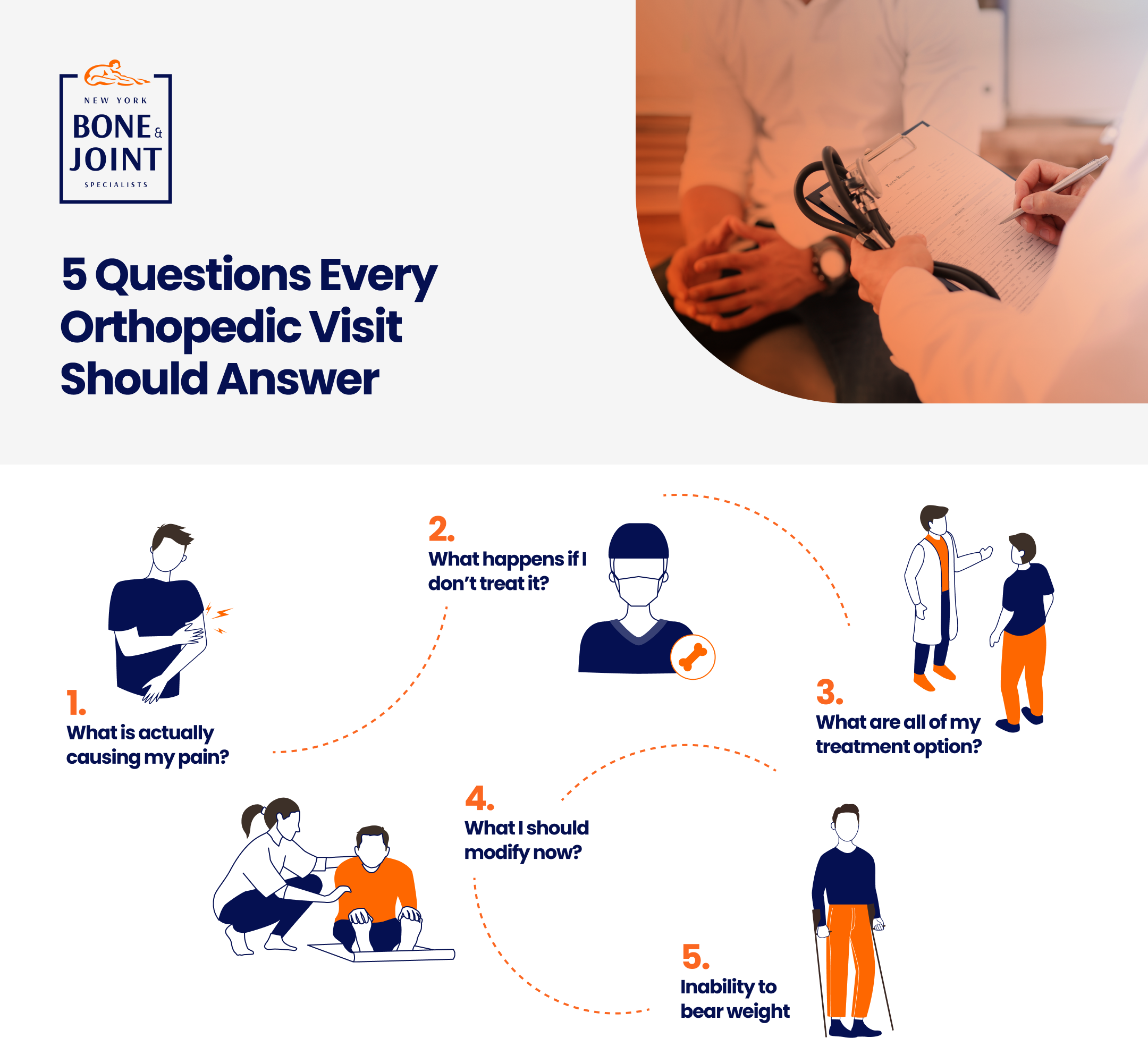
The 5 Questions an Orthopedic Visit Should Always Answer
A 2010 Center for Disease Control and Prevention report estimated 63 million adults visited an orthopedic practice. That number has grown as the population ages.
Like you, many of those patients were apprehensive during the first visit. Asking these five questions can ease any concerns you may have about your condition and future therapy.
What exactly is causing my pain?
This is probably the most important question you can ask. Finding the exact source of your pain determines treatment options. But even after a review of your symptoms and imaging tests, the answer may be inconclusive. Your body is a dynamic structure and one joint can affect other joints. For example, foot pain can often be caused by an imbalance in the hips.
A thorough evaluation of your health history, the severity of your symptoms, and when they began will direct the orthopedic doctor to the right answer. Perhaps the pain is due an old sports injury, overuse from repetitive motions, your posture, or a degenerative condition like arthritis. The first visit should give you a solid idea of what is causing your pain. Also free to ask the orthopedist to clarify any medical terms you don’t understand. He or she should answer in clear, precise language.
What happens if I do nothing?
Ignoring joint discomfort, however slight at first, only increases the chance of worsening pain and making the initial injury or condition more severe. You also may find your ability to do everyday tasks, such as walking, climbing stairs, or reaching for objects is significantly limited. That’s why seeing an orthopedic doctor as soon as the pain starts translates to a quicker recovery.
However, that doesn’t mean every ache or pain calls for extensive treatment right away. Minor arthritis discomfort can be managed with physical therapy and lifestyle changes. Or your doctor may choose to monitor your condition. On the other hand, an acute injury resulting in severe pain, swelling, and inability to bear weight on the joint demands immediate medical intervention.
What are all my treatment options?
Once a diagnosis is made, ask your orthopedic doctor about your treatment options. Orthopedic doctors typically recommend non-surgical alternatives, such as physical therapy, medications, or corticosteroid injections to relieve pain and inflammation, as first-line treatment. This is also your opportunity to ask the doctor about his or her experience in treating your diagnosis.
Traumatic injuries, such as ligament tears in the knee, may be best addressed by surgery depending on the severity. Here again, ask whether you can undergo a minimally invasive procedure or an innovative option like robotic surgery. Inquire about where the surgery will be performed, preparations, and your hospital stay.
Know the risks and benefits of each treatment option. Whichever one you choose, be sure it is one you are comfortable with based on the advice of your orthopedic doctor.
What activities should I modify right now?
During and after treatment — whether conservative or surgical — certain activities can increase your chances of a full recovery or hold back your rehab. Your orthopedic specialist may suggest activities to avoid as well as exercise to try. Stay active as much as possible, but stay away from movements that aggravate your specific condition or injury.
Lifestyle modifications such as smoking cessation and ergonomic changes to your desk setup can further aid your recovery efforts. You can also inquire about ways to prevent the same or another orthopedic issue from cropping up in the future.
What does recovery realistically look like?
Everyone heals at a different pace. Your orthopedic doctor can provide a general timeline of when you can expect to fully recover and return to your normal activities.
Much depends on the type of treatment you received. It’s common to walk on crutches for two weeks after knee surgery, with a return to light activities in two to four weeks. Full recovery may take up to six months.
In general, a gradual uptick in physical activity allows you to build muscle strength and overall stamina without overexerting yourself. Increase your activity level by about 10 percent each week. Report any pain or discomfort to your doctor or physical therapist. You may need to adjust your physical therapy program.
How NYBJ Approaches Patient Education and Clear Care Plans
At New York Bone & Joint Specialists, our physicians take a patient-centric approach to orthopedic care. At the first appointment and every time afterward, we listen to our patients’ questions and concerns and will answer them in understandable terms.
Our physicians work with a team of sports medicine specialists and physical therapists to come up with a structured care plan based on your individual condition, lifestyle, and wishes. We let our patients decide their preferred treatment route.
We welcome first-time patients as well as those seeking a second opinion. At the first appointment, our physicians are trained to perform a comprehensive evaluation combining a physical examination with imaging tests if called for. We believe most orthopedic issues can be treated through non-surgical therapy. But we are experts in orthopedic surgery if that is the optimal course of treatment. Contact us today to learn more about our practice.
FAQs
What questions should I ask an orthopedic doctor at my first appointment?
Start off with asking what exactly is the source of your pain. With an accurate diagnosis, you can discuss your treatment options, risk and benefits, as well as recovery expectations.
How many questions should I ask during an orthopedic visit?
We highlight five. But you can ask as many questions as you want. And the orthopedist should answer your questions fully and in plain language. The relationship between you and your doctor should be a partnership in which you both work together to understand your condition and how to address it with treatment.
What are the most important orthopedic questions to ask before surgery?
Inquire about how many surgeries he or she has performed for your specific condition and the success rate. Know where the surgery will be performed, preparations for the operation (such as when to stop any medications), and the length of the hospital stay. The orthopedic doctor can also provide a rough timeline for your recovery, post-surgery physical therapy, and assistive devices you may need (crutches, casts, etc.).
How do I know if my orthopedic doctor answered my questions clearly?
You’ll know if you leave the first appointment with a good understanding of your condition and treatment options. You’ll leave with no questions unanswered.
Should I get a second opinion if my orthopedic questions weren’t answered?
Definitely. Part of a physician’s job is making sure patients are comfortable asking questions and answering them calmly and thoroughly. Anytime you feel uncomfortable or confused by the answers is a sign to seek a second opinion from another doctor.