For some office workers, sitting down isn’t a relief, but a cause of pain. Fortunately, with the right orthopedic support, it can be managed so you can sit comfortably all day.
If you’re a New Yorker, you’re probably familiar with the hustle of standing on packed subways or buses during your morning commute. After rushing to the office and spending the morning on your feet, finally sitting at your desk should feel like a break. But instead, you’re met with a dull ache—or even a sharp pain—in your lower back. And you wonder, “Why does sitting down hurt my back when I was perfectly fine standing up?”
Lower back pain is a common complaint among people who spend long hours sitting, especially at work. It’s easily treatable once you know the cause, which could be anything from your seated posture to an underlying spinal condition made worse by sitting. An orthopedic doctor and a physical therapist skilled in treating back pain will help you learn how to sit down comfortably and find relief.
Why does my back hurt when I sit down?
Most people prefer sitting to standing. Sitting down is a chance to finally get off our feet and relax. However, our bodies were actually built to stand. Standing distributes the upper body weight evenly across the body. Sitting down, on the other hand, throws the body out of its natural alignment.
Sitting for long hours causes the hip flexors to tense up. Combined with weakness in the hamstring and buttock muscles, this tightness can lead to an anterior pelvic tilt, or a forward leaning or rotation of the pelvis. Over time, this muscle imbalance can result in chronic back pain.
How you sit can exacerbate your lower back pain, too. Sitting in a slouched position stresses not only the spine, but all the muscles and ligaments attached to it, as well. The discs that cushion each spinal vertebrae are also under pressure.
Sitting at a desk for eight hours is one of the top reasons your back might be hurting. But it’s not just work—long periods spent in the car, on a train, or even reclining to watch TV can add to the discomfort. Targeted therapy or tweaking the ergonomics of your setup can go a long way in relieving lower back pain while seated. But first, you must get to the bottom of why your back hurts when sitting.
Common causes of lower back pain when sitting
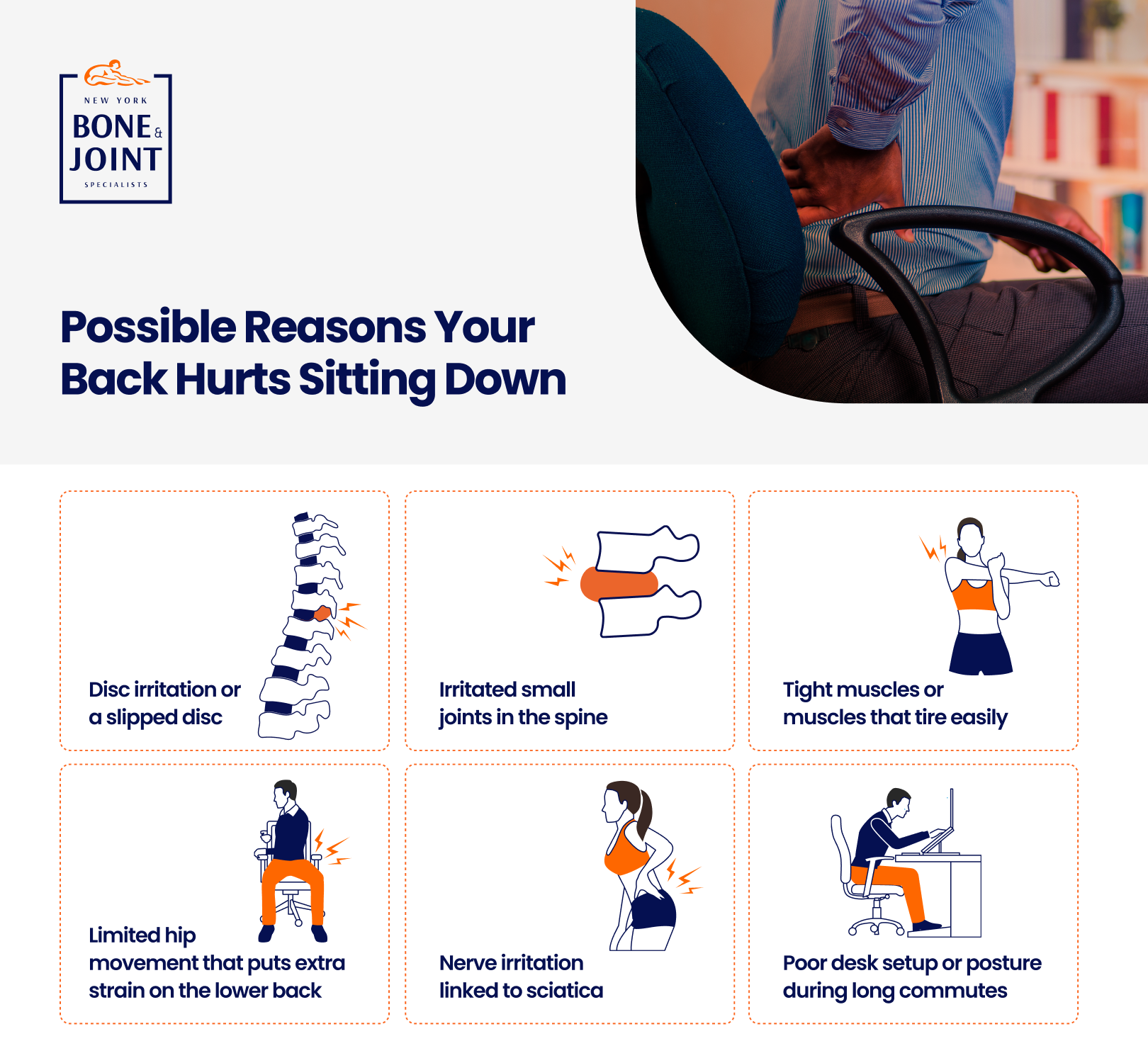
Lower back pain usually originates in the L1–L5 vertebrae and can be triggered by structural issues or lifestyle habits. Here are the most common culprits:
Desk posture. Your lower or lumbar spine absorbs enormous pressure when you slouch or hunch over your desk, or if your workstation isn’t positioned properly. This can lead to pain and stiffness in the muscles supporting the back. You can tell if it’s your desk posture if the pain improves when you stand up or walk, but increases when seated.
Muscle strain or imbalance. Sitting tends to tighten the hip flexors and push the pelvis out of alignment.
Herniated disc. A disc between a vertebrae can bulge outward due to the strain of prolonged sitting. The ballooning of the disc then irritates the spinal cord nerves. Herniated discs are characterized by a sharp or shooting pain down one leg.
Sciatica. The sciatic nerve runs from the base of the spine to the legs. Irritation of the nerve when seated causes a dull ache or an electric shock sensation along the lower back that travels to the buttocks.
Spinal stenosis. Lower back pain may worsen when seated if you have spinal stenosis, a condition in which the tube through which the spinal nerves travel narrows and pinches nearby nerves.
Facet arthropathy. Arthritis in the small joints (facets) connecting the spinal bones can flare when seated.
Weak core muscles. Weakness in the core muscles at your sides, back, hips, abdomen, and buttocks can leave your spine unsupported, leading to pain.
How to relieve lower back pain when sitting down
No one wants to sit all day with an aching lower back. Simple measures can relieve your lower back pain and make your workday a bit more enjoyable.
Move often
Take short breaks every 30 to 60 minutes to stand, stretch, or walk. You can also add in a seated spinal stretch:
- Sit tall in your chair.
- Place one hand on the opposite knee.
- Gently twist your torso.
- Hold for 15 seconds on each side.
Adjust your posture
Set up an ergonomic workstation or try a standing desk. If sitting, follow these posture tips:
- Keep feet flat on the floor.
- Knees bent at a 90-degree angle.
- Sit upright with relaxed shoulders.
- Position your screen at eye level.
- Keep elbows bent at 90 degrees.
- Use a lumbar pillow or ensure your lower back is supported by the chair back.
Try heat and cold therapy
Use ice packs to reduce inflammation. Wait a day for the inflammation to reside and apply heat to stimulate blood flow to relax the muscles.
Exercise and strengthen your core
Physical therapy can strengthen the all-important core muscles that support the lower back. At-home stretching exercises also help loosen tight muscles.
Try these moves to improve your mobility:
The arch
- Lie on your back with your arms by your sides.
- Slowly lift your hips using your back, glutes, and abdominal muscles.
- Hold for five seconds, and then relax.
The plank
- Get into a pushup position with your forearms on the ground.
- Keep your elbows in line with your shoulders.
- Push up onto your forearms and toes, keeping your back straight and your elbows on the ground.
- Hold for a few seconds.
- Lower yourself to the floor.
When to see a medical professional
Lower back pain frequently affects people who sit for their jobs. At-home treatments and workstation adjustments work effectively to relieve the discomfort, but it’s always a great idea to get a proper medical evaluation to rule out any serious conditions. Definitely visit an orthopedic specialist for the following symptoms:
- Persistent pain for 2 or more weeks
- Tingling and numbness in the back or legs
- Weakness in the legs
- Difficulty standing up or walking after sitting
- Increased pain at night
- Bowel or bladder control problems
Sit in comfort
Lower back pain frequently affects people who sit for their jobs. Luckily, at-home treatments work effectively to relieve the discomfort. An orthopedist and/or physical therapist can investigate the source of your pain and recommend a treatment plan to help you sit in comfort all day.
The staff at New York Bone & Joint Specialists has years of training and experience in treating lower back pain. Tired of back pain every time you sit down? Contact us today for a consultation.
FAQs
Why does my back hurt only when I sit down but walking feels fine?
Simply put, your lower back is under extreme pressure when seated. There could also be other reasons, such as how you position your body when seated, or a spinal condition, including a herniated disc or spinal stenosis. An orthopedic doctor and a physical therapist can make that determination.
If my lower back hurts when sitting down, is it a disc problem?
It could be. Prolonged sitting can cause a spinal disc to herniate or bulge and irritate the spinal nerves. A sharp or shooting pain down one leg is a common symptom of a herniated disc, which requires medical treatment.
Why does sitting down hurt my back after commuting?
Standing distributes your upper body weight evenly across the body. Sitting down, on the other hand, throws the body out of its natural alignment. Your hips flexors tighten and push the pelvis forward. You’re also putting more pressure on the spine and the muscles and ligaments attached to it when you sit.
What chair setup helps with back pain?
An ergonomic chair that provides strong lumbar support is the best. Pay attention to your seated posture, too. Sit with your feet flat on the floor, your elbows at a 90-degree angle, and your computer at eye level. And never slouch over your desk. You can also try a standing desk.
When should I get imaging for back pain?
If an orthopedist suspects a spinal condition is causing your seated back pain, he or she may order imaging tests to find the root cause of the discomfort. Persistent pain, numbness and weakness in the legs, as well as bladder and bowel control issues may warrant a more thorough examination, including an imaging test.