Spinal cord compression disrupts the nerve signals from the spine to the rest of your body. It causes pain, numbness, and balance issues that worsen without early treatment.
Occasional neck and back pain is common. Often the crick in your neck or stiff back is due to sleeping awkwardly or pulling a muscle while lifting a heavy object. It usually goes away, but if the pain is accompanied by slips and falls, severe numbness in the legs, or bladder incontinence, you may have a serious nerve disorder in the spine known as spinal cord compression.
What the Spinal Cord Does
So much of what you do everyday is because of your spine. Your posture and ability to bend is due to the vertebral column. The nerves inside it allow you to feel whether something is hot or cold, or smooth or prickly.
It does all this thanks to its unique combination of bones and nerves, including:
Vertebrae. The 24 bony discs running from the neck to the lower back support your body and enable movement.
The spinal canal. The hollow area inside the stack of vertebrae that protects the spinal cord.
Nerve center. The spinal cord encases a network of nerves that send messages to your brain and then on to your muscles and other soft tissues. They do this through nerve roots that extend outward from the spinal cord through openings in the vertebrae.
Spinal cord compression, or myelopathy, refers to pressure affecting the entire spinal cord. That’s different from radiculopathy, which is compression of a nerve root, but not the cord. Radiculopathy is often characterized as a pinched nerve.
What Causes Spinal Cord Compression?
Osteoarthritis is the leading cause of spinal cord compression, but it can also result from any condition or injury that impacts the nerves in the spinal cord.
Degenerative diseases. Osteoarthritis wears down the cartilage that covers the vertebrae and can cause friction between the bones. The vertebrae may respond by forming bone spurs that press into the spinal canal. As we age, ligaments and other tissues lining the spinal canal can also thicken and narrow the space around the spinal cord.
Spinal stenosis. A narrowing of the spinal canal restricts nerve function. It can be caused by degeneration of the spine, a herniated disc, or a congenital abnormality.
Herniated disc. Stacked between each vertebrae is a fluid-filled disc. A disc becomes herniated when the thick outer layer of a disc breaks open, leaking fluid and compressing nearby nerves.
Trauma. A fracture or dislocation of the vertebrae can compress the spinal cord.
Tumor.Benign or cancerous tumors that grow in or near the spinal canal can put direct pressure on the spinal cord and surrounding nerves.
Infection and inflammation. An epidural abscess, which is a collection of pus outside the spinal cord, can compress it. Osteomyelitis, an infection in the bones of the spine, can also lead to spinal cord compression.
Hematoma. Although rare, blood can accumulate in or around the spinal cord due to injury, tumors, or bleeding disorders and cause acute compression.
Spinal Cord Compression Symptoms
Symptoms of spinal cord compression may be subtle at first and gradually worsen. In some cases, especially after trauma, they can appear suddenly. Seeking medical attention at any point in this process gives you the best chance of reducing pain and protecting your mobility.
Early Signs
- Neck or lower back pain
- Mild balance or coordination problems, such as more frequent stumbles or dropping objects
- Tingling or numbness in the arms, hands, legs, or feet
Progressive Signs
- A general feeling of weakness and stiffness in the arms or legs
- Worsening balance problems that lead to falls
- Trouble with fine motor skills, such as holding a pen, buttoning a shirt, or opening jars
Red Flag Symptoms
Spinal cord compression at the lower end of the spine can lead to the most serious form of this condition, known as cauda equina syndrome. These symptoms require immediate evaluation in an emergency room:
- Loss of bowel or bladder control
- Sudden and rapid worsening of symptoms
- Severe numbness between the legs, in the inner thighs, or along the back of the legs
- Marked weakness in one or both legs that makes it difficult to walk or even stand up from a chair
Where in the Spine Can Compression Happen?
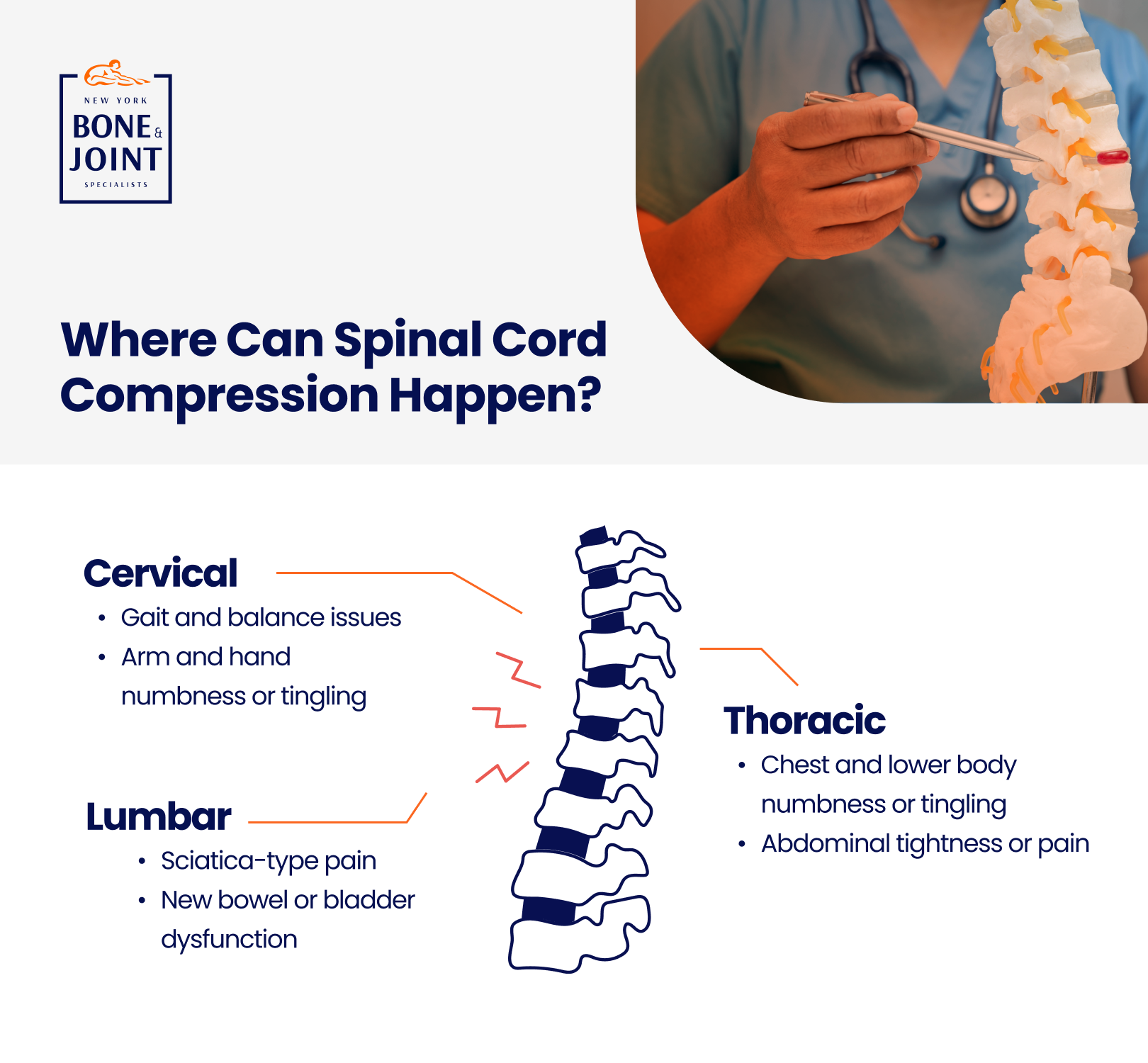
Spinal cord compression can strike anywhere along the spinal column, but it frequently affects the neck. Cervical myelopathy accounts for between 5% to 10% of all spinal cord compression in adults over the age of 55.
Cervical myelopathy symptoms include:
- Pain and stiffness in the neck
- Weakness in the muscles of the arms, shoulders, or hands
- Trouble with grasping objects, writing, or dressing
When compression occurs a little lower in the spine, the symptoms shift and often focus more on the mid back and walking.
Notable thoracic (mid-spine) myelopathy symptoms are:
- Back pain
- Pain when walking
- Numbness or loss of sensation in the mid-back area
- Poor coordination and balance
If the compression moves even farther down, into the lower spine, the nerves that control bladder, bowel, and leg function can be affected.
Cauda equina syndrome affects the nerves at the very end of the spinal cord that control bladder function and sensation in your legs and buttocks. Onset of these symptoms should be immediately checked by a medical professional:
- Urinary and bowel dysfunction
- Numbness in the butt and genitals
- Sexual dysfunction
- Pain in the back of legs (sciatica)
- Weakness in the lower extremities
How Spinal Cord Compression Is Diagnosed
Diagnosing spinal cord compression involves a comprehensive evaluation of your medical history, physical exam, and imaging tests.
Medical history/physical exam. Your doctor will review your overall health, when your symptoms began, and where they are located. They may test muscle strength and reflexes in your arms and legs and observe how you walk to evaluate your gait and balance.
Imaging tests. An MRI is the primary imaging test for spinal cord compression because it provides a detailed view of the spinal cord, discs, and surrounding tissues. X rays and CT scans may also be ordered, especially if trauma or arthritis is suspected.
Myelogram. If you cannot undergo an MRI, a myelogram may be used. A contrast dye is injected into the spinal canal and X rays or CT scans are taken to highlight the bones and soft tissues in the spine.
Spinal Cord Compression Therapy and Treatment Options
Spinal cord compression treatment options vary depending on the severity of the symptoms. Non-surgical treatments are effective in caring for minor compression symptoms. Significant compression may require more extensive therapy. At any stage, the earlier you enter treatment, the better chance you have of managing pain and living an active life.
Non-Surgical Options (Reserved for Mild Cases)
- Physical therapy to strengthen and improve range of motion in the back, abdominal, leg, and neck muscles.
- Occupational therapy to help you accomplish daily tasks without straining your back or neck.
- Medications like nonsteroidal anti-inflammatory drugs and oral corticosteroids can reduce pain and inflammation.
- Braces on the neck and spine to keep those regions immobile. Braces should only be used for a short time because the devices may weaken muscles.
- Home therapy such as ice packs and heating pads to alleviate swelling and stiffness.
One treatment course not recommended for spinal cord compression is chiropractic manipulation of the neck or back.
Urgent Therapy for Severe Cases
A specialist may recommend these alternatives if imaging indicates significant compression:
- High dose steroids, including epidural injections, to bring down acute swelling.
- Radiation to shrink tumors causing the compression.
Surgical Options
Persistent pain, progressive weakness, or clear evidence of spinal cord damage may require decompression surgery. The specific procedure depends on the cause and location of the compression, such as a herniated disc or spinal stenosis. Many of these operations can be performed endoscopically through small incisions, which may reduce scarring and tissue disruption.
- Endoscopic discectomy. The damaged portion of the herniated disc is removed to relieve pressure on the nerve.
- Endoscopic decompression. This procedure is typically reserved for spinal stenosis. Through a smaller incision, the surgeon receives a clear view of the spine and can remove any tissue compressing on the spinal nerves.
- Endoscopic foraminotomy. The vertebrae of the spine consist of openings, called neural foramina, through which nerves from the spinal cord reach other parts of the body. During endoscopic foraminotomy, a small incision is made to allow surgical tools to enter and enlarge the opening and decompress the nerve or nerves.
- Spinal fusion. Two or more vertebrae are fused together to stabilize the spine and treat degenerative conditions.
When to See a Specialist
Spinal cord compression is a serious nerve disorder. Don’t ignore the symptoms. Call a specialist if the pain lingers, you’re increasingly numb in the extremities, or feel unsteady on your feet.
Starting treatment as soon as the symptoms begin can show you how to manage the pain and improve your overall mobility.
You should seek emergency care right away if you experience:
- Urinary and bowel dysfunction
- Numbness in the glutes and genitals
- Sexual dysfunction
- Pain in the back of legs (sciatica)
- Progressive weakness in the lower extremities
Don’t Delay Treatment
A healthy spine is essential for your overall well being, yet it is vulnerable to injuries and conditions that affect its nerve center. Spinal cord compression can lead to pain, numbness, and coordination problems and, in severe cases, loss of bladder or bowel control.
The spinal specialists at New York Bone & Joint Specialists have extensive experience treating complex spinal conditions, including spinal cord compression. Our care plans emphasize conservative treatments when appropriate, and we are also highly trained in advanced spinal surgery when it is needed to relieve pressure on the spinal cord.
From diagnosis and treatment through recovery, our team will guide you with expertise and compassion. Contact us as soon as spinal cord compression symptoms start so we can begin the healing process together.
FAQs
Is spinal cord compression an emergency?
Spinal cord compression can significantly impact your quality of life with persistent pain and numbness that impairs your coordination in the hands and legs. You may find yourself stumbling more often or unable to do simple tasks, like holding a pen. You can overcome these troubling symptoms with early treatment. However, the most serious symptoms—bladder and bowel incontinence as well as severe muscle weakness—indicate an emergency situation.
What are the most common spinal cord compression symptoms?
Neck or lower back pain are the most common initial symptoms. Pain is often accompanied by tingling, numbness, or weakness and by trouble walking, maintaining balance, or performing fine motor tasks. In advanced stages, you may lose control of bladder or bowel function and have serious difficulty standing or walking.
What spinal cord compression therapy works best for mild cases?
For mild or stable cases, physical therapy to strengthen and improve the range of motion in the muscles surrounding the spine are most helpful. Medications and corticosteroids to relieve pain and inflammation are effective treatments, as well. Assistive devices such as soft neck braces can immobilize the cervical spine to take pressure off the nerves, but should be worn for a short period of time. Your specialist will come up with a treatment plan designed for you.
When is surgery needed?
Surgery may be an option if non-surgical treatments have failed to lessen pain and produce improvements in mobility. Acute compression from a malignant tumor, orthopedic condition, or injury will likely require surgery. Spinal decompression surgery fixes the route cause of the compression, which could be a herniated disc, arthritis, or spinal stenosis, a narrowing of the spinal canal. Many spinal surgery techniques are done endoscopically to reduce nerve damage.
What happens if spinal cord compression is untreated?
Untreated spinal cord compression often leads to further nerve damage and possibly permanent disability. That’s why it’s vital to start treatment at the first signs of spinal cord compression to slow the progression and maintain a healthy spine.