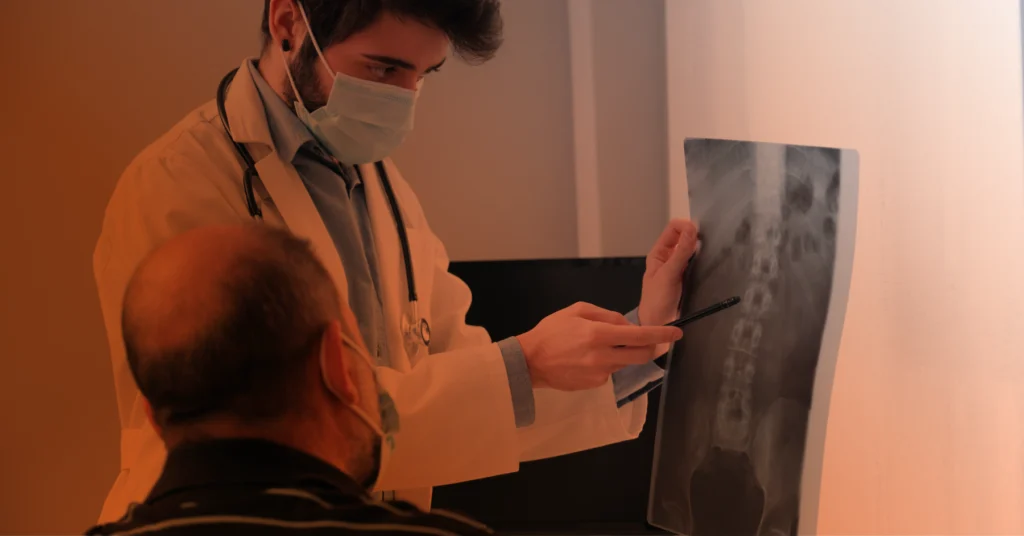
XLIF surgery may help reduce chronic back and leg pain with fewer disruptions to surrounding tissue. If your doctor has recommended this procedure, here’s what you can expect.
Physical therapy and medication haven’t relieved the pain shooting from your lower back into your leg. Some days, it’s so intense you struggle to walk, stand up from a chair, or climb stairs. Your orthopedist recommends a minimally invasive spinal fusion technique called XLIF, or eXtreme Lateral Interbody Fusion.
But what is XLIF surgery? How is it performed? And can it help relieve your symptoms?
Spinal fusion has become a common and safe procedure for treating back and leg pain caused by disc disease and other spinal conditions. In fact, one study estimates that more than 400,000 spinal fusion surgeries are performed each year. XLIF surgery was introduced in the late 1990s as another spinal fusion technique to repair damaged discs while minimizing the impact on nearby nerves and soft tissue.
If you’re considering surgery, talk with an orthopedic spine surgeon about XLIF surgery to understand the benefits, potential risks, and what recovery may look like. In the meantime, here’s a breakdown of what XLIF surgery is and what you can expect.
What XLIF surgery involves
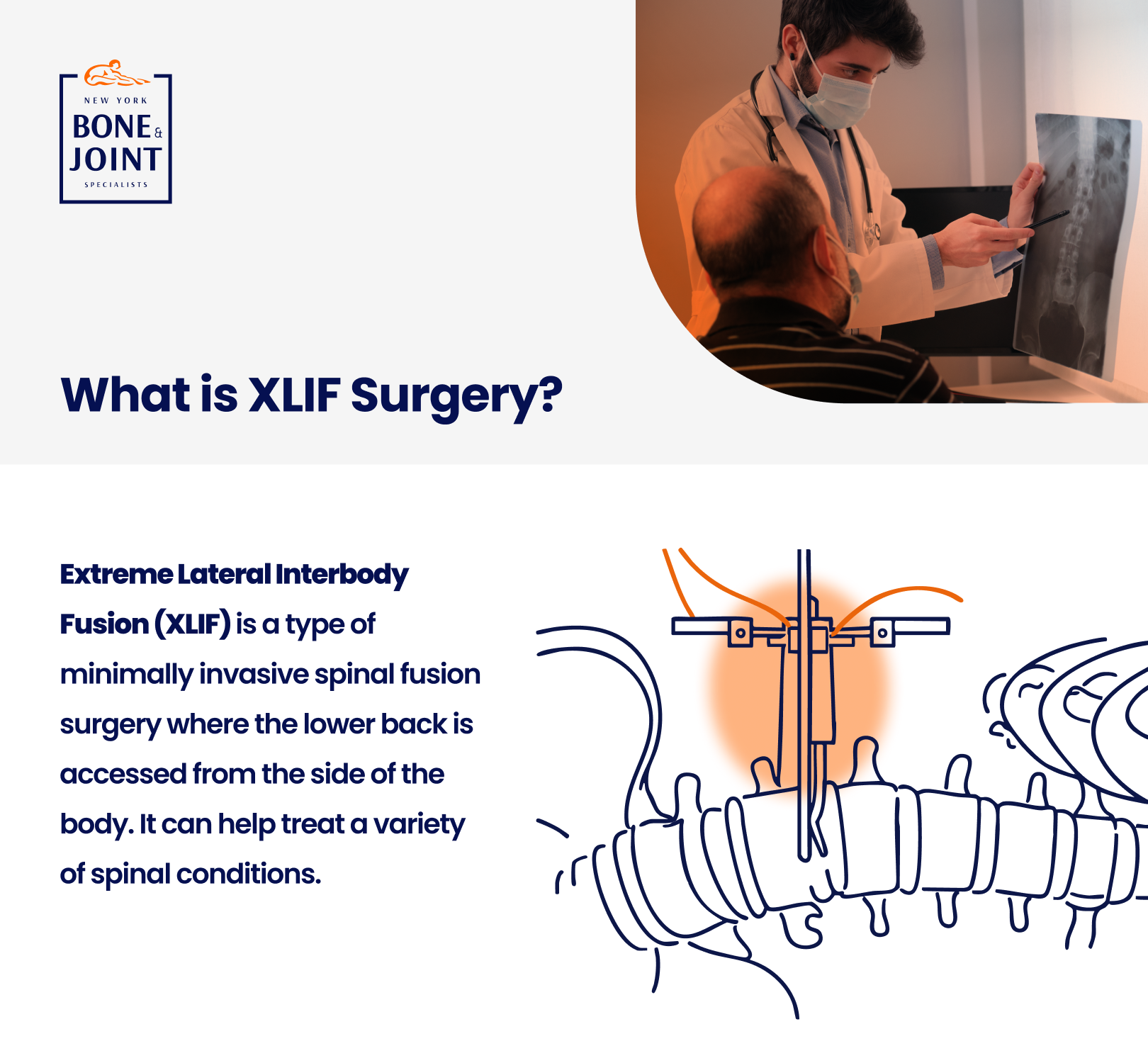
Most spinal fusion surgeries access the spine either through the front of the body (anterior) or the back (posterior). For XLIF surgery, the surgeon enters the spine through the side, or lateral, area of the body. This eliminates the need to cut through essential muscles and nerves in the back or abdomen.
XLIF surgery is most often performed on the lumbar spine (L1–L5)—the five vertebrae between the bottom of the rib cage and the top of the pelvis. These vertebrae are larger and stronger than those in the neck or mid-back because they support the weight of the upper body.
Once the surgeon reaches the spine through the lateral incision, the procedure resembles other minimally invasive spinal fusion techniques. It focuses on repairing or replacing damaged discs, which are the fluid-filled cushions between vertebrae that help absorb shock and allow movement.
As discs lose hydration over time, they can collapse, shift the spine out of alignment, and contribute to weakness, instability, and nerve irritation.
XLIF surgery stabilizes the spine by joining two or more vertebrae together. The surgeon inserts a bone graft or spacer between the vertebrae and secures the area with screws and/or rods. Over time, the graft fuses with the surrounding bone to create a more stable spine, reduce pain, and improve mobility.
What conditions does XLIF surgery treat?
Conservative treatment (such as physical therapy, medication, and injections) is typically the first step for back and leg pain. XLIF surgery may be recommended when symptoms persist and imaging confirms structural issues such as:
- Degenerative disc disease. Discs lose fluid over time and begin to thin.
- Spinal stenosis. Narrowing of the spinal canal that compresses nerves.
- Spondylolisthesis. A displacement or dislocation of the vertebrae.
- Mild scoliosis. An unnatural curvature of the spine in an S or C shape.
- Persistent disc issues. Recurrent disc pain or instability after prior surgery.
Spinal fusion may be considered when pain, weakness, or nerve symptoms continue despite non-surgical treatment.
Who is a good candidate and who may not be?
XLIF surgery, like any spinal fusion procedure, is a major surgery. Your surgeon will evaluate your symptoms, imaging results, anatomy, and overall health to determine whether XLIF is appropriate.
You may be a good candidate if you have:
- Chronic back or leg pain due to disc degeneration
- Instability caused by spinal deformities such as scoliosis and spondylolisthesis
- Ongoing difficulty walking, standing, or completing daily tasks because of intense pain
- Imaging and health screening results that support safe surgery and rehabilitation
XLIF surgery may not be recommended if you have:
- Osteoporosis or poor bone quality
- Severe scoliosis or high-grade spondylolisthesis in the lower lumbar spine
- Conditions requiring direct posterior access (such as certain herniated discs or bone spurs)
- Abdominal or anatomical barriers that prevent safe lateral access, including scarring from prior abdominal surgery or radiation
Benefits of XLIF surgery compared to other fusion approaches
All types of spinal fusion surgeries are safe and effective in reducing pain and correcting spinal abnormalities. XLIF surgery, in particular, offers several key benefits:
- Minimally invasive approach compared to traditional open surgery
- Shorter operating time
- Smaller incision and less disruption to muscles and nerves
- Reduced blood loss
- Less post-op pain
- Faster recovery than open surgery
- Effective for mild spinal deformities such as scoliosis
XLIF surgery has a low complication rate, though all surgeries carry risk. Potential complications include infection, blood clots, nerve irritation, and (rarely) failure of the vertebrae to fuse.
What recovery is like after XLIF surgery
A full return to normal activities can take between 12 to 18 months after XLIF surgery. However, that timeline can be longer or shorter depending on how many vertebral fusions were performed. Typically, you can go home the day of the surgery, although multiple disc fusions may require a one- to two-day hospital stay.
After surgery, you’ll follow a structured rehabilitation plan with support from your care team.
Immediately after surgery:
- Drowsiness is common
- Walking is encouraged to reduce clot risk
- Hip flexor and low back soreness is normal
- Medications help manage pain
2 to 4 days after surgery:
- Keep the incision clean and dry
- Begin gentle physical therapy
- Use assistive devices as needed (walker, cane, grabber)
- Avoid twisting, bending, or lifting
1 to 4 weeks after surgery:
- Strength begins to improve
- Walking distance increases gradually
- Transition from prescription medication to OTC options
4 to 6 weeks after surgery:
- Return to non-physical work is often possible
- Physically demanding jobs may require several months before return
1 to 3 months after surgery:
- Significant pain reduction is common
- Resume light household activities
- Drive once prescription pain medication is no longer needed
- Physical therapy becomes more active
3 months after surgery and beyond:
- Fusion continues to strengthen
- More strenuous activity may be approved by your surgeon
- Rehab focuses on strength, flexibility, and safe movement
- Learn proper lifting technique to protect the fusion
Bone fusion is a gradual process, and everyone recovers at a different pace. Your surgeon will closely monitor your progress every step of the way to make sure the fused vertebrae are fully healed. Alert your surgeon if you experience a fever, severe pain or swelling in the leg, or continued muscle weakness. Also, look for any signs of infection around the wound site.
Trust NYBJ with your XLIF surgery
At New York Bone & Joint Specialists, we believe conservative therapy is the best strategy to preserve long-term joint health. Yet sometimes, surgical intervention may be the better course of action for certain conditions and abnormalities of the lower spine.
When surgery is called for, our spine surgeons are up-to-date on the latest spinal fusion techniques, including XLIF surgery, to repair damaged discs. This innovative approach is designed to protect vital nerves in the back and abdomen, reduce pain, and improve overall spine stability and mobility.
After surgery, our surgeons and a team of physical therapists will check your progress and lead you through a structured physical therapy program to assure a successful recovery. Schedule an appointment with us today to discuss more about XLIF surgery and how it can help you achieve a healthy spine.
FAQs
What is XLIF surgery used for?
XLIF surgery can treat a number of spinal conditions. Most often it is used to replace a deteriorated disc between two vertebrae in the lower or lumbar spinal column. The purpose is to straighten and strengthen the spine. It can also treat some spinal abnormalities, such as mild scoliosis and spondylolisthesis. If conservative methods or a prior spinal fusion have failed to reduce pain, XLIF may be an option.
How is XLIF different from other lumbar fusion procedures?
Many lumbar spinal fusion procedures access the spine either through the front (anterior) or posterior (back) areas of the body. XLIF adds a third entry point through the side or lateral aspect of the body. Doing so avoids impact on the nerves and muscles of the back and abdomen.
How long does recovery take after XLIF?
XLIF spine surgery has a high success rate. A full recovery may take between 12 to 18 months. A structured physical therapy program will help you reach your goal of getting back to your normal activities.
What are the most common XLIF side effects?
After surgery, you’ll feel drowsy and there may be lingering pain in the hip and lower back. Pain medication prescribed by your surgeon can reduce any discomfort.
When can I start physical therapy after XLIF?
It begins right after surgery when you get up and walk around. After the hospital, a physical therapist will teach you gentle exercises and movements to protect your spine from excess stress.
Is XLIF a good option for scoliosis or spondylolisthesis?
Mild cases of scoliosis and spondylolisthesis can be treated with XLIF. Serious cases may not be. Your surgeon will make the decision if XLIF is right for you after a thorough evaluation of the condition, its severity, and your overall health.