10 Signs You May Have Morton’s Neuroma

Morton’s neuroma is a common, treatable cause of forefoot pain that can feel like you are walking on a pebble. It happens when a nerve between the toes becomes irritated and thickens over time, often made worse by tight shoes or high heels. Early care can reduce pain, protect the nerve, and help you stay active.
Ever feel like you’re walking on pebbles when you’re not at the beach? Do your toes feel numb or tingly? After a long run, do you rush to take off your shoes to relieve pain in the ball of your foot? If so, you may be dealing with a very common and treatable foot condition called Morton’s neuroma.
Morton’s neuroma is a thickening of a nerve in the bed of the foot. Symptoms of Morton’s neuroma may be minor at first, but tend to worsen as the nerve becomes increasingly irritated. Over time, the nerve damage causes pain with every step and may lead you to alter your stride.
These 10 signs of Morton’s neuroma will tell you if you have the condition and steps you can take to step out without pain again.
What is Morton’s neuroma?
Your foot consists of 14 toe bones, or phalanges, as well as five metatarsal bones connecting the front of the foot (the ball) to the midfoot. Alongside the metatarsal bones sit the interdigital nerves. Morton’s neuroma is an inflammation of the interdigital nerves between the third and fourth digits, or the middle toes closest to the little toe. It sometimes develops between the second and third toes, too.
Morton’s neuroma is quite common, with an estimated one in three people affected by the condition at some point during their lifetime. It tends to occur more often in women and those between the ages of 30 and 60.
The interdigital nerves thicken in response to repeated pressure and irritation. Common risk factors include:
- Wearing high-heels with narrow toe beds that force the foot out of alignment and compress the forefoot
- Participating in sports (running, basketball, soccer) on hard surfaces that place enormous pressure on the feet
- Having structural foot issues such as flat feet or high arches
- Having other foot conditions, such as bunions or hammertoes
- Spending long hours standing or walking for work
10 signs you may have Morton’s neuroma
Experiencing just one of these symptoms may not indicate Morton’s Neuroma. Rather, a worsening of any of these 10 signs or a combination of several could point to a diagnosis of Morton’s neuroma.
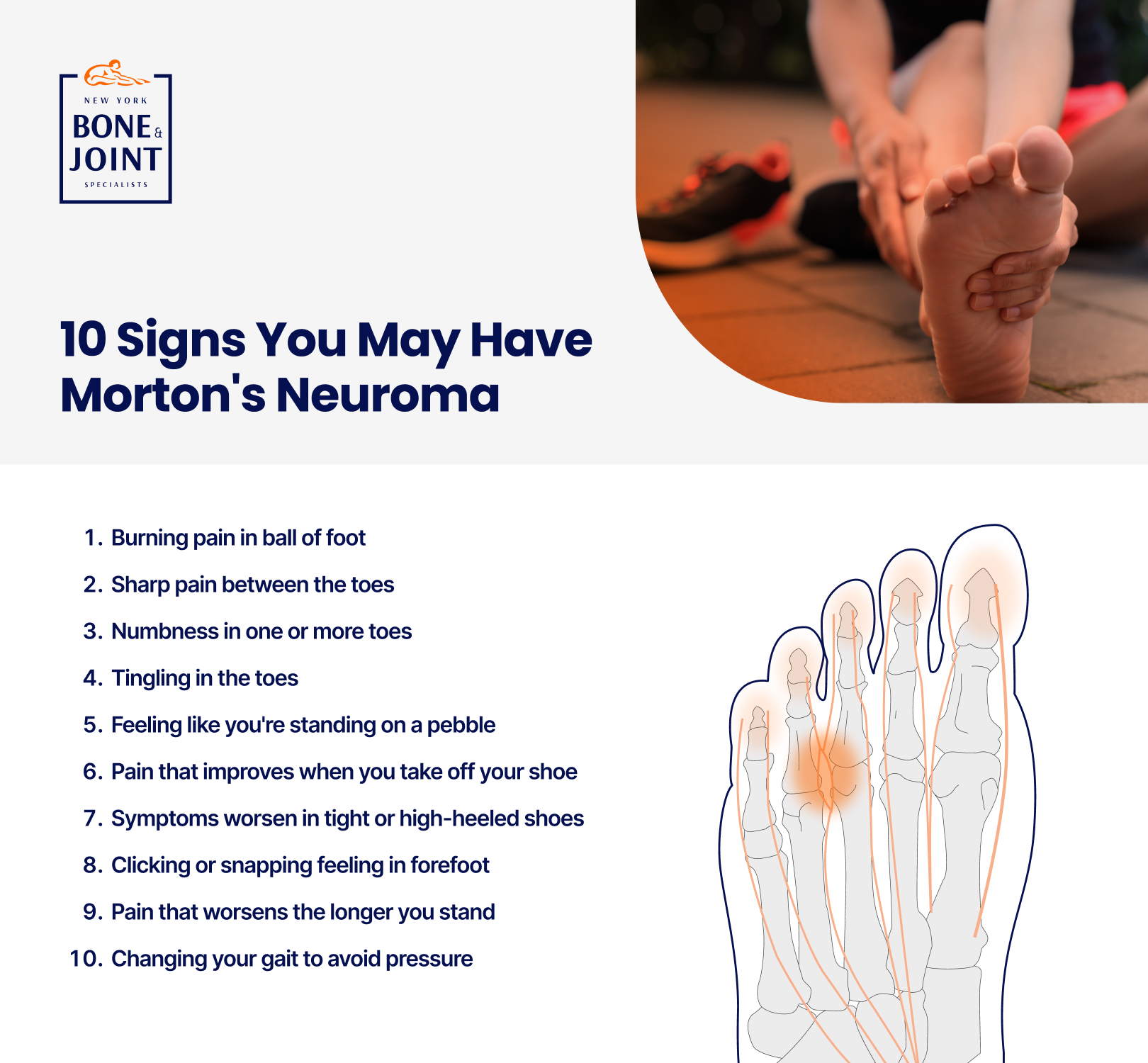
Be sure to consult with an orthopedic specialist if you experience any of the following:
1. Burning pain in the ball of the foot that intensifies with walking or running and may linger afterward.
2. Sharp, shooting, or stabbing pain between the toes that can radiate from the ball of the foot into the toes.
3. Numbness in one or more toes, commonly between the third and fourth toes.
4. Tingling or pins and needles in the toes that may come and go at first, then become more frequent.
5. A pebble or marble sensation under the forefoot, even when the shoe is empty, or a feeling like your sock is bunched up.
6. Pain that improves when you take your shoe off, especially with gentle foot and toe massage.
7. Symptoms that flare in tight shoes or high heels, since narrow toe boxes and elevated heels increase pressure on the nerve.
8. A clicking or snapping sensation in the forefoot, sometimes felt or heard when walking, or when the forefoot is squeezed by hand.
9. Pain that worsens the longer you are on your feet, including after long periods of standing or a busy day of walking.
10. Changing your gait to avoid pressure, such as shifting weight to the outside of the foot or shortening your stride.
What can mimic Morton’s neuroma?
Morton’s neuroma shares many similarities with other orthopedic conditions of the foot, such as arthritis or a stress fracture, that also cause intense pain, numbness, and tingling. Only a diagnosis by an orthopedist or podiatrist can determine if Morton’s neuroma is the exact cause of your foot pain and prescribe treatment.
Common look alike conditions include:
Arthritis. Arthritis in the toe joints is often mistaken for Morton’s neuroma. But unlike Morton’s neuroma, arthritis strikes more than one joint with the pain increasing when resting. Morton’s neuroma hurts less at rest.
Metatarsal stress fracture. A crack in one of the bones in the foot due to overuse.
Tarsal tunnel syndrome. Also causes sharp pain, numbness, and tingling in the foot, but the source is nerve compression in the ankle.
Metatarsalgia. Probably the most similar condition to Morton’s neuroma, metatarsaglia is an inflammation located at the ball of the foot between the arches and toes. Pain, numbness, and tingling is centered around one or more of the five bones at the bases of the toes, known as the metatarsal heads. It’s also caused by wearing tight shoes and participating in activities requiring frequent running and jumping.
Plantar plate tear. An injury to the ligament lying under the metatarsal heads as the result of prolonged pressure or excessive bending of the toe.
How Morton’s neuroma is diagnosed
Diagnosis typically starts with a detailed history and physical exam, followed by imaging when needed.
Your appointment will typically start with a few targeted questions, such as:
- When did your symptoms begin?
- Do symptoms worsen with activity or in certain shoes, especially tight shoes or high heels?
- Do you feel relief with rest or after removing your shoes?
Next, your specialist will examine the foot and try to reproduce the discomfort in a controlled way. This may include:
- Applying pressure to the ball of the foot and between the toes to locate the most tender area
- Gently squeezing the forefoot to check for a clicking sensation
- Moving the toes to assess range of motion
- Looking for contributing issues, such as bunions, hammertoes, flat feet, or high arches
Imaging is not always required, but it can be helpful when symptoms overlap with other conditions. For example, an X-ray will not show nerve damage, but can rule out other conditions, such as a stress fracture or arthritis. An ultrasound of MRI provides a detailed image of the soft tissues of the foot to confirm a Morton’s neuroma diagnosis.
Treatment for Morton’s neuroma
Morton’s neuroma responds very favorably to conservative therapy. You can try at-home remedies or by purchasing commercially available products for foot pain. Start by switching to lower-heeled footwear with a wide toe bed. You can also buy toe pads and orthotic devices to lift pressure on the nerves. OTC pain relievers and icing the foot are effective, as well.
Surgery may be an option if conservative methods fail. These procedures remove the nerve or decompress it. A less invasive option is a steroid injection to relieve swelling and inflammation.
How to prevent Morton’s neuroma
Once symptoms improve, you can focus on simple lifestyle changes to prevent it from coming back. Try these tips:
- Choose footwear with low heels and a roomy forefoot area. Also, look for solid arch support in a shoe, especially running shoes.
- Limit high heels for special occasions and change into comfortable shoes soon after.
- Occasionally reduce mileage when you run, or try low-impact exercises that place less stress on the feet.
- Build up foot strength gradually if you’re starting a running program or any other activity where you’re on your feet a lot.
- Address other mechanical foot issues, such as bunions, flat arches, or misaligned toes.
When to see a specialist
Morton’s neuroma develops due to nerve damage. Ignoring the pain, pins and needles, and other symptoms will only lead to further nerve deterioration. The earlier you see a medical professional, the quicker you can get back on your feet.
Consider seeing a specialist if:
- Pain and numbness doesn’t go away after two weeks of at-home treatment and a break from exercise
- Symptoms worsen or come back even after rest
- You change how you walk to avoid forefront pain (this shift in gait could put pressure on other joints, like your knees)
We help you get back on your feet
Morton’s neuroma is a common foot disorder, but it’s extremely treatable when caught early. If the pain, numbness, and that annoying “pebble in the shoe” sensation is getting you down, consult with our expert orthopedists at New York Bone & Joint Specialists. We’ll get the spring back into your step with a comprehensive conservative treatment plan that rarely involves surgery.
Contact us today for a consultation.
FAQs
What are the first signs of Morton’s neuroma?
A burning sensation and sharp pains in the ball of the foot reaching the toes are the initial signs of Morton’s neuroma. Numbness between the third and fourth toes is also common, but a telltale symptom is the feeling you have a pebble or small rock in your shoe.
How do I know if forefoot pain is Morton’s neuroma or something else?
Morton’s neuroma mimics several other foot disorders, such as a stress fracture or arthritis. The only sure way to tell if it is Morton’s neuroma is through a thorough physical examination and imaging tests like an ultrasound or MRI to highlight nerve damage.
What is the best treatment for Morton’s neuroma?
Ditch the high heels with a narrow toe bed, and instead, wear low-heeled footwear with room for your toes. Toe pads and orthotic inserts can soften the stress on the nerve, while medications like nonsteroidal anti-inflammatories reduce pain.
Can Morton’s neuroma go away without surgery?
Of course. In fact, conservative treatments like the ones mentioned above are most effective in treating Morton’s neuroma. Surgery is rarely recommended.
What shoes should I wear if I have Morton’s neuroma?
Choose shoes with a modest heel and a forefront area that gives the toes enough room to spread. Running shoes must have strong arch and heel support.
Our Locations
-

Upper East Side: Full Service Orthopedic Center & Walk-In
1198 3rd Avenue, Between 69th and 70th Street New York, NY 10021Physicians: Monday–Friday 8:00am–6:00pm, Saturday 8:00am–5:00pm
Physical Therapy: Monday–Friday 7:00am–7:30pm, Saturday 8:00am–3:00pm
Sunday: ClosedPhone: (212) 759-4553 -

Orthopedic Doctor Midtown Manhattan NYC — New York Bone & Joint Specialists
425 Madison Ave, Suite 200 (second floor) New York, NY 10017 (corner of East 49th Street)Physician appointments: Mon–Fri 8:00 am–6:00 pm
Physical therapy: Mon–Fri 7 am–7:30 pm, Sat 8 am–3 pmPhone: (212) 759-4553 -

Orthopedic Doctor Upper East Side NYC — New York Bone & Joint Specialists
130 E 67th St New York, NY 10065Tuesday & Thursday: 8:00am–6:00pm
All other days: ClosedPhone: (212) 759-4553