Our Orthopedic Surgeons & Doctors NYC
Doctors & Staff
New York Bone & Joint Specialists is proud to be an authority in Orthopedic Surgery and Sports Medicine. We are full-service centers that specialize in everything from the most conservative treatment, such as physical therapy, to regenerative medical injections to the most complex orthopedic surgery. Our doctors and staff are experts in Orthopedic Surgery, Sports Medicine, Regenerative Orthopedics, and Rehabilitation. Learn more about our specialists and other supporting staff below.
Written by: Dr. Popovitz.
Board-Certified Orthopedic Surgeon | Fellowship-Trained Sports Medicine, NYU Langone Medical Center | FAAOS
Co-Founder, NY Bone & Joint Specialists | Lenox Hill Hospital - Northwell Health
Recognized: New York Magazine Best Doctor | New York Times Super Doctor | IAOS Leading Physician of the World | IAOS Top Orthopedic Surgeon in New York
Date Published: April 14, 2026
Last Updated: September 8, 2026
Last Medically Reviewed: September 8, 2026
This page has been written and reviewed by a fellowship-trained, board-certified orthopedic surgeon with over 20 years of clinical experience. All clinical claims are supported by peer-reviewed literature and current AAOS and AOSSM guidelines. See References section below.
At a glance
- What we are: A private orthopedic surgery and sports medicine practice founded and led by orthopedic surgeon Leon Popovitz, MD. Not a hospital system, not a corporate medical group. Built to give the people of New York City prompt, easy access to genuinely high-quality orthopedic care, with same-day or next-day access to non-operative physicians, same-week surgical consultations, and Manhattan’s first dedicated orthopedic urgent walk-in center. Physician-founded, physician-led, and preservation-first.
- Core statistic: 90% of New York Bone & Joint patients are treated successfully without surgery. Surgical expertise exists at the highest level, and it’s used when surgery is the right answer, not the default answer.
- Specialties: Orthopedic surgery (knee, shoulder, hip, foot & ankle), sports medicine, interventional pain management, physical & rehabilitative medicine (PMR), and in-house physical therapy. Every specialty under one roof, with direct communication between physicians.
- Surgical team: Fellowship-trained, board-certified orthopedic surgeons specializing in knee, shoulder, hip preservation, sports medicine, and total joint replacement. Surgery performed at Lenox Hill Hospital.
- Non-surgical team: Board-certified sports medicine physicians, interventional pain specialists, and a physiatrist providing the full range of non-operative care, from diagnostic evaluation to injection therapy to complex pain management.
- Locations: Two full-service orthopedic centers in Manhattan: Upper East Side (1198 Third Avenue) and Midtown (425 Madison Avenue). Walk-in orthopedic urgent care at Upper East Side.
- Appointments: Same-day and next-day appointments available for most consultations. Prompt surgical consultations and second opinions. Call 212-759-4553 or book online.
Book a consultation
Prompt Appointments Available
Upper East Side: 1198 Third Ave | Midtown: 425 Madison Ave
Surgery performed at Lenox Hill Hospital - Northwell Health
About this page
New York Bone & Joint Specialists is a private orthopedic surgery and sports medicine practice with two full-service locations in Manhattan — Upper East Side (1198 Third Avenue) and Midtown (425 Madison Avenue). New York Bone & Joint was co-founded by Leon Popovitz, MD, a board-certified orthopedic surgeon and Fellow of the American Academy of Orthopaedic Surgeons, fellowship-trained in sports medicine at NYU Langone Medical Center, and Michael Mizhiritsky, MD, physiatrist and specialist in electrodiagnostic medicine. New York Bone & Joint provides orthopedic surgery, sports medicine, interventional pain management, physical & rehabilitative medicine, and in-house physical therapy. Surgical procedures are performed at Lenox Hill Hospital, part of the Northwell Health system. New York Bone & Joint is independent of hospital systems and operates as a physician-founded private practice serving patients across New York City and the surrounding region.
Find a Specialist


Sports Medicine Doctors
We treat injuries, enhance performance, and help you safely return to activity
Learn More
Hip Specialists
We can help restore hip function to get you back to your daily activities.
Learn More
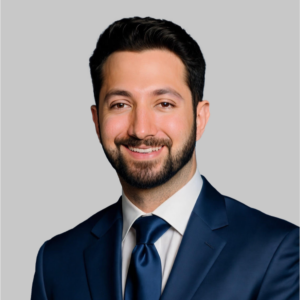
Our Physicians






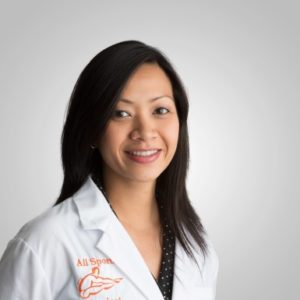
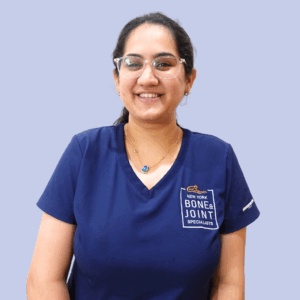
Our Physical Therapists



About New York Bone & Joint Specialists
New York Bone & Joint Specialists was founded by Dr. Leon Popovitz with two convictions that have shaped every decision the practice has made since.
The first: that the people of New York City deserve prompt, easy access to genuinely high-quality orthopedic care instead of weeks waiting for an appointment, a rotating cast of residents, and a system that routes every patient toward the most convenient procedure.
The second: that the best orthopedic care, whether delivered by an orthopedic surgeon, a sports medicine physician, or a non-operative orthopedic doctor, starts with preserving what you have. Surgery, when it’s the right answer, is performed at the highest level of subspecialty precision. But surgery is the answer we arrive at after every appropriate non-surgical option has been genuinely and expertly tried.
90% of New York Bone & Joint patients are treated successfully without surgical intervention. That number isn’t a marketing claim: it’s a reflection of how the practice was built and who it hired.
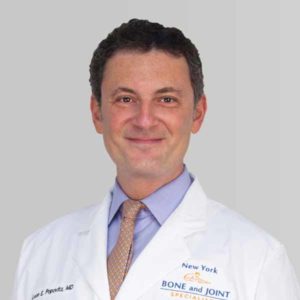
Dr. Popovitz is a board-certified orthopedic surgeon with fellowship training in sports medicine from NYU Langone Medical Center, more than 20 years of clinical experience, and a subspecialty focus on shoulder and knee surgery and sports medicine. He founded New York Bone & Joint because he saw clearly what was happening to orthopedic care in New York: medicine becoming increasingly hospital-focused and institution-driven, private practices providing limited access or subpar care, and the reality of patients being rushed into procedures before conservative options had been genuinely exhausted. He built New York Bone & Joint as the answer to that pattern. He is a Fellow of the American Academy of Orthopaedic Surgeons. He has served as team physician for the US Open Tennis Championships. He has been recognized by New York Magazine as a Best Doctor, by the New York Times as a Super Doctor, and by the International Association of Orthopedic Surgeons as both a Leading Physician of the World and Top Orthopedic Surgeon in New York.
He did not build New York Bone & Joint as a vehicle for surgical volume. He built it as a vehicle for the kind of orthopedic care he believed his patients deserved: honest, preservation-first, subspecialty-depth care that addresses the actual source of the problem rather than the most convenient treatment. When a procedure is recommended at New York Bone & Joint, it’s for one of two reasons: either all appropriate conservative treatment has genuinely been exhausted, or because (as is the case with ACL tears, Bankart lesions, and other structural injuries) surgical repair or reconstruction is itself the conservative route, the one that preserves the patient’s own tissue and protects the joint for the long term. The team he has assembled around him reflects that conviction.
The Private Practice Advantage: What It Means for You
Most orthopedic care in New York City is delivered by large hospital systems. There are genuine advantages to those systems, such as research programs, tertiary care capabilities, and specialized imaging. But there are also structural disadvantages that private practice eliminates, and those disadvantages fall directly on the patient.
| What changes in private practice | Hospital system experience | New York Bone & Joint experience |
| Who evaluates you | A rotating pool of residents, fellows, and attendings. You may not see the same physician twice. | The physician who evaluates you is the physician who treats you. One physician, one relationship, start to finish. |
| Appointment availability | Weeks to months for a new patient appointment with a specialist. Urgent referrals routed through emergency departments. No same-day access to a subspecialist without an ER visit. | Non-operative sports medicine physicians available same day or next day. Surgical consultations and subspecialist appointments within the week. New York Bone & Joint operates Manhattan’s first dedicated orthopedic urgent walk-in center at 1198 Third Avenue. No appointment needed, staffed by our physicians. |
| Communication between specialists | Your spine surgeon does not know your pain management physician. Your physical therapist has not read your operative report. | Orthopedic surgeons, sports medicine physicians, pain management specialists, physiatrist, and physical therapists work in the same practice and communicate directly about your care. |
| Surgical vs. non-surgical pathway | Patients referred to a surgeon get a surgical evaluation. The incentive structure, the referral pattern, and the institutional culture all favor the procedure, whether or not conservative options have been fully explored. | The non-surgical pathway is staffed by full-time specialists who are not surgeons. When a procedure is recommended, it’s because conservative options were genuinely exhausted or because surgery is itself the preservation choice. Repairing a torn ACL or a Bankart lesion is not aggressive management: it’s the intervention that saves the patient’s own tissue from the progressive damage that non-operative management produces. The default is never the procedure. The default is the right answer. |
| The physician’s relationship with the practice | Employed by a hospital system. The hospital’s financial priorities are not always aligned with the patient’s clinical priorities. | The physician is the practice. Dr. Popovitz’s name, and his colleagues’, are on the door. The clinical decisions made here are their decisions, their reputation, and their responsibility. |
“I built New York Bone & Joint because I wanted New Yorkers to have easy access to high quality orthopedic care. Suffering from an injury is stress enough. People don’t need the added stress of trying to find an orthopedic doctor that they can trust, that they can see right away, that accepts their insurance, or being rushed into a procedure. I saw how medicine was changing in New York. Everything was consolidating into hospitals. It doesn’t matter which one. Once you’re in one system, it feels the same as any other. It feels cold, difficult to communicate, and difficult to see someone right away. I also see patients getting rushed into procedures or getting subpar care. It doesn’t have to be that way. That’s why at New York Bone & Joint, I made sure New Yorkers can get prompt and easy access to expert orthopedic care. All the while the focus must be preservation first. We have to preserve your tissue and your anatomy so that you can have your joints for a long lifetime to come.
— Leon Popovitz, MD, Founder
Specialties: What We Treat
New York Bone & Joint Specialists provides comprehensive orthopedic and musculoskeletal care across the full spectrum of conditions affecting the bones, joints, muscles, tendons, ligaments, and nerves. Every specialty is represented by physicians with dedicated subspecialty training, not generalists covering multiple areas.
Orthopedic Surgery
NYBJ’s surgical team performs arthroscopic and open orthopedic surgery across the knee, shoulder, hip, and foot & ankle. Surgical procedures are performed at Lenox Hill Hospital. Every surgical patient at NYBJ is evaluated by the surgeon who will operate on them.
- Knee: ACL reconstruction, meniscus surgery (repair and reconstruction), knee arthroscopy, cartilage restoration, patella stabilization.
- Shoulder: Rotator cuff repair and reconstruction, SLAP repair, Bankart repair and shoulder stabilization, shoulder arthroscopy, biceps tenodesis.
- Hip: Hip arthroscopy, FAI correction (cam and pincer osteoplasty), hip labral repair and reconstruction, total hip replacement.
- Foot & Ankle: Bunion surgery, ankle arthroscopy, Brostrom procedure, Achilles tendon repair, ORIF fracture surgery.
Sports Medicine: Non-Operative
New York Bone & Joint’s non-operative sports medicine team provides the first and most important line of musculoskeletal care: accurate diagnosis, evidence-based conservative treatment, and clear guidance on when escalation is appropriate. Our sports medicine physicians hold fellowship training in sports medicine and provide diagnostic workup, injection therapy, and management of the full range of soft tissue injuries, overuse conditions, and musculoskeletal complaints. While some are surgeons, they are also all specialists who exhaust every non-surgical option first.
Interventional Pain Management
New York Bone & Joint’s interventional pain management service provides precision diagnosis and treatment of chronic spinal and musculoskeletal pain through targeted, minimally invasive procedures: epidural steroid injections, medial branch blocks, radiofrequency ablation, sacroiliac joint injections, selective nerve root blocks, trigger point injections, and peripheral nerve stimulation (PNS). Our pain management physicians hold dual board certification in their subspecialties and fellowship training from top academic programs.
Physical & Rehabilitative Medicine (PMR)
New York Bone & Joint’s PMR service is led by Dr. Michael Mizhiritsky, co-founder of the practice and a specialist in electrodiagnostic medicine. Dr. Mizhiritsky performs EMG (electromyography) and nerve conduction studies (the definitive tests for diagnosing nerve damage, radiculopathy, neuropathy, and nerve entrapment syndromes) with results communicated directly to the treating physician. PMR services also include non-surgical evaluation of musculoskeletal and neuromuscular conditions and coordination of complex rehabilitation programs. PMR bridges the gap between sports medicine evaluation and the full diagnostic workup that complex cases require.
In-House Physical Therapy
Physical therapy at New York Bone & Joint is performed in the same center as the physicians. That’s not a coincidence, it’s a design decision. When your surgeon and your physical therapist work in the same building and communicate directly, your post-operative protocol is calibrated to what was done in the operating room, not built from a generic template. For non-operative patients, physical therapy is coordinated with the treating physician from the first session.
Injections: Cortisone, Gel, and Regenerative
New York Bone & Joint provides a complete range of in-office joint and soft tissue injections: cortisone injections for targeted anti-inflammatory relief, hyaluronic acid (gel) injections for knee osteoarthritis and patellofemoral syndrome, and PRP (platelet-rich plasma) for regenerative applications. All injections are performed with ultrasound guidance where accuracy demands it.
Our Surgical Team
New York Bone & Joint’s orthopedic surgical team is built around subspecialty depth rather than general coverage. Every surgeon brings fellowship training in their specific area. Every patient sees the surgeon who will operate on them. The team is growing: New York Bone & Joint is actively recruiting additional fellowship-trained surgeons across subspecialties.
Our Non-Surgical Specialists
The non-surgical side of New York Bone & Joint isn’t an afterthought to the surgical program it’s the primary pathway for the 90% of patients who resolve their conditions without surgery. Every non-surgical specialist at New York Bone & Joint holds subspecialty board certification and provides a level of non-operative care that matches the surgical team’s depth.
Sports Medicine Physicians
New York Bone & Joint’s sports medicine physicians are the first point of contact for most musculoskeletal injuries and complaints. They provide diagnostic evaluation, imaging coordination, injection therapy, and management of the full range of sports and overuse injuries. When surgical evaluation is warranted, they refer directly within the practice: to the surgeon who specializes in the relevant anatomy.
Interventional Pain Management Specialists
Efime Popovitz, MD: Dual board-certified in Anesthesiology and Pain Medicine (American Board of Anesthesiology). Fellowship-trained in Pain Medicine at Yale School of Medicine. Full-spectrum interventional pain procedures including epidural steroid injections, medial branch blocks, radiofrequency ablation, sacroiliac joint injections, and peripheral nerve stimulation (PNS).
Nickhil Gupta, DO: Interventional spine specialist.
Physical & Rehabilitative Medicine
Michael Mizhiritsky, MD: Co-Founder & Physiatrist (Physical & Rehabilitative Medicine). Dr. Mizhiritsky co-founded New York Bone & Joint alongside Dr. Popovitz and has been a core part of the practice from its founding. His clinical focus is electrodiagnostic medicine (EMG and nerve conduction studies), which allows New York Bone & Joint to diagnose nerve and muscle pathology in-house with results communicated directly to the treating physician. He also provides non-surgical evaluation of musculoskeletal and neuromuscular conditions and coordinates complex rehabilitation programs.
Why Patients Choose New York Bone & Joint Specialists
| What patients tell us they chose New York Bone & Joint for | What that means in practice |
| “I wanted a surgeon who would tell me if I didn’t need surgery” | 90% of New York Bone & Joint patients are treated without surgery. The non-surgical team is not a waiting room for the surgical team. It’s a fully staffed, subspecialty-depth service in its own right. |
| “I didn’t want to be seen by a resident” | Every patient at New York Bone & Joint is evaluated by the attending physician. No residents. No handoffs to mid-level providers for the clinical decision. |
| “I needed an appointment this week, not in two months” | Non-operative physicians are available same- or next day. Surgical and subspecialist consultations same week. Manhattan’s first orthopedic urgent walk-in at 1198 Third Avenue, staffed by our physicians. No appointment, no ER. |
| “I wanted one practice that could handle everything” | Surgery, sports medicine, pain management, PMR, and physical therapy all in the same practice, with direct physician-to-physician communication. |
| “I wanted a second opinion I could trust” | New York Bone & Joint provides surgical second opinions. If you were recommended for surgery elsewhere, we’ll review your imaging and give you an honest assessment of whether surgery is the right answer, and if so, which procedure and why. |
| “I wanted the surgeon, not the system” | Dr. Popovitz’s name is on the practice. His conviction about how orthopedic care should be practiced is the reason every decision at New York Bone & Joint is made the way it is. |
Conditions We Treat
The following is a representative overview of the conditions treated at New York Bone & Joint. Each specialty page provides clinical depth for specific conditions and procedures. Use the links to navigate to the relevant page for your condition.
| Body Region | Common Conditions | Surgical Options | Non-Surgical Options |
| Knee | ACL tear, meniscus tear, cartilage injury, knee arthritis, patellofemoral syndrome, ligament injuries | ACL reconstruction, meniscus repair/reconstruction, knee arthroscopy, partial/total knee replacement | Physical therapy, bracing, cortisone/gel injections, PRP, sports medicine management |
| Shoulder | Rotator cuff tear, SLAP tear, Bankart lesion/shoulder instability, shoulder impingement, biceps tendon pathology, shoulder arthritis | Rotator cuff repair, SLAP repair, Bankart repair, shoulder arthroscopy, biceps tenodesis, shoulder replacement | Physical therapy, cortisone injections, PRP, sports medicine management |
| Hip | FAI, hip labral tear, hip arthritis, snapping hip, gluteus medius tear | Hip arthroscopy, FAI correction, labral repair/reconstruction, total hip replacement | Physical therapy, cortisone/gel injections, pain management |
| Foot & Ankle | Bunions, ankle instability, Achilles tendon tear, ankle arthritis, ankle sprains, fractures | Bunionectomy, Brostrom procedure, Achilles repair, ankle arthroscopy, ORIF | Physical therapy, bracing, injections, orthotics |
| Spine & Back | Herniated disc, spinal stenosis, sciatica, facet arthritis, SI joint dysfunction, degenerative disc disease | Surgical referral when indicated | Epidural steroid injections, medial branch blocks, RFA, Physical therapy, pain management |
| General Sports Injuries | Muscle strains, tendinitis, stress fractures, overuse injuries, sprains | Surgical repair when indicated | Sports medicine evaluation, Physical therapy, injections, PRP, activity modification |
Awards, Affiliations and Hospital Partnerships
New York Bone & Joint Specialists is affiliated with Lenox Hill Hospital, where our surgical team performs all operative procedures. Lenox Hill is one of New York City’s leading academic medical centers for orthopedic surgery, providing New York Bone & Joint patients with access to state-of-the-art surgical facilities and the full resources of the Northwell Health system.
New York Bone & Joint physicians hold affiliations and credentials including:
- American Board of Orthopaedic Surgery (ABOS) — board certification
- Fellow, American Academy of Orthopaedic Surgeons (FAAOS)
- American Board of Anesthesiology — Pain Medicine certification
- American Society of Anesthesiologists (ASA)
- American Society of Regional Anesthesia and Pain Medicine (ASRA)
- American Academy of Orthopaedic Surgery International Resident (Dr. Tarwala)
- AOTrauma Member — North America (Dr. Tarwala)
Dr. Popovitz has been recognized by New York Magazine as a Best Doctor, by the New York Times as a Super Doctor, by Castle Connolly as a Top Doctor, and by the International Association of Orthopedic Surgeons as both a Leading Physician of the World and Top Orthopedic Surgeon in New York.
FAQs
New York Bone & Joint Specialists is a physician-founded private practice where every patient is evaluated by an attending physician, same-day and next-day appointments are available, and the surgical and non-surgical teams communicate directly without the handoffs, wait times, and institutional friction of a large hospital system. New York Bone & Joint was founded by Dr. Leon Popovitz with a preservation-first philosophy: 90% of patients are treated successfully without surgery. When surgery is the right answer, it is performed by fellowship-trained surgeons at Lenox Hill Hospital.
Yes, 90% of New York Bone & Joint patients are treated successfully without surgical intervention. New York Bone & Joint has a fully staffed non-surgical team (from sports medicine physicians and an interventional pain management specialist to a physiatrist) providing the same level of subspecialty depth on the non-operative side as the surgical team provides on the operative side. Patients are not routed to surgery unless it is genuinely the right answer.
New York Bone & Joint treats the full range of orthopedic and musculoskeletal conditions affecting the knee, shoulder, hip, foot and ankle, spine, and general sports injuries. This includes ACL tears, meniscus tears, rotator cuff injuries, SLAP tears, shoulder instability, FAI and hip labral tears, bunions, ankle instability, Achilles tendon injuries, herniated discs, sciatica, spinal stenosis, and all categories of sports-related injuries. Surgical and non-surgical treatment pathways are both available within the same practice.
Non-operative sports medicine physicians at New York Bone & Joint are available same day or next day, surgical consultants and subspecialists within the same week, and walk-in orthopedic urgent care at 1198 Third Avenue without any appointment at all. New York Bone & Joint was built around the conviction that access to high-quality orthopedic care in New York City should be prompt, not measured in weeks on a waitlist. For acute injuries and urgent orthopedic issues, patients can be seen the same day at the walk-in center. For scheduled consultations with specific surgeons, same-week availability is the standard, not the exception.
Most major insurance plans are accepted at New York Bone & Joint. Coverage for specific procedures and consultations varies by plan. New York Bone & Joint will verify your insurance coverage before your appointment and provide a clear picture of your out-of-pocket responsibility in advance. Call 212-759-4553 to verify your specific coverage or ask during scheduling.
Yes, New York Bone & Joint provides second opinions for patients who have received a surgical recommendation elsewhere and want an independent assessment. Dr. Popovitz and the New York Bone & Joint surgical team will review your imaging and clinical history and give you an honest evaluation of whether surgery is the right answer, whether a different procedure is more appropriate, and what the non-surgical alternatives are. Second opinion consultations are available on the same timeline as new patient appointments.
All surgical procedures at New York Bone & Joint are performed at Lenox Hill Hospital, part of the Northwell Health system, located in Manhattan. Consultations, imaging coordination, injections, and physical therapy are provided at New York Bone & Joint’s two Manhattan offices: Upper East Side (1198 Third Avenue) and Midtown (425 Madison Avenue). No procedures require a separate hospital admission unless the clinical situation requires it.
New York Bone & Joint Specialists was co-founded by Leon Popovitz, MD, a board-certified orthopedic surgeon fellowship-trained in sports medicine at NYU Langone Medical Center, and Michael Mizhiritsky, MD, physiatrist and specialist in electrodiagnostic medicine. Dr. Popovitz founded New York Bone & Joint around the conviction that preserving your body’s own tissue and exhausting every appropriate non-surgical option before recommending surgery is the foundation of long-term orthopedic health. He co-founded New York Bone & Joint with Dr. Michael Mizhiritsky, physiatrist and specialist in electrodiagnostic medicine. Dr. Popovitz remains the practice’s lead surgeon and clinical director.
Yes, New York Bone & Joint operates Manhattan’s first dedicated orthopedic urgent walk-in center at 1198 Third Avenue (Upper East Side), open during regular office hours without an appointment for acute injuries and urgent musculoskeletal complaints. It is the only urgent care center in Manhattan staffed exclusively by orthopedic physicians, not a general urgent care provider. Patients seen at walk-in can be scheduled with the appropriate specialist for follow-up within the same practice, the same day when needed.
Our Locations
-

Upper East Side: Full Service Orthopedic Center & Walk-In
1198 3rd Avenue, Between 69th and 70th Street New York, NY 10021Physicians: Monday–Friday 8:00am–6:00pm, Saturday 8:00am–5:00pm
Physical Therapy: Monday–Friday 7:00am–7:30pm, Saturday 8:00am–3:00pm
Sunday: ClosedPhone: (212) 759-4553 -

Orthopedic Doctor Midtown Manhattan NYC — New York Bone & Joint Specialists
425 Madison Ave, Suite 200 (second floor) New York, NY 10017 (corner of East 49th Street)Physician appointments: Mon–Fri 8:00 am–6:00 pm
Physical therapy: Mon–Fri 7 am–7:30 pm, Sat 8 am–3 pmPhone: (212) 759-4553 -

Orthopedic Doctor Upper East Side NYC — New York Bone & Joint Specialists
130 E 67th St New York, NY 10065Tuesday & Thursday: 8:00am–6:00pm
All other days: ClosedPhone: (212) 759-4553