Femoracetabular Impingement
Written by: Dr. Popovitz.
Board-Certified Orthopedic Surgeon | Fellowship-Trained Sports Medicine, NYU Langone Medical Center | FAAOS
Co-Founder, NY Bone & Joint Specialists | Lenox Hill Hospital - Northwell Health
Recognized: New York Magazine Best Doctor | New York Times Super Doctor | IAOS Leading Physician of the World | IAOS Top Orthopedic Surgeon in New York
Date Published: October 1, 2018
Last Updated: November 28, 2018
Last Medically Reviewed: November 28, 2018
This page has been written and reviewed by a fellowship-trained, board-certified orthopedic surgeon with over 20 years of clinical experience. All clinical claims are supported by peer-reviewed literature and current AAOS and AOSSM guidelines. See References section below.
Book a consultation
Prompt Appointments Available
Upper East Side: 1198 Third Ave | Midtown: 425 Madison Ave
Surgery performed at Lenox Hill Hospital - Northwell Health
WHAT IS HIP IMPINGEMENT?
Hip impingement, sometimes called femoracetabular impingement or FAI, refers to abnormal contact and friction between the bones in the hip joint, usually caused by an imperfect fit between the head of the femur (the ball) and acetabulum (the socket). As a result, the labrum that surrounds and stabilizes the joint is pinched as the bones rub together, causing significant pain. The nature and extent of the impingement can vary depending on what part of the joint is out of place and which surrounding tissues are affected.
HIP IMPINGEMENT SYMPTOMS:
What does hip impingement feel like?
The primary symptom of hip impingement is a deep pain in the groin that can extend into the lower back or outer hip. Some patients describe the pain as being concentrated in a “C” shape around the hip. The pain often presents as a dull ache, but can turn into a sharp, stabbing pain during physical activity and as the condition worsens.
If left untreated, the labrum will gradually tear and increase contact between the bones, resulting in stiffness, weakness, and inflammation in surrounding tissues. In some cases, the dislocated joint will place pressure on surrounding ligaments and tissues, which will, in turn, create friction with the bursa sac on the outside of your hip. The irritated bursa sac can then become inflamed or torn, resulting in intense pain.
HIP IMPINGEMENT TESTS
An orthopedic specialist can diagnose hip femoroacetabular impingement with a physical exam, during which the specialist will recreate the symptoms of the condition by bending the knee to the chest and rotating the thigh inward. The test should result in a pinching of the labrum, providing your specialist with a better understanding of the extent of the damage. Your specialist will then take an X-ray to determine the extent to which the shape of the bone is causing the impingement, as well as an MRI to identify damage to the labrum. Should arthroscopic surgery be necessary, your specialist might also order a CT scan to better map the shape of the bones before operating.
TYPES OF HIP IMPINGEMENT
Cam Hip Impingement
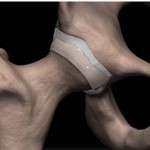 A cam hip impingement arises when the head of the femur isn’t sufficiently rounded to fit within the acetabulum and labrum seal, creating friction at the end of the socket whenever the thigh or hip joint move. Because of the malformation, bone spurs will grow on the unrounded end of the femur, striking the labrum and grinding the articular cartilage inside the joint whenever the thigh is rotated.
Pincer Hip Impingement
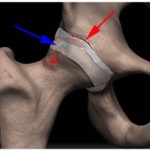 A pincer hip impingement occurs when the rim of the acetabulum hangs over the head of the femur, crushing the labrum in the process. Instead of sealing the ball into the socket, the labrum is pinched down towards the neck of the femur.
Mixed Hip Impingement
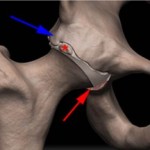 This type of hip femoroacetabular impingement is a combination of both Cam-type and Pincer-type hip femoroacetabular impingement.
FAI develops early and may go unnoticed throughout your life. It usually affects both hip joints and may happen in combination.
HOW TO TREAT HIP IMPINGEMENT?
While hip impingement can be debilitating, it isn’t untreatable. With some combination of physical therapy, anti-inflammatory injections, and, if necessary, reconstructive surgery, you can expect a full recovery.
If you are in pain from hip impingement there are many treatment options available that can get you back on track in no time.
_________________________________
EXPERIENCING PAIN? DO YOU HAVE AN INJURY?
Our Specialists are here to help.
Book an appointment with NYC’s best orthopedic specialists to discuss your condition. Fill out the form below and you will receive a call from our office within 5-10 minutes. We’ll book an appointment at a time and location that work for you, and send you a reminder by email.
Doctors Seeing Patients for Hip Conditions:






Medically Reviewed by Dr. Popovitz.
You can book your appointment with New York Bone & Joint online by submitting the appointment request form here:
Book an appointmentOur Locations
-

Upper East Side: Full Service Orthopedic Center & Walk-In
1198 3rd Avenue, Between 69th and 70th Street New York, NY 10021Physicians: Monday–Friday 8:00am–6:00pm, Saturday 8:00am–5:00pm
Physical Therapy: Monday–Friday 7:00am–7:30pm, Saturday 8:00am–3:00pm
Sunday: ClosedPhone: (212) 759-4553 -

Orthopedic Doctor Midtown Manhattan NYC — New York Bone & Joint Specialists
425 Madison Ave, Suite 200 (second floor) New York, NY 10017 (corner of East 49th Street)Physician appointments: Mon–Fri 8:00 am–6:00 pm
Physical therapy: Mon–Fri 7 am–7:30 pm, Sat 8 am–3 pmPhone: (212) 759-4553 -

Orthopedic Doctor Upper East Side NYC — New York Bone & Joint Specialists
130 E 67th St New York, NY 10065Tuesday & Thursday: 8:00am–6:00pm
All other days: ClosedPhone: (212) 759-4553