Do Knee Braces Actually Work? An Orthopedic Surgeon’s Take
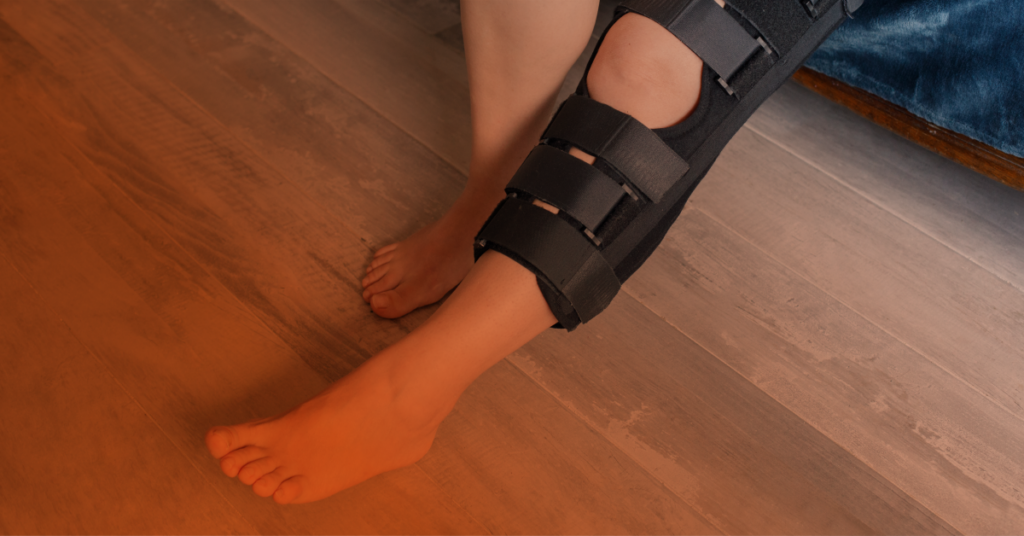
The short answer: Knee braces can help, but only when the brace matches the problem. Different braces are designed to provide compression, limit certain movements, support an injured ligament, stabilize the kneecap, or shift load away from an arthritic part of the knee. [1][2]
Where the evidence is strongest: Bracing can improve pain and function in some people with knee osteoarthritis. Hinged braces are also commonly used during selected ligament-injury rehabilitation programs. [1][3]
Where a brace may not help: A sleeve or brace cannot repair a torn meniscus, rebuild cartilage, or substitute for strength and rehabilitation. Routine functional bracing after an uncomplicated ACL reconstruction has not been shown to improve clinical outcomes. [2]
What matters most: The diagnosis. A brace that makes sense for an MCL injury is different from an offloader brace for osteoarthritis or a brace intended to control patellar movement.
When to see a specialist: Recurring swelling, instability, locking, an inability to bear weight, or pain that continues despite activity modification and bracing are reasons to have the knee evaluated.
Walk into almost any pharmacy or sporting goods store and you can find an entire wall of knee braces. There are thin compression sleeves, straps that sit below the kneecap, braces with metal hinges, bulky offloader braces, and products promising “maximum support” without saying what they are actually supporting.
That makes it easy to assume that more support must be better. It is not quite that simple. A knee brace can be useful when it has a specific job to do, but wearing one without knowing what is causing your knee pain may offer little more than temporary comfort. In some situations, the brace is an important part of treatment. In others, it adds bulk without changing the underlying problem.
The question is not simply whether knee braces work. It is whether the right brace works for the right knee problem.
What Does a Knee Brace Actually Do?
“Knee brace” is a broad category rather than one treatment. Different designs change what the brace can realistically accomplish.
A simple elastic sleeve may provide compression and a feeling of support but does not mechanically stabilize a major ligament in the way a hinged brace can. An offloader brace used for certain forms of knee osteoarthritis is designed to change how load passes through the joint. A brace used after a patellar dislocation may help control the movement of the kneecap during early rehabilitation.
None of these braces repairs damaged tissue. Their purpose is generally to modify forces, restrict selected movement, provide support, or make an activity more tolerable while the underlying condition is treated.
| Type of Knee Brace | What It Is Designed to Do | When It May Be Used | Important Limitation |
| Compression sleeve | Provides compression and a subjective feeling of support | Mild symptoms or swelling in selected patients | Does not mechanically stabilize a torn ligament |
| Hinged brace | Limits side-to-side stress while allowing controlled bending and straightening | Selected ligament injuries such as MCL tears [3] | Does not make every ligament injury safe to play through |
| Unloader/offloader brace | Shifts load away from one affected compartment of the knee | Selected patients with unicompartmental knee osteoarthritis [1] | Does not reverse cartilage loss or cure arthritis |
| Patellar-stabilizing brace | Helps control kneecap movement | Selected cases of patellar instability or rehabilitation after dislocation [4] | Not every case of pain around the kneecap benefits from bracing |
| Postoperative/functional brace | Protects or limits movement during selected phases of recovery | Depends on the operation and associated injuries | Routine functional bracing after isolated ACL reconstruction has not shown clinical benefit [2] |
The important point is that these braces are not interchangeable. Buying the strongest-looking brace on the shelf does not necessarily give the knee what it needs.
Knee Braces Can Help With Osteoarthritis
Knee osteoarthritis is one area where bracing has meaningful clinical evidence behind it.
The American Academy of Orthopaedic Surgeons states that brace treatment may be used to improve pain, function, and quality of life in patients with knee osteoarthritis. [1] Certain patients with arthritis concentrated primarily on one side of the joint may benefit from an unloader or offloader brace.
These braces are designed to shift some of the force away from the more affected compartment of the knee. That can make walking and other weight-bearing activities more comfortable for some patients, but the response varies. The AAOS guideline notes that brace studies have produced heterogeneous results, which is one reason bracing should be considered an option rather than a universal solution. [1]
An arthritis brace also does not rebuild worn cartilage. It may help manage symptoms and improve function while being used as part of a broader treatment plan that can include exercise, physical therapy, activity modification, medication, injections, weight management when relevant, and other treatments based on the severity of the arthritis.
NYBJ offers both non-surgical and surgical treatment for arthritis and osteoarthritis, with the treatment plan determined by the condition of the joint and the patient’s symptoms and goals.
Hinged Braces Have a Different Job
Ligament injuries are another common reason a physician may recommend a knee brace.
The medial collateral ligament, or MCL, runs along the inside of the knee and helps resist forces that push the knee inward. Many isolated MCL injuries can be managed without surgery, although treatment depends on the severity and whether other structures were injured at the same time. [3]
A hinged knee brace can be useful in selected MCL injuries because it limits unwanted side-to-side stress while still allowing controlled flexion and extension. This is very different from pulling on a neoprene sleeve and expecting it to stabilize an injured ligament.
Even with an appropriate hinged brace, rehabilitation still matters. The goal is not to immobilize the knee indefinitely. It is to protect healing tissue while gradually restoring range of motion, strength, control, and the ability to tolerate normal activity.
What About ACL Braces?
This is where the idea that a brace always adds useful protection begins to break down.
After ACL reconstruction, some athletes feel safer returning to activity with a functional knee brace. That sense of confidence can be meaningful to the patient, but feeling more protected and demonstrating better clinical outcomes are not the same thing.
Current AAOS guidance does not recommend routine functional knee bracing for patients returning to activity after an isolated primary ACL reconstruction because available evidence has not shown a clinical benefit. [2]
That does not mean a surgeon will never use a brace after ACL surgery. Individual procedures, additional ligament injuries, meniscus repairs, or other clinical factors can change the postoperative plan. It does mean that a brace should not be treated as automatic protection against reinjury or as a substitute for rehabilitation and return-to-sport testing.
The AAOS guideline also does not consider prophylactic knee bracing a preferred strategy for preventing ACL injuries in athletes who have never injured the ligament. [2] Neuromuscular training and appropriate conditioning remain much more important components of an injury-prevention program.
A Brace Cannot Make an Unstable Knee Safe
One of the biggest mistakes people make is using a brace to continue an activity that the knee cannot safely tolerate.
If your knee repeatedly gives way, a brace may make it feel more secure. The reason it is giving way still needs to be identified. Instability can occur with ACL, MCL, PCL, or other knee ligament injuries as well as patellar instability and other conditions.
A brace can change movement or provide external support. It cannot turn a severely injured ligament into an intact one.
That distinction is particularly important for athletes. Continuing to cut, pivot, or compete because a brace makes the knee feel safer can expose a damaged knee to forces it is not prepared to handle. Return to sports should be based on recovery of function and the specific injury, not simply whether you can put on a brace and get through practice.
What About Knee Braces for Meniscus Tears?
A meniscus tear is another situation where patients frequently reach for a knee brace.
The meniscus is cartilage inside the joint that helps distribute load and contributes to knee function. A brace may make some patients feel more comfortable, particularly if swelling or activity is aggravating the knee, but it does not repair torn meniscal tissue.
The treatment for a meniscus tear depends on the type and location of the tear, the patient’s age and activity level, whether the tear resulted from an injury or degenerative changes, and symptoms such as locking or mechanical catching. Some tears can be managed non-surgically. Others require surgical evaluation.
If your knee locks, repeatedly catches, remains swollen, or feels unstable, buying a brace should not replace finding out what is happening inside the joint.
Patellar Braces Are Not for Every Kind of Front-of-Knee Pain
Braces and straps marketed for “runner’s knee” are particularly common. The problem is that pain around the kneecap can come from several different conditions.
A stabilizing brace can be useful during selected cases of patellar instability or dislocation, particularly as part of a broader non-surgical rehabilitation program. [4] But evidence does not support treating every case of patellofemoral pain with a knee brace.
The 2019 physical therapy clinical practice guideline for patellofemoral pain recommends against routinely prescribing knee orthoses such as sleeves, braces, or straps for patellofemoral pain. [5] Exercise therapy addressing the hip and knee is a more important component of treatment for many patients with this condition.
This is another example of why the diagnosis comes first. “Pain around my kneecap” is a symptom. It does not automatically tell you whether a brace is appropriate.
Why a Knee Sleeve Can Still Feel Better
If a simple sleeve does not repair tissue, why do so many people say their knee feels better when they wear one?
Comfort still counts.
Compression, warmth, and the sensation of having something around the knee may make movement feel more comfortable or secure for some people. That does not mean the sleeve is rebuilding cartilage or providing the same mechanical support as a hinged brace.
There is nothing inherently wrong with using a sleeve that makes an activity more comfortable, assuming it fits properly and your physician has not given you a reason to avoid it. The problem arises when temporary symptom relief convinces you that the underlying condition no longer needs treatment.
Pain relief can help you move. It should not be mistaken for proof that an injury has healed.
Can Wearing a Knee Brace Make Your Knee Weaker?
A brace does not automatically weaken the muscles around your knee, but relying on support while neglecting rehabilitation is not a good long-term strategy.
Strength, balance, mobility, and neuromuscular control all contribute to knee function. A brace can sometimes make those exercises more comfortable or protect healing tissue while you perform them, but it cannot produce the adaptations that come from actually training the muscles.
There are also important differences between controlled bracing and immobilization. A brace prescribed to permit safe movement during recovery is not the same as keeping a leg completely immobilized.
For most orthopedic problems, the better question is not, “How quickly can I stop wearing this?” or “Can I wear it forever?” It is, “What role is this brace playing in my treatment, and what needs to improve before I no longer need that role?”
Our corresponding All Sports Physical Therapy article, When Knee Bracing Helps Rehab (and When It Creates a Crutch), looks more closely at how therapists use bracing without allowing it to replace strength, mobility, balance, and movement retraining.
Does an Expensive Knee Brace Work Better?
Not necessarily.
A $20 compression sleeve and a custom offloader brace are designed for completely different purposes. Price tells you very little unless you know what the brace is supposed to accomplish.
Fit does matter. A brace that constantly slides down the leg, pinches the skin, restricts circulation, or does not place its hinges or support structures where intended is unlikely to function properly. AAOS also notes that discomfort and skin irritation can occur with arthritis braces. [1]
For a brace being used to manage a diagnosed ligament injury, osteoarthritis, postoperative restriction, or patellar instability, professional fitting and instructions can be more important than simply selecting the product with the highest support rating online.
When You Should Stop Self-Treating With a Brace
Trying a simple sleeve for mild soreness is different from using a brace to manage a knee that is swollen, unstable, or mechanically locking.
Consider seeing an orthopedic knee specialist in NYC if:
- Your knee repeatedly gives way or feels unstable
- Swelling keeps returning
- The knee catches or locks
- You cannot fully bend or straighten the knee
- Pain prevents you from bearing weight normally
- Symptoms began after a twisting injury, fall, collision, or other trauma
- You heard or felt a pop during an injury
- Pain continues despite reasonable activity modification
- You feel dependent on a brace to get through normal daily activity
These symptoms can occur with ligament injuries, meniscus tears, cartilage damage, arthritis, and other knee conditions. The brace you choose depends on which of those problems is actually present.
What an Orthopedic Evaluation Can Tell You
An orthopedic evaluation starts by identifying why the knee hurts or feels unstable. Your doctor will ask how the symptoms began, where the pain occurs, whether the knee swells, whether it gives way or locks, and which activities reproduce the problem.
The physical examination may evaluate range of motion, swelling, tenderness, ligament stability, kneecap movement, strength, gait, and movements that reproduce your symptoms. X-rays can help assess arthritis, fractures, alignment, and other bony changes, while MRI may be appropriate when a ligament, meniscus, cartilage injury, or another soft-tissue problem is suspected.
Only after the diagnosis becomes clearer does the question of bracing become useful.
At New York Bone & Joint Specialists, the knee specialists treat ACL and other ligament injuries, meniscus tears, cartilage injuries, patellofemoral conditions, osteoarthritis, and other causes of knee pain. Non-surgical treatment can include physical therapy, activity modification, injections, and bracing when appropriate, with surgical treatment reserved for conditions that require it.
The Best Knee Brace Is the One With a Specific Job
So, do knee braces actually work?
Sometimes very well. But a knee brace should have a reason for being there.
An offloader brace may reduce symptoms from knee osteoarthritis. A hinged brace may protect an injured MCL while it heals. A stabilizing brace can have a role in selected cases of patellar instability. Meanwhile, a generic brace may add little to the treatment of another knee condition, and routine functional bracing after an isolated ACL reconstruction has not been shown to improve clinical outcomes. [1][2][3][4]
The mistake is treating “knee pain” as though it were one condition with one brace.
If you find yourself shopping for progressively stronger knee supports because the pain, swelling, or instability keeps returning, it may be time to stop treating the symptom and find out what is causing it. Schedule an evaluation with New York Bone & Joint Specialists to determine whether a brace belongs in your treatment plan and, if so, what type actually makes sense.
Frequently Asked Questions
Do knee braces actually help knee pain?
They can, depending on what is causing the pain and what type of brace is used. Bracing has evidence for improving pain and function in some people with knee osteoarthritis, while braces can also be used to protect selected ligament injuries or stabilize the patella. A generic knee brace is not equally effective for every cause of knee pain. [1][3][4]
What type of knee brace is best for joint pain?
There is no single best knee brace for all joint pain. An offloader brace may be appropriate for selected cases of unicompartmental knee osteoarthritis, while a compression sleeve provides a very different level and type of support. The diagnosis should determine the brace rather than the pain level alone. [1]
Should I wear a knee brace for arthritis?
Some people with knee osteoarthritis may benefit from bracing. AAOS guidelines state that brace treatment may improve pain, function, and quality of life in patients with knee osteoarthritis, although results vary and bracing is generally one part of a larger treatment plan. [1]
Should athletes wear a brace after ACL reconstruction?
Routine functional knee bracing is not recommended after an isolated primary ACL reconstruction because current evidence has not demonstrated a clinical benefit. Individual cases can differ, particularly when other injuries or procedures are involved, so patients should follow the postoperative plan provided by their surgeon. [2]
Can a knee brace prevent an ACL tear?
Current AAOS guidance does not consider prophylactic knee bracing a preferred strategy for preventing ACL injuries. Injury-prevention programs that address neuromuscular control, strength, landing mechanics, and sport-specific movement are more important than relying on a brace alone. [2]
Does a knee brace help an MCL tear?
A hinged knee brace is commonly used in the non-surgical treatment of selected MCL injuries. It can protect the healing ligament from side-to-side stress while allowing controlled knee movement, but the need for a brace depends on the severity and stability of the injury. [3]
Can wearing a knee brace make your knee weaker?
A properly used brace does not automatically make your knee weak, but it should not replace rehabilitation. Strength, mobility, balance, and neuromuscular control still need to be restored when an injury or knee condition has affected function.
How do I know if I need a knee brace or a doctor?
See a knee specialist when pain is persistent or worsening, swelling repeatedly returns, the knee locks or gives way, you cannot bear weight normally, or symptoms followed a significant injury. An evaluation can identify the condition first and determine whether bracing is actually appropriate.
References
[1] American Academy of Orthopaedic Surgeons. Management of Osteoarthritis of the Knee (Non-Arthroplasty), Third Edition. Clinical Practice Guideline. 2021.
[2] American Academy of Orthopaedic Surgeons. Management of Anterior Cruciate Ligament Injuries. Evidence-Based Clinical Practice Guideline. 2022.
[3] Svantesson J, Hamrin Senorski E, et al. Rehabilitation of Medial Collateral Ligament Injuries: A Systematic Review. BMJ Open Sport & Exercise Medicine. 2024.
[4] Balcarek P, et al. Management of First-Time Patellar Dislocation: The ESSKA 2024 Formal Consensus. 2025.
Our Locations
-

Upper East Side: Full Service Orthopedic Center & Walk-In
1198 3rd Avenue, Between 69th and 70th Street New York, NY 10021Physicians: Monday–Friday 8:00am–6:00pm, Saturday 8:00am–5:00pm
Physical Therapy: Monday–Friday 7:00am–7:30pm, Saturday 8:00am–3:00pm
Sunday: ClosedPhone: (212) 759-4553 -

Orthopedic Doctor Midtown Manhattan NYC — New York Bone & Joint Specialists
425 Madison Ave, Suite 200 (second floor) New York, NY 10017 (corner of East 49th Street)Physician appointments: Mon–Fri 8:00 am–6:00 pm
Physical therapy: Mon–Fri 7 am–7:30 pm, Sat 8 am–3 pmPhone: (212) 759-4553 -

Orthopedic Doctor Upper East Side NYC — New York Bone & Joint Specialists
130 E 67th St New York, NY 10065Currently ClosedPhone: (212) 759-4553