Elbow Pain in Racquet Sports: More Than Just Tennis Elbow
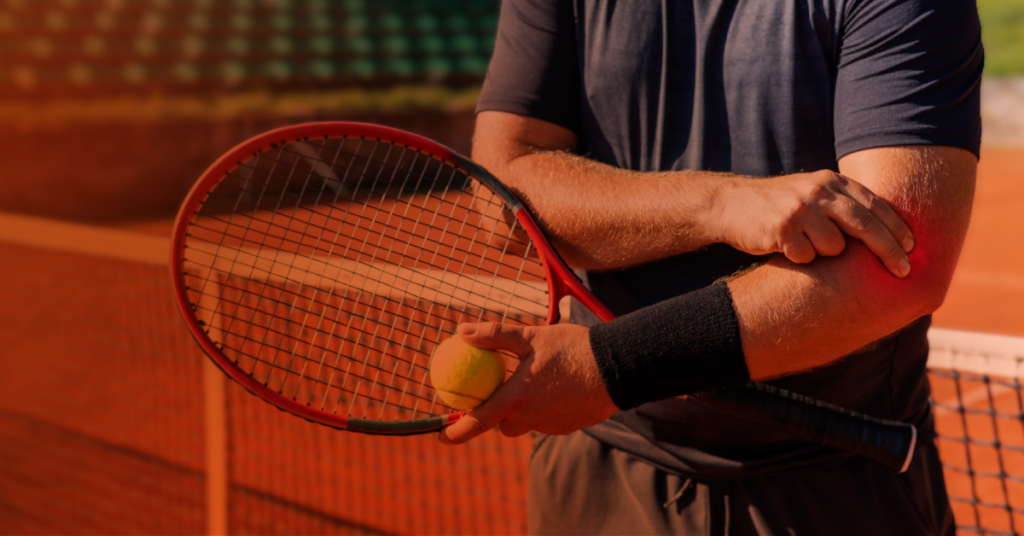
The short answer: Tennis elbow is a common cause of elbow pain in racquet sports, but it is not the only possibility. Pain may come from the tendons on either side of the elbow, an irritated nerve, or another structure around the joint. [1][4][5]
Where the pain is matters: Lateral epicondylitis, commonly called tennis elbow, causes pain around the outside of the elbow. Medial epicondylitis, or golfer’s elbow, affects the tendon attachment on the inside of the elbow. Both can develop from repetitive gripping and forearm use. [1][4]
Numbness or tingling is an important clue: Tingling that travels into the little finger and part of the ring finger is more consistent with ulnar nerve irritation than a straightforward case of tennis elbow. [5]
Treatment depends on the diagnosis: Activity modification and progressive strengthening are commonly used for lateral and medial epicondylitis, but nerve, ligament, and joint problems may require a different approach. [2][3][4]
When to get it checked: Persistent pain, loss of grip strength, numbness or tingling, significant swelling, locking, instability, or symptoms that began after an acute injury should be evaluated rather than assumed to be tennis elbow.
Racquet sports place repeated demands on the elbow. Tennis, pickleball, badminton, squash, and similar activities require you to grip a racquet or paddle while repeatedly controlling the wrist and forearm through serves, volleys, forehands, backhands, and overhead shots. Over time, those repeated movements can irritate or overload the tissues around the elbow.
When pain develops, many players immediately assume they have tennis elbow. That may be the correct diagnosis, particularly when the pain is centered on the outside of the joint, but several other elbow conditions can produce similar symptoms. The location of the pain, the movements that trigger it, and symptoms such as tingling, weakness, or instability can help determine what is actually causing the problem.
Why Racquet Sports Can Lead to Elbow Pain
The forearm muscles play an important role in controlling the wrist and maintaining grip throughout a racquet swing. Their tendons attach around the inside and outside of the elbow, which means repetitive gripping and wrist movement can place substantial load on those attachment points. [1][4]
Problems often develop when the amount or intensity of activity increases faster than the tissues can adapt. Someone who suddenly begins playing several days a week, returns after a long break, or adds longer and more competitive matches may place considerably more demand on the elbow than it is accustomed to handling.
Elbow pain can also creep into activities away from the court. A player may initially notice discomfort only after a match, then begin feeling it while carrying groceries, lifting a coffee mug, opening a jar, or shaking someone’s hand. That progression is one reason recurring elbow pain should not automatically be dismissed as ordinary soreness.
Tennis Elbow: Pain on the Outside of the Elbow
Lateral epicondylitis, often called tennis elbow, involves the tendon attachment on the outside of the elbow. Current medical literature also uses terms such as lateral elbow tendinopathy because chronic tendon pain is more complex than simple inflammation. [1][2]
The wrist extensor muscles attach near the lateral epicondyle and are repeatedly loaded during gripping and wrist control. Symptoms can gradually develop when those tissues are exposed to more repetitive stress than they can tolerate.
Common symptoms include:
- Pain or burning around the outside of the elbow
- Tenderness over the outer elbow
- Pain when gripping or lifting
- Discomfort with resisted wrist extension
- Reduced grip strength because gripping is painful
Despite the name, you do not have to play tennis to develop the condition. Pickleball, badminton, weight training, manual work, and other activities involving repetitive gripping and forearm use can produce similar loading.
Golfer’s Elbow Can Affect Racquet Players Too
Pain on the inside of the elbow involves a different group of tendons. Medial epicondylitis, commonly known as golfer’s elbow, affects the flexor-pronator tendon origin near the medial epicondyle. These muscles help flex the wrist, rotate the forearm, and support gripping. [4]
The name “golfer’s elbow” can be misleading because golf is only one activity that can cause it. Racquet athletes repeatedly grip their equipment and rotate the forearm, so they can also overload the tissues on the inside of the elbow.
Symptoms may include pain or tenderness at the inner elbow, discomfort while gripping, and pain reproduced by wrist flexion or forearm pronation against resistance.
Tennis Elbow vs. Golfer’s Elbow
The clearest difference between these two conditions is the location of the affected tendon.
| Tennis Elbow | Golfer’s Elbow | |
| Medical name | Lateral epicondylitis / lateral elbow tendinopathy | Medial epicondylitis |
| Where does it hurt? | Outside of the elbow [1] | Inside of the elbow [4] |
| Main tendon group involved | Wrist extensor tendon origin | Flexor-pronator tendon origin |
| Common aggravating movements | Gripping and resisted wrist extension | Gripping, wrist flexion, and forearm pronation |
| Can racquet players get it? | Yes | Yes |
| Typical treatment approach | Activity modification and progressive rehabilitation [2][3] | Activity modification and progressive rehabilitation [3][4] |
Pain location is a useful starting point, but it is not enough to diagnose the problem on your own. Nerves, ligaments, and other joint structures are located close to these tendon attachments, and some conditions can closely resemble epicondylitis.
Other Conditions That Can Feel Like Tennis or Golfer’s Elbow
Not every case of outer or inner elbow pain comes from an overused tendon. The pattern of your symptoms can help an orthopedic specialist determine when another structure may be involved.
Radial Tunnel Syndrome
The radial nerve passes through an area near the outside of the elbow. Radial tunnel syndrome occurs when part of that nerve becomes irritated or compressed, and the resulting pain can resemble tennis elbow or occur at the same time. [6]
One difference is that radial tunnel pain may be felt farther down the upper forearm rather than directly over the lateral epicondyle. An orthopedic examination can help distinguish nerve-related symptoms from pain originating at the tendon attachment.
Ulnar Nerve Irritation
The ulnar nerve passes behind the bony prominence on the inside of the elbow. When the nerve becomes compressed or irritated there, the condition is known as cubital tunnel syndrome. [5]
Inner elbow discomfort can occur, but numbness and tingling are particularly important clues. Ulnar nerve symptoms commonly travel into the little finger and part of the ring finger, and more significant compression can also affect grip or hand coordination. Those symptoms do not fit the typical pattern of uncomplicated medial epicondylitis.
Ligament or Joint Injuries
A sudden injury creates a different clinical picture than elbow pain that gradually develops from repetitive use. A fall, forceful movement, or other traumatic event can injure ligaments or structures within the joint and may cause swelling, instability, limited motion, or sudden weakness.
The ulnar collateral ligament, for example, is an important stabilizer on the inside of the elbow. It is best known for injuries in repetitive overhead throwers, but traumatic elbow injuries can also damage the ligament. [7] A player who develops sudden medial elbow pain after an injury should not assume it is simply golfer’s elbow.
How an Orthopedic Specialist Finds the Cause
An orthopedic evaluation begins with how the symptoms developed. Your doctor will usually want to know exactly where the elbow hurts, whether the problem began gradually or suddenly, which movements reproduce the pain, and whether your playing schedule recently changed.
The examination helps narrow the possibilities further. Your physician may check wrist and forearm strength, grip, elbow range of motion, tenderness around the tendon attachments, ligament stability, and nerve function. Numbness, tingling, or weakness may lead to additional neurological testing. [1][4][5]
Imaging is not required for every case of tennis or golfer’s elbow. These conditions can often be identified through the history and physical examination. X-rays, ultrasound, MRI, or nerve studies may be considered when symptoms suggest another condition, the diagnosis remains uncertain, or the elbow is not improving as expected.
How Is Racquet-Sport Elbow Pain Treated?
Treatment depends on which structure is causing the symptoms. For lateral and medial epicondylitis, nonsurgical treatment is usually the starting point and often combines temporary changes in activity with a progressive exercise program. [2][3][4]
The purpose is not simply to rest until the pain disappears. Rehabilitation gradually improves the forearm muscles’ ability to tolerate the gripping and repetitive loads required by sports and everyday activities. Depending on the individual case, a treatment plan may include activity modification, stretching, progressive strengthening, physical therapy, bracing, or medication for pain when medically appropriate.
Current clinical guidance for lateral elbow tendinopathy supports resisted exercise as part of rehabilitation. AAOS conditioning guidance for both tennis and golfer’s elbow similarly emphasizes progressive stretching and strengthening of the forearm muscles. [2][3]
Our corresponding All Sports Physical Therapy article, Lateral vs. Medial Epicondylitis: Exercise Protocols for Each, will take a closer look at the rehabilitation approach for each side of the elbow.
Do You Have to Stop Playing?
The answer depends on the diagnosis and how the elbow responds to activity. Mild symptoms do not always require complete withdrawal from a sport, but repeatedly playing at the same intensity while pain continues to increase is unlikely to help the irritated tissue recover.
Activity modification may involve reducing the number or length of matches, temporarily avoiding the stroke that causes the most discomfort, or taking a period away from racquet play while strengthening begins. The appropriate amount of modification varies based on the severity of the symptoms and the demands of the athlete.
Returning to unrestricted play should be based on function rather than a preset number of days. Grip strength, wrist and forearm strength, elbow motion, sport-specific movements, and the elbow’s response to progressively heavier loading all help determine whether it is ready for normal play. [2]
Can You Reduce Your Risk of Elbow Pain?
No strategy can guarantee that an athlete will never develop tennis or golfer’s elbow, but conditioning and sensible progression can improve the forearm’s tolerance to repetitive stress. AAOS recommends strengthening and stretching the forearm muscles as part of rehabilitation and longer-term conditioning for epicondylitis. [3]
How quickly you increase your playing volume also matters. Moving abruptly from occasional recreational matches to several long sessions every week places greater demand on the muscles and tendons before they have had time to adapt.
Early symptoms deserve attention as well. An ache that appears after every match and gradually begins affecting gripping or lifting should not be treated the same way as temporary muscle soreness that resolves. Adjusting activity and addressing the problem early may prevent it from becoming more limiting.
When Should You See an Orthopedic Specialist?
Occasional mild soreness may settle when activity is reduced, but recurring or progressively worsening elbow pain deserves a closer look. An orthopedic evaluation is particularly useful when symptoms no longer occur only during sports and begin affecting work or ordinary daily activities.
Consider scheduling an evaluation if:
- Pain returns every time you play
- Symptoms are becoming more intense rather than improving
- Gripping the racquet has become painful or difficult
- Everyday lifting or carrying now causes pain
- You have numbness or tingling in the hand or fingers
- Grip strength has noticeably decreased
- The elbow catches, locks, or feels unstable
- Significant swelling develops
- You cannot fully bend or straighten the elbow
- Pain began after a fall or another acute injury
Sudden severe pain, obvious deformity, major weakness, or loss of sensation after an injury should be evaluated promptly.
Don’t Assume Every Sore Elbow Is Tennis Elbow
Tennis elbow is closely associated with racquet sports because repeated gripping and wrist control can place substantial demand on the tendons at the outside of the elbow. However, the same sports can also irritate the tendons on the inside of the joint, and nerve or joint problems can create symptoms that initially seem similar.
Pay attention to where the pain occurs and what accompanies it. Outer elbow pain with gripping, inner elbow pain, tingling into the fingers, instability, or symptoms following an acute injury each provide different clues. Identifying the structure responsible for the pain is what allows treatment and rehabilitation to address the actual problem.
If elbow pain keeps returning, changes the way you grip or swing, or begins interfering with activities away from the court, schedule an evaluation with New York Bone & Joint Specialists to determine what is causing your symptoms and what you need to return to your sport safely.
Frequently Asked Questions
Is all elbow pain from tennis considered tennis elbow?
No. Tennis elbow specifically refers to lateral elbow tendinopathy involving the tendon attachment on the outside of the elbow. Racquet players can also develop medial epicondylitis, nerve irritation, or other elbow injuries. The location and pattern of symptoms help determine which structure may be involved. [1][4][5]
What is the difference between tennis elbow and golfer’s elbow?
Tennis elbow affects the tendon attachment on the outside of the elbow, while golfer’s elbow involves the flexor-pronator tendon attachment on the inside. Both conditions can cause pain with gripping, but different wrist and forearm movements tend to reproduce their symptoms. [1][4]
Can pickleball cause tennis elbow?
Yes. Pickleball involves repeated gripping and forearm use that can load the same tendon involved in tennis elbow. Lateral epicondylitis is not limited to tennis and can occur during many sports, hobbies, and occupations involving repetitive use of the wrist and forearm. [1]
Does tingling in my fingers mean I have tennis elbow?
Tingling in the fingers is not a typical feature of uncomplicated tennis elbow and can indicate nerve involvement. Compression of the ulnar nerve at the elbow commonly causes numbness or tingling in the little finger and part of the ring finger. [5]
Do I need an MRI for elbow pain?
Not necessarily. Many cases of tennis and golfer’s elbow can be diagnosed through the history and physical examination. Imaging may be appropriate when the diagnosis is uncertain, another injury is suspected, or symptoms are not improving as expected.
Can physical therapy help tennis elbow?
Yes. Progressive exercise is an important part of nonsurgical treatment for lateral elbow tendinopathy. Clinical guidelines support resisted wrist-extensor exercise, while AAOS guidance for epicondylitis includes progressive stretching and strengthening of the forearm muscles. [2][3]
Can a racquet player get golfer’s elbow?
Yes. Golfer’s elbow is not limited to golfers. Repetitive gripping, wrist flexion, and forearm rotation can overload the flexor-pronator tendon attachment on the inside of the elbow, so medial epicondylitis can also occur in racquet-sport athletes. [4]
When should elbow pain from tennis or pickleball be evaluated?
Persistent, recurrent, or worsening elbow pain should be evaluated when it begins limiting your grip, sport, or everyday activities. Numbness, tingling, substantial weakness, locking, instability, significant swelling, or symptoms following an acute injury are additional reasons to see an orthopedic specialist.
References
[1] American Academy of Orthopaedic Surgeons. Tennis Elbow (Lateral Epicondylitis). OrthoInfo.
[2] Lucado AM, Day JM, Vincent JI, et al. Lateral Elbow Pain and Muscle Function Impairments: Clinical Practice Guidelines. Journal of Orthopaedic & Sports Physical Therapy. 2022;52(12).
[3] American Academy of Orthopaedic Surgeons. Therapeutic Exercise Program for Epicondylitis (Tennis Elbow / Golfer’s Elbow). OrthoInfo.
[4] Amin NH, Kumar NS, Schickendantz MS. Medial Epicondylitis: Evaluation and Management. Journal of the American Academy of Orthopaedic Surgeons. 2015;23(6):348-355.
[5] American Academy of Orthopaedic Surgeons. Ulnar Nerve Entrapment at the Elbow (Cubital Tunnel Syndrome). OrthoInfo.
[6] American Academy of Orthopaedic Surgeons. Therapeutic Exercise Program for Radial Tunnel Syndrome. OrthoInfo.
[7] American Academy of Orthopaedic Surgeons. Ulnar Collateral Ligament (UCL) Injury. OrthoInfo.
Our Locations
-
Upper East Side: Full Service Orthopedic Center & Walk-In
1198 3rd Avenue, Between 69th and 70th Street New York, NY 10021Physicians: Monday–Friday 8:00am–6:00pm, Saturday 8:00am–5:00pm
Physical Therapy: Monday–Friday 7:00am–7:30pm, Saturday 8:00am–3:00pm
Sunday: ClosedPhone: (212) 759-4553 -

Orthopedic Doctor Midtown Manhattan NYC — New York Bone & Joint Specialists
425 Madison Ave, Suite 200 (second floor) New York, NY 10017 (corner of East 49th Street)Physician appointments: Mon–Fri 8:00 am–6:00 pm
Physical therapy: Mon–Fri 7 am–7:30 pm, Sat 8 am–3 pmPhone: (212) 759-4553 -

Orthopedic Doctor Upper East Side NYC — New York Bone & Joint Specialists
130 E 67th St New York, NY 10065Currently ClosedPhone: (212) 759-4553