How Your Big Toe Can Affect Your Knees (Seriously)
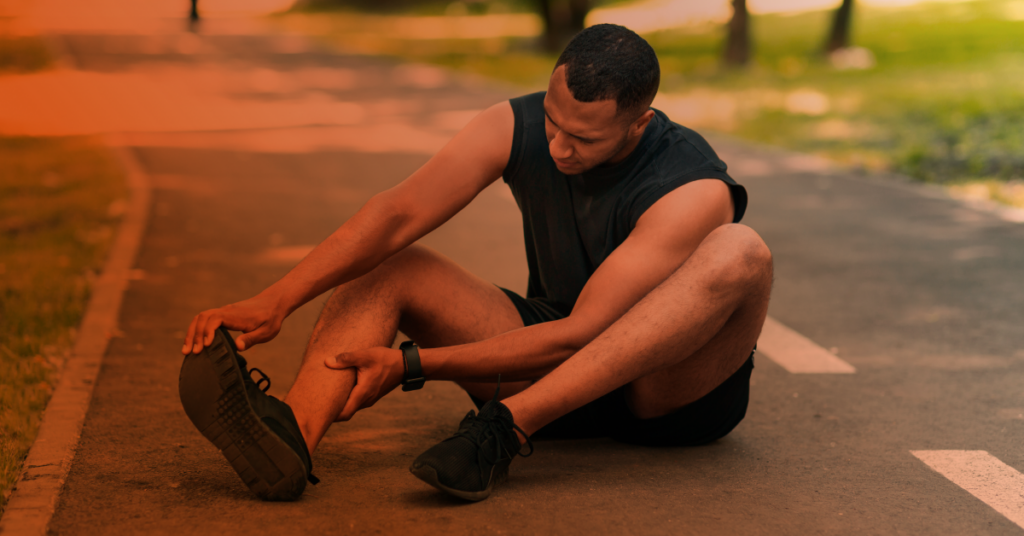
Your big toe and knee may be far apart, but they’re definitely connected. In fact, your big toe may be the cause of your knee pain.
Most people don’t think too much about their big toe until they stub it on furniture. The toe is sore for a few days and you walk around gingerly. But then your knee starts aching, too. So why are you having big toe and knee pain at the same time?
The reason relates to what is known as the “kinetic chain,” or a theory that states an injury or damage to one part of the body may be felt in another, sometimes distant joint. Under that theory, a throbbing big toe may be the cause of your knee pain. If you want to know why your knee is hurting, look down at your big toe.
The Kinetic Chain: How Your Body Is Connected
The kinetic chain refers to how all the joints, muscles, and tendons work in concert to create movement. It’s similar to an electrical current. When the current is strong, it produces energy. If the current is interrupted or weak, you lose power.
Same with the body’s kinetic chain. The lower body kinetic chain includes your toes and feet as well as your ankles, lower legs, knees, hips, and pelvis. At the base of that chain are your feet, and in particular, your big toes. When each of these elements are strong and flexible, the lower kinetic chain propels you forward when you walk or run. But if your big toe is hurting or lacks mobility, your knee overcompensates to help you move. And that can lead to knee pain.
Why the Big Toe Matters More Than You Think
Your big toe, or hallux, connects to your foot via the metatarsophalangeal (MTP) joint. A normal, functional big toe flexes between 65 degrees to 90 degrees. Though small compared to other larger joints, like the knee or hip, the big toe is just as important to your overall body mechanics.
- Allows you to push ahead when walking or running
- Maintains your balance when standing or moving
- Enables dorsiflexion, or the backward bending of the big toe, to ensure good gait alignment to absorb the impact of landing on your foot
How Big Toe Problems Lead to Knee Pain
The big toe serves as the first link in the lower kinetic chain. If its movement is restricted in any manner, the impact may be felt up the entire chain.
Limited Big Toe Motion (Hallux Limitus)
- Interrupts the normal gait pattern through excessive supination (outward roll of the foot) or pronation (inward roll of the foot)
- Overpronation can push the knee out of alignment and lead to knee pain
Altered Walking Mechanics/Compensation Patterns
- Changes in stride, such as lifting your foot sooner to prevent a painful toe bend or using your hip to raise your leg
- Increased stress on knee leading to inward knee collapse, or knee valgus
- Overpronation of the knee due to a weak flexor hallucis longus muscle that runs underneath the arch before it connects to the big toe
- Altered knee mechanics disrupts normal quadriceps loading, thereby increasing stress on the kneecap or patella.
Common Conditions Linking Big Toe and Knee Pain
Stubbing your toe definitely causes toe pain that can affect the knee. But other conditions centered in the big toe often result in knee pain, too.
Hallux Limitus / Hallux Rigidus
Both are caused by arthritis, but vary in severity. One study found that hallux limitus was a significant factor in altering gait.
- Hallux Limitus: The MTP joint is painful and stiff, but somewhat mobile.
- Hallux Rigidus. The MTP joint cannot move due to severe arthritis.
Gout
Patients often ask if their big toe and knee pain is gout? It certainly can be.
- Gout is a form of arthritis caused when uric acid forms painful crystals in the joint. Uric acid usually passes through the urine.
- Characterized by sudden, severe big toe pain.
- Can affect any joint, including the knee, but mainly strikes the big toe.
Bunions (Hallux Valgus)
Bunions make every stride a painful experience. Medically known as hallux valgus, a bunion advances slowly until the big toe bends abnormally.
- Appears as a bony outgrowth on the side of the big toe.
- The big toe slants toward the nearby toe.
- Causes increasing foot pain, stiffness, and swelling making walking difficult.
General Foot Pain
Big toe pain for any reason can have far reaching effects beyond just your toe and foot.
- Overpronation due to big toe pain can lead to anterior or internal knee pain.
- Inability to push off from the big toe may result in an anterior tilt of the pelvis or early flexion (bending) of the trunk. May trigger lower back pain or hip impingements.
Signs Your Big Toe May Be Causing Knee Pain
If your knee starts aching, how do you know if the source is your big toe? Look for these symptoms.
- Knee pain without an apparent injury to the joint
- Stiffness or pain in the big toe
- Difficulty pushing off while walking or running
- Noticeable uneven wear on shoes
- Pain that travels up the leg
Why This Problem Is Often Missed
Unfortunately, knee pain linked to big toe dysfunction often goes overlooked. Several factors contribute to a misdiagnosis of the source of the pain.
- Pain shows up in the knee, not the foot
- Treatment focuses on the site of the pain
- Many physicians may lack knowledge of foot mechanics
When to See a Specialist
Ignoring big toe pain will not make it go away. As mentioned previously, your big toe pain can cause problems up the kinetic chain to your knee and other joints.
- Persistent knee and big toe pain
- Pain centered on the top of the toe joint
- Difficulty bending your big toe
- Pain that worsens with activity or when pressure is put on the joint
- Limited mobility in toe or knee
- Numbness or tingling on the top of the big toe
- A callus under the big toe
How Physical Therapy Helps
Physical therapy is the first line of treatment for big toe and knee pain. A physical therapist has the skills to:
- Identify the root cause with a physical exam, gait analysis, or imaging tests
- Focus on the source of the pain and not just the symptoms
- Restore proper movement patterns
- Suggest therapies to reduce stress on the knee and big toe
- Prevent future injury
Improve Big Toe Mobility
- Stretching and joint mobilization: Raise your heel and extend your toes; calf stretches
- Manual therapy. Roll your foot over a tennis ball
Strengthen the Foot and Lower Leg
- Intrinsic foot muscle exercises: Pick up marbles with your toes
- Balance training: Stand with feet forward and press the big toe downward; stand on one leg
Address Gait Mechanics
- Adjust walking and running gait to reduce impact on the big toe and knee
- Correct poor movement patterns
Footwear and Orthotics
- Choose shoes with proper support to the heel and arch
- Pick footwear with sufficient toe space
- Try orthotics to spread the load evenly across the foot
Why Your Big Toe Matters
You may think it’s just another toe, but your big toe plays an outsized role in your everyday movements. In fact, that nagging big toe pain could eventually lead to an aching knee and increasing discomfort when walking or running.
An evaluation by one of the physicians and physical therapists at New York Bone & Joint can correctly pinpoint the reason for your big toe and knee pain and treat the exact cause with conservative treatment. Contact us today to walk freely once again.
FAQ Section
Can a big toe problem really cause knee pain?
Absolutely. It relates to the kinetic chain in which every joint, muscle, and tendon works together to produce movement. If one part of that chain, such as the big toe, is weak or damaged, the knee may struggle to handle the extra load.
Why do my big toe and knee hurt at the same time?
It’s likely due to improper walking patterns due to a stiff big toe, which increases pressure on the knee. Conditions such as gout and arthritis can affect the big toe joint, as well. Big toe pain or abnormalities can frequently cause knee discomfort.
What is hallux limitus?
Hallux limitus is a form of arthritis that restricts big toe movement. The joint is stiff and painful, but you can still move. The restricted mobility can alter your walking stride.
How do I know if my knee pain is coming from my foot?
The main signs are toe stiffness and difficulty bending the toe. You may find your walking pace has changed to avoid pain in the big toe. You may have difficulty pushing off when you walk. You may feel pain in both your big toe and knee.
Can fixing my big toe relieve knee pain?
Definitely when it’s the root cause. Physical therapy to strengthen the toe muscles and improve MTP joint mobility can help relieve pain.
Our Locations
-

Upper East Side: Full Service Orthopedic Center & Walk-In
1198 3rd Avenue, Between 69th and 70th Street New York, NY 10021Monday–Friday: 9:00am–6:00pm
Saturday: 8:00am–5:00pm
Sunday: ClosedPhone: (212) 759-4553 -

Orthopedic Doctor Midtown Manhattan NYC — New York Bone & Joint Specialists
425 Madison Ave, Suite 200 (second floor) New York, NY 10017 (corner of East 49th Street)Physician appointments: Mon–Fri 8:00 am–6:00 pm
Physical therapy: Mon–Fri 7 am–7 pm, Sat 8 am–2 pmPhone: (212) 759-4553 -

Orthopedic Doctor Upper East Side NYC — New York Bone & Joint Specialists
130 E 67th St New York, NY 10065Tuesday & Thursday: 8:00am–6:00pm
All other days: ClosedPhone: (212) 759-4553