Ankle Arthroscopy NYC — Orthopedic Ankle Surgery at New York Bone & Joint
Written by: Dr. Leon E. Popovitz
Board-Certified Orthopedic Surgeon (ABOS) | FAAOS | Fellowship-Trained Sports Medicine, NYU Langone
Arthroscopic Surgery — Knee, Shoulder & Ankle | Co-Founder, New York Bone & Joint Specialists | Co-Author: Dr. Haydée Brown — Board-Certified Orthopedic Surgeon (ABOS) | Foot & Ankle Surgery, NYBJ Midtown
Surgery at Lenox Hill Hospital — Northwell Health
Date Published: July 16, 2026
Last Updated: July 16, 2026
Last Medically Reviewed: July 16, 2026
This page has been written and reviewed by a fellowship-trained, board-certified orthopedic surgeon with over 20 years of clinical experience. All clinical claims are supported by peer-reviewed literature and current AAOS and AOSSM guidelines. See References section below.
At a glance
Ankle Arthroscopy at New York Bone & Joint — At a Glance
- What it is: Ankle arthroscopy is a minimally invasive surgical procedure in which a small camera (arthroscope) and instruments are inserted through small portals around the ankle to visualize and treat pathology within the ankle joint. It is performed as an outpatient procedure at Lenox Hill Hospital.
- Dr. Leon E. Popovitz (board-certified orthopedic surgeon, ABOS, FAAOS, fellowship-trained sports medicine NYU Langone) and Dr. Haydée Brown (board-certified orthopedic surgeon specializing in foot and ankle surgery, NYBJ Midtown). Arthroscopic ankle surgery performed at Lenox Hill Hospital.
- Conditions treated: Osteochondral lesions of the talus (OCD), anterior ankle impingement (bone spurs), posterior ankle impingement (os trigonum), ankle synovitis, loose bodies, and intra-articular pathology concurrent with ankle instability (Brostrom procedure).
- Concurrent procedures: Ankle arthroscopy is frequently performed simultaneously with the Brostrom procedure for lateral ankle stabilization, allowing intra-articular pathology to be addressed in the same session.
- Recovery: Depends on pathology treated. Simple debridement or loose body removal: weight-bearing same day, return to activity 2–4 weeks. OCD treatment (microfracture): non-weight-bearing 4–6 weeks, return to sport 4–6 months. Impingement release: weight-bearing in boot 2–3 weeks, return to sport 2–3 months.
- Access: Same-week consultations at both Manhattan locations. No referral required.
Book a consultation
Prompt Appointments Available
Upper East Side: 1198 Third Ave | Midtown: 425 Madison Ave
Surgery performed at Lenox Hill Hospital - Northwell Health
About this page
board-certified orthopedic surgeon (ABOS), FAAOS, fellowship-trained sports medicine NYU Langone, co-founder of New York Bone & Joint Specialists) and Dr. Haydée Brown (board-certified orthopedic surgeon specializing in foot and ankle surgery, NYBJ Midtown). Ankle arthroscopy is performed at Lenox Hill Hospital — Northwell Health. Consultations at NYBJ Upper East Side (1198 Third Ave) and Midtown (425 Madison Ave).
Introduction
The ankle joint is a hinged synovial joint formed by the tibia, fibula, and talus. It is one of the most congruent joints in the body — meaning its joint surfaces are tightly fitted — which makes it mechanically stable but also means that any intra-articular pathology is felt immediately and consistently with weight-bearing activity. Osteochondral lesions, impingement spurs, loose bodies, and synovitis that develop from prior injury, chronic instability, or repetitive loading produce predictable patterns of anterior ankle pain, posterior impingement, or deep aching with activity that are often misattributed to chronic ankle sprain.
The clinical value of ankle arthroscopy is that it provides definitive diagnosis and treatment simultaneously. A patient with anterior ankle pain and activity limitation who has failed six months of conservative management and shows only subtle findings on MRI may have an impingement lesion, synovial scar tissue, or an early osteochondral defect that is directly addressable arthroscopically. Identifying and treating the source in a single outpatient procedure avoids continued empirical management of an undiagnosed problem.
Conditions Treated
| Condition | Description | Arthroscopic Treatment |
| Osteochondral Lesion of the Talus (OCD) | Damage to the cartilage and underlying bone of the talar dome, most commonly medial or lateral. From acute injury or repetitive microtrauma. | Microfracture for small lesions (<1.5 cm²). OCA (Osteochondral Allograft): for large cartilage defects, a healthy donor bone-and-cartilage graft is transplanted to restore the gliding surface of the talar dome. Debridement and fixation for unstable osteochondral fragments. |
| Anterior Ankle Impingement | Bony spurs on the anterior tibia and talus that impinge during dorsiflexion. Common in soccer players (“footballer’s ankle”) and dancers. | Arthroscopic debridement of anterior osteophytes. Rapid return to activity. |
| Posterior Ankle Impingement | Compression of posterior ankle structures (os trigonum, posterior process of talus) during plantarflexion. Common in ballet dancers and sprinters. | Arthroscopic excision of os trigonum or posterior process. Addresses impingement without open posterior approach. |
| Loose Bodies | Cartilaginous or osseous fragments within the ankle joint causing catching, locking, or intermittent sharp pain. | Arthroscopic removal of loose bodies. Resolution of mechanical symptoms. |
| Ankle Synovitis | Inflammation of the ankle joint synovium causing persistent pain, swelling, and stiffness after ankle injury. | Arthroscopic synovectomy. Concurrent evaluation for underlying pathology. |
| Concurrent with Brostrom | Intra-articular pathology discovered at time of lateral ankle stabilization procedure. | Addressed in the same arthroscopic session before performing a stabilizing Brostrom lateral ankle ligament repair. |
References
- Vega J, Dalmau-Pastor M, Malagelada F, Fargues-Polo B, Peña F. Ankle Arthroscopy: An Update. pubmed.ncbi.nlm.nih.gov/28816902/
- Ferkel RD, Scranton PE. Arthroscopy of the ankle and foot. JBJS. 1993. pubmed.ncbi.nlm.nih.gov/8340815
- Zengerink M et al. Treatment of osteochondral lesions of the talus: a systematic review. Knee Surg Sports Traumatol Arthrosc. 2010. pubmed.ncbi.nlm.nih.gov/19585229
- van Dijk CN et al. Anterior ankle impingement. Foot Ankle Int. 2007. pubmed.ncbi.nlm.nih.gov/17559762
FAQs
An osteochondral lesion (OCD) is damage to the cartilage and underlying bone of the talar dome — the top surface of the talus that articulates with the tibia. It most commonly results from ankle sprains or repetitive microtrauma and causes deep ankle pain with activity, swelling, and a feeling of giving way. Small lesions may be treated with microfracture (drilling the bone to stimulate fibrocartilage healing). Larger lesions require osteochondral allograft transplantation.
Ankle impingement is pain caused by soft tissue or bony structures being pinched within the ankle joint during movement. Anterior impingement (pain at the front of the ankle with dorsiflexion) is commonly caused by bony spurs on the anterior tibia and talus from prior sprains or repetitive impact. Posterior impingement (pain at the back of the ankle with plantarflexion) is caused by an os trigonum or enlarged posterior process of the talus. Both are effectively addressed with ankle arthroscopy.
Recovery depends on the pathology addressed. For simple loose body removal or synovectomy: weight-bearing is immediate and return to sport is 2–4 weeks. For impingement release (anterior or posterior): boot for 2–3 weeks, return to sport 2–3 months. For microfracture of an osteochondral lesion: non-weight-bearing for 4–6 weeks, progressive loading, return to sport 4–6 months. All return-to-sport clearance is criteria-based.
Yes — and this is one of the significant advantages of ankle arthroscopy. Before the Brostrom repair for lateral ankle instability is performed, the ankle joint is evaluated arthroscopically. Any concurrent intra-articular pathology — osteochondral lesions, impingement, loose bodies, synovitis — is addressed in the same session. This avoids a separate procedure and allows both problems to be rehabilitated on the same timeline.
Ankle arthroscopy has a limited role in true ankle osteoarthritis with diffuse cartilage loss. Debridement and synovectomy provide short-term symptom relief but do not alter the progression of established arthritis. Focal osteochondral lesions are different — they are contained cartilage defects in an otherwise healthy joint that respond well to arthroscopic restoration. Dr. Popovitz distinguishes these clearly at consultation.
An os trigonum is an accessory bone at the posterior aspect of the talus that is present in approximately 10–15% of the population. It is usually asymptomatic but can become painful with repetitive plantarflexion — a common mechanism in ballet dancers, soccer players, and downhill runners. When it causes persistent posterior ankle pain despite conservative management, arthroscopic excision is a reliable, minimally invasive solution.
Most major insurance plans cover ankle arthroscopy when medically indicated. Coverage criteria typically require documented failure of conservative management and specific pathology on imaging or clinical examination. Our team verifies coverage before scheduling any procedure. Call 212-759-4553 to confirm your specific plan.
Medically Reviewed by Dr. Popovitz.
You can book your appointment with New York Bone & Joint online by submitting the appointment request form here:
Book an appointmentOur Locations
-
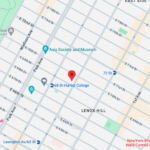
Upper East Side: Full Service Orthopedic Center & Walk-In
1198 3rd Avenue, Between 69th and 70th Street New York, NY 10021Physicians: Monday–Friday 8:00am–6:00pm, Saturday 8:00am–5:00pm
Physical Therapy: Monday–Friday 7:00am–7:30pm, Saturday 8:00am–3:00pm
Sunday: ClosedPhone: (212) 759-4553 -

Orthopedic Doctor Midtown Manhattan NYC — New York Bone & Joint Specialists
425 Madison Ave, Suite 200 (second floor) New York, NY 10017 (corner of East 49th Street)Physician appointments: Mon–Fri 8:00 am–6:00 pm
Physical therapy: Mon–Fri 7 am–7:30 pm, Sat 8 am–3 pmPhone: (212) 759-4553 -

Orthopedic Doctor Upper East Side NYC — New York Bone & Joint Specialists
130 E 67th St New York, NY 10065Tuesday & Thursday: 8:00am–6:00pm
All other days: ClosedPhone: (212) 759-4553