Brostrom Procedure NYC — Lateral Ankle Stabilization at New York Bone & Joint
Written by: Dr. Leon E. Popovitz
Board-Certified Orthopedic Surgeon (ABOS) | FAAOS | Fellowship-Trained Sports Medicine, NYU Langone
Knee, Shoulder & Ankle Arthroscopy | Sports Medicine | Co-Founder, New York Bone & Joint Specialists | Co-Author: Dr. Haydée Brown — Board-Certified Orthopedic Surgeon (ABOS) | Foot & Ankle Surgery, NYBJ Midtown
Surgery at Lenox Hill Hospital — Northwell Health
Date Published: July 16, 2026
Last Updated: July 16, 2026
Last Medically Reviewed: July 16, 2026
This page has been written and reviewed by a fellowship-trained, board-certified orthopedic surgeon with over 20 years of clinical experience. All clinical claims are supported by peer-reviewed literature and current AAOS and AOSSM guidelines. See References section below.
At a glance
Brostrom Procedure at New York Bone & Joint — At a Glance
- What it is: The Brostrom procedure is a surgical repair of the lateral ankle ligaments — primarily the anterior talofibular ligament (ATFL) and the calcaneofibular ligament (CFL) — that have been stretched or torn by repeated ankle sprains. The native ligaments are shortened and reattached to their anatomical footprints on the fibula using suture anchors, restoring the passive restraint to ankle inversion.
- Dr. Leon E. Popovitz (board-certified orthopedic surgeon, ABOS, FAAOS, fellowship-trained sports medicine NYU Langone, co-founder New York Bone & Joint) and Dr. Haydée Brown (board-certified orthopedic surgeon specializing in foot and ankle surgery, NYBJ Midtown). Surgery at Lenox Hill Hospital as an outpatient procedure.
- Who needs it: Patients with chronic lateral ankle instability (giving way on uneven ground) who have failed a genuine course of physical therapy targeting peroneal strengthening and proprioceptive training. Typically 3–6 months of supervised PT is the prerequisite.
- The procedure: Arthroscopic evaluation of the ankle joint first — concurrent intra-articular pathology (osteochondral lesions, impingement, synovitis) is addressed in the same session. Open or arthroscopic-assisted Brostrom repair of the ATFL and CFL using suture anchors.
- Recovery: Non-weight-bearing in a splint for 1–2 weeks. Boot for 4–6 weeks. Physical therapy from week 6. Return to sport at 4–6 months criteria-based.
- Access: Same-week consultations at both Manhattan locations. No referral required.
Book a consultation
Prompt Appointments Available
Upper East Side: 1198 Third Ave | Midtown: 425 Madison Ave
Surgery performed at Lenox Hill Hospital - Northwell Health
About this page
board-certified orthopedic surgeon (ABOS), FAAOS, fellowship-trained sports medicine NYU Langone, co-founder of New York Bone & Joint Specialists) and Dr. Haydée Brown (board-certified orthopedic surgeon specializing in foot and ankle surgery, NYBJ Midtown). The Brostrom procedure is performed at Lenox Hill Hospital — Northwell Health as an outpatient procedure.
Introduction
Lateral ankle sprains are the most common musculoskeletal injury in sport. The vast majority resolve with appropriate management — RICE protocol, protected mobilization, and progressive rehabilitation targeting peroneal strength and proprioception. The subset that does not resolve — approximately 20–25% of patients with acute lateral ankle sprains — develops chronic lateral ankle instability characterized by recurrent giving way, persistent pain, and progressive joint damage.
The ligaments most commonly injured in a lateral ankle sprain are the ATFL (anterior talofibular ligament) and CFL (calcaneofibular ligament). When these ligaments fail to heal to functional length and tension, physical therapy can compensate dynamically but cannot restore the passive mechanical restraint that an intact ATFL provides. The Brostrom procedure restores that restraint directly.
The Procedure
| Phase | What Happens |
| Arthroscopic evaluation | Before open repair, the ankle joint is evaluated arthroscopically. Concurrent intra-articular pathology — osteochondral lesions, anterior impingement, loose bodies, synovitis — is identified and treated in the same session. This eliminates a separate procedure for patients with both instability and intra-articular pathology. |
| ATFL exposure | The ATFL is exposed through a small incision over the anterior fibula. The attenuated or torn ligament ends are identified. |
| Suture anchor placement | Suture anchors are placed at the anatomical footprint of the ATFL on the fibula. |
| Ligament reefing | The ATFL is imbricated (shortened and overlapped) and sutured to the anchor, restoring its functional length and tension. The inferior extensor retinaculum (Gould modification) is incorporated to reinforce the repair. |
| CFL repair | The CFL is addressed when clinical and intraoperative findings indicate it is incompetent. |
| Closure & immobilization | Wound is closed. Splint applied with the foot in slight eversion. Patient is discharged same day. |
References
- Brostrom L. Sprained ankles: surgical treatment of “chronic” ligament ruptures. Acta Chir Scand. 1966. pubmed.ncbi.nlm.nih.gov/5339635/
- Gould N et al. Repair of lateral ligament of ankle. Foot Ankle. 1980. pubmed.ncbi.nlm.nih.gov/7449416
- Aicale R, Maffulli N. Rotational ankle instability: A current concept review. J Orthop Surg (Hong Kong). 2023 May-Aug;31 pubmed.ncbi.nlm.nih.gov/37449793/
- Dhillon MS, Patel S, Baburaj V. Ankle Sprain and Chronic Lateral Ankle Instability: Optimizing Conservative Treatment. Foot Ankle Clin. 2023 Jun;28 pubmed.ncbi.nlm.nih.gov/37137624/
FAQs
Chronic lateral ankle instability develops when the ATFL and CFL fail to heal to their native length and tension after a sprain, leaving the ankle mechanically unable to prevent inversion. Risk factors include high-arched foot (cavus foot), ligamentous laxity, inadequate rehabilitation after the initial sprain, and anatomical factors that place greater stress on the lateral ligaments.
The Brostrom procedure is indicated when a patient has documented chronic lateral ankle instability that has failed a genuine course of physical therapy. Clinical criteria include: a positive Anterior Drawer Test (anterior translation of the talus relative to the tibia, indicating ATFL laxity) and a positive Talar Tilt Test (excessive inversion of the talus, indicating CFL involvement). These two bedside stress tests are the primary clinical confirmation of mechanical instability. Stress X-rays under fluoroscopy and high-resolution MRI to evaluate ATFL and CFL tissue quality provide imaging confirmation. Dr. Popovitz and Dr. Brown both evaluate instability using this examination framework before recommending surgery.
The ankle is evaluated arthroscopically before the open Brostrom repair. This allows concurrent intra-articular pathology to be addressed in the same session. The ligament repair itself is performed as a small open procedure (or arthroscopic-assisted technique in selected cases). The incision is small and well-tolerated.
Splint for 1–2 weeks non-weight-bearing. Boot for 4–6 weeks with progressive weight-bearing. Physical therapy begins at 6 weeks. Return to jogging at 3 months. Return to cutting and sport-specific activity at 4–6 months with criteria-based clearance based on strength symmetry and functional testing.
The Brostrom repair restores the native ATFL and CFL to their anatomical length and tension, which significantly reduces the risk of recurrent instability. No surgical repair eliminates all risk of future ankle sprain. Completing the full rehabilitation protocol — particularly the proprioceptive and peroneal strengthening phases — is essential to protecting the repair.
The Gould modification incorporates the inferior extensor retinaculum into the ATFL repair to reinforce the ligament reconstruction. It is a standard augmentation that improves repair strength and has become part of the standard Brostrom technique. Most surgeons performing the Brostrom procedure routinely include the Gould modification. Rehabilitation note: Many patients with chronic lateral ankle instability present with tight calf muscles and limited dorsiflexion from years of compensatory guarding. New York Bone & Joint’s rehabilitation program specifically targets gastrocnemius and soleus stretching alongside peroneal strengthening — because limited dorsiflexion increases the stress placed on the repaired ATFL during weight-bearing, and restoring full ankle range of motion is as important as restoring ligament tension.
Yes — the Brostrom procedure has excellent outcomes in athletes at all levels of competition. Return to sport rates are high and re-dislocation rates are low when the procedure is performed for the correct indication and the rehabilitation is completed fully. Athletes with high functional demands and documented instability are among the best candidates for the procedure.
Medically Reviewed by Dr. Popovitz.
You can book your appointment with New York Bone & Joint online by submitting the appointment request form here:
Book an appointmentOur Locations
-
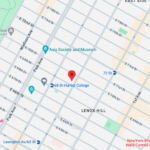
Upper East Side: Full Service Orthopedic Center & Walk-In
1198 3rd Avenue, Between 69th and 70th Street New York, NY 10021Physicians: Monday–Friday 8:00am–6:00pm, Saturday 8:00am–5:00pm
Physical Therapy: Monday–Friday 7:00am–7:30pm, Saturday 8:00am–3:00pm
Sunday: ClosedPhone: (212) 759-4553 -

Orthopedic Doctor Midtown Manhattan NYC — New York Bone & Joint Specialists
425 Madison Ave, Suite 200 (second floor) New York, NY 10017 (corner of East 49th Street)Physician appointments: Mon–Fri 8:00 am–6:00 pm
Physical therapy: Mon–Fri 7 am–7:30 pm, Sat 8 am–3 pmPhone: (212) 759-4553 -

Orthopedic Doctor Upper East Side NYC — New York Bone & Joint Specialists
130 E 67th St New York, NY 10065Currently ClosedPhone: (212) 759-4553