Weightlifting Injuries
Written by: Dr. Popovitz.
Board-Certified Orthopedic Surgeon | Fellowship-Trained Sports Medicine, NYU Langone Medical Center | FAAOS
Co-Founder, NY Bone & Joint Specialists | Lenox Hill Hospital - Northwell Health
Recognized: New York Magazine Best Doctor | New York Times Super Doctor | IAOS Leading Physician of the World | IAOS Top Orthopedic Surgeon in New York
Date Published: November 29, 2018
Last Updated: September 22, 2025
Last Medically Reviewed: September 22, 2025
This page has been written and reviewed by a fellowship-trained, board-certified orthopedic surgeon with over 20 years of clinical experience. All clinical claims are supported by peer-reviewed literature and current AAOS and AOSSM guidelines. See References section below.
Book a consultation
Prompt Appointments Available
Upper East Side: 1198 Third Ave | Midtown: 425 Madison Ave
Surgery performed at Lenox Hill Hospital - Northwell Health
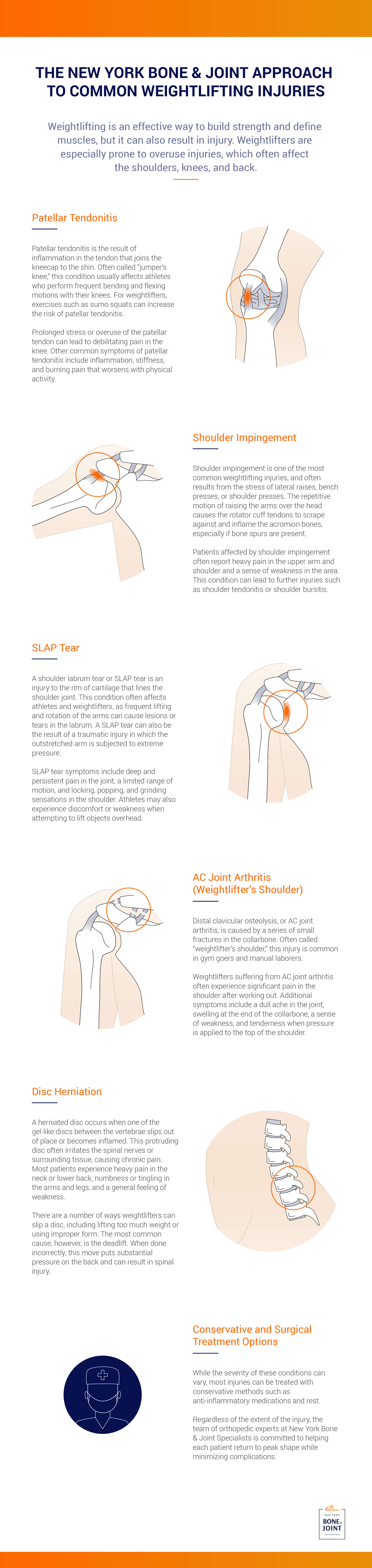
Weightlifting is an effective way to build strength and define muscles, but it can also result in many common sports injuries. Weightlifters are especially prone to overuse injuries, which often affect the shoulders, knees, and back.
While the severity of these conditions can vary, most injuries can be treated with conservative methods such as anti-inflammatory medications and rest. Regardless of the extent of the injury, the team of orthopedic experts at New York Bone & Joint Specialists is committed to helping each patient return to peak shape while minimizing complications.
Common Weightlifting Injuries
Patellar Tendonitis
Patellar tendonitis is the result of inflammation in the tendon that joins the kneecap to the shin. Often called “jumper’s knee,” this condition usually affects athletes who perform frequent bending and flexing motions with their knees. For weightlifters, exercises such as sumo squats can increase the risk of patellar tendonitis.
Prolonged stress or overuse of the patellar tendon can lead to debilitating pain in the knee. Other common symptoms of patellar tendonitis include inflammation, stiffness, and burning pain that worsens with physical activity.
Shoulder Impingement
Shoulder impingement is one of the most common weightlifting injuries, and often results from the stress of lateral raises, bench presses, or shoulder presses. The repetitive motion of raising the arms over the head causes the rotator cuff tendons to scrape against the acromion bones, especially if bone spurs are present. As the tendons are trapped under the rough tip of the acromion bone, they may become irritated or inflamed.
Patients affected by shoulder impingement often report a heavy pain in the upper arm and shoulder and a sense of weakness in the area. This condition can lead to further injuries such as shoulder tendonitis or shoulder bursitis, an inflammation of the fluid-filled bursa that cushions the bones in the joint.
SLAP Tear
A shoulder labrum tear or SLAP tear is an injury to the rim of cartilage that lines the shoulder joint, called the labrum. This condition often affects athletes and weightlifters, as frequent lifting and rotation of the arms can cause lesions or tears in the labrum. A SLAP tear can also be the result of a traumatic injury in which the outstretched arm is subjected to extreme pressure.
SLAP tear symptoms include deep and persistent pain in the joint, a limited range of motion, and locking, popping, and grinding sensations in the shoulder. Athletes may also experience discomfort or weakness when attempting to lift objects overhead.
AC Joint Arthritis (Weightlifter’s Shoulder)
Distal clavicular osteolysis, or AC joint arthritis, is caused by a series of small fractures in the collarbone. Often called “weightlifter’s shoulder,” this injury is common in gym goers and manual laborers. As the fractures deteriorate, the clavicle and bones within the AC joint begin to erode.
Weightlifters suffering from AC joint arthritis often experience significant pain in the shoulder after working out. Additional symptoms include a dull ache in the joint, swelling at the end of the collarbone, a sense of weakness, and tenderness when pressure is applied to the top of the shoulder.
Disc Herniation
A herniated disc occurs when one of the gel-like discs between the vertebrae slips out of place or becomes inflamed. This protruding disc often irritates the spinal nerves or surrounding tissue, causing chronic pain.
There are a number of ways weightlifters can slip a disc, including lifting too much weight or using improper form. Overhead lifting while arching the back creates a dangerous downward force on the vertebrae. The most common cause of herniated discs, however, is the deadlift. When done incorrectly, this move puts substantial pressure on the back and can result in spinal injury.
Herniated discs usually affect the lumbar, or lower back, region. Some cases don’t present any symptoms, but most patients experience heavy pain in the neck or lower back, numbness or tingling in the arms and legs, and a general feeling of weakness.
Treatment for Weightlifting Injuries
Conservative Options
Like most sports injuries, weightlifting injuries often respond well to non-surgical treatments like rest, icing, and anti-inflammatory medications. For more serious conditions, an orthopedic specialist will likely recommend physical therapy, as stretching and strengthening exercises can relieve pain and prevent future injury.
In addition to PT, a physician may recommend corticosteroid injections to minimize inflammation. These injections serve to reduce pain and enable patients to continue with their rehabilitation activities. Some weightlifters may also opt for a regenerative treatment called platelet rich plasma therapy. Dr. Michael Mizhiritsky is an expert in PRP therapy, in which a concentrated formula of platelets from the patient’s own blood sample is injected directly into the injured area.
Surgical Treatment
The expert physicians and physical therapists at New Joint Bone & Joint Specialists recommend conservative treatments whenever possible, but some weightlifting injuries may require surgery. Most procedures, such as arthroscopic surgery performed by Dr. Leon Popovitz, are minimally invasive. Patients generally return home the same day and benefit from a reduced recovery time. Depending on the severity of the injury, most people recover fully and are able to return to the gym within a few months.
_________________________________
EXPERIENCING PAIN? DO YOU HAVE AN INJURY?
Our Specialists are here to help.
Book an appointment with NYC’s best orthopedic specialists to discuss your condition. Fill out the form below and you will receive a call from our office within 5-10 minutes. We’ll book an appointment at a time and location that work for you, and send you a reminder by email.
Weightlifting Injuries: FAQs
What are the most common injuries from weightlifting?
Some of the most frequent injuries among weightlifters include patellar tendonitis (knee pain), shoulder impingement or labrum/SLAP tears, AC-joint issues, disc herniations (especially lumbar), and lower back strains. Overuse, improper technique, lifting too heavy, and inadequate warm-ups are major contributing factors.
How do I know if a weightlifting injury needs rest or medical evaluation?
Mild soreness or fatigue after workouts is common, but seek evaluation if you have persistent pain lasting more than several days, swelling, restricted motion, numbness/tingling, or weakness. Also if pain increases steadily or when performing everyday tasks, not just during lifting. Early assessment can prevent worsening.
What non-surgical treatments help most for weightlifting injuries?
Conservative treatments often work well. These include rest & activity modification, anti-inflammatory medications, icing, physical therapy focused on flexibility, strength, posture correction, and sometimes injections (e.g. corticosteroids or regenerative treatments like PRP) if needed. Gradual return to lifting with attention to form is crucial.
How can weightlifters prevent injuries when training intensively?
Key prevention strategies include mastering proper lifting technique, gradually increasing weight/load (progressive overload), using adequate warm-ups and mobility work, ensuring muscle balance (especially core, hips, shoulders), giving sufficient rest between sessions, and using supportive gear (belts, knee sleeves) when appropriate. Also listening to your body and avoiding pushing through sharp or worsening pain.
Doctors Seeing Patients for Sports Medicine Conditions:








Medically Reviewed by Dr. Popovitz.
You can book your appointment with New York Bone & Joint online by submitting the appointment request form here:
Book an appointmentOur Locations
-

Upper East Side: Full Service Orthopedic Center & Walk-In
1198 3rd Avenue, Between 69th and 70th Street New York, NY 10021Physicians: Monday–Friday 8:00am–6:00pm, Saturday 8:00am–5:00pm
Physical Therapy: Monday–Friday 7:00am–7:30pm, Saturday 8:00am–3:00pm
Sunday: ClosedPhone: (212) 759-4553 -

Orthopedic Doctor Midtown Manhattan NYC — New York Bone & Joint Specialists
425 Madison Ave, Suite 200 (second floor) New York, NY 10017 (corner of East 49th Street)Physician appointments: Mon–Fri 8:00 am–6:00 pm
Physical therapy: Mon–Fri 7 am–7:30 pm, Sat 8 am–3 pmPhone: (212) 759-4553 -

Orthopedic Doctor Upper East Side NYC — New York Bone & Joint Specialists
130 E 67th St New York, NY 10065Currently ClosedPhone: (212) 759-4553