Holiday Travel and Joint Pain: How to Arrive Without Aching
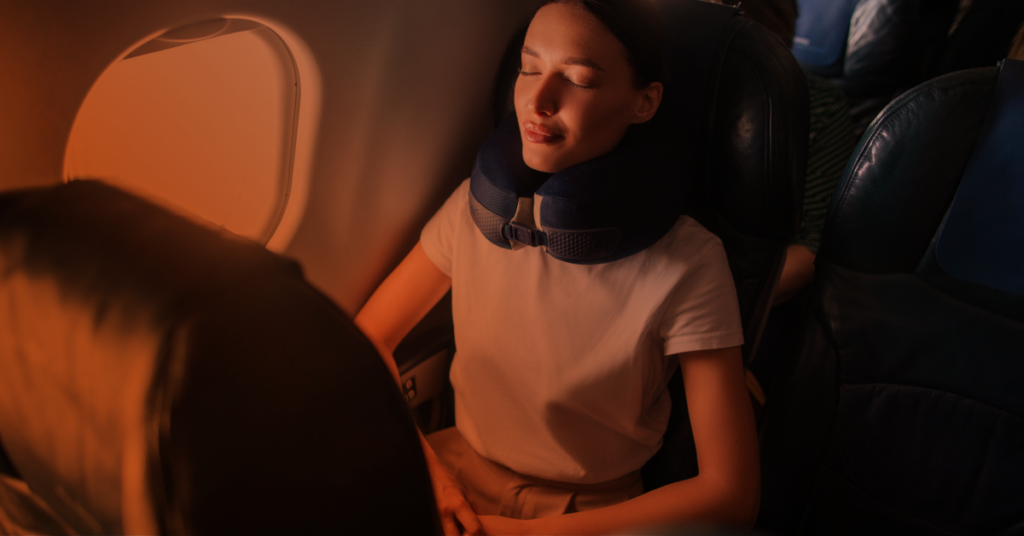
The short answer: Long flights, car rides, and train trips can leave your back, hips, and knees feeling stiff or uncomfortable because you spend hours in a limited range of positions with relatively little muscle activity. Prolonged sitting has been associated with immediate increases in low-back discomfort, and recent research also shows that perceived knee stiffness can develop during extended sitting. [1][2]
Movement helps: Changing position, standing when possible, and moving the legs periodically can break up long periods of inactivity. For people with osteoarthritis, regular movement and exercise are also important for managing stiffness and maintaining joint function. [3]
Your seat is only part of the trip: Carrying luggage, lifting bags into an overhead bin, rushing through an airport, and spending much more time walking or standing than usual can also aggravate an already sensitive back or joint.
Plan around an existing condition: Arthritis, chronic low-back pain, hip problems, or a previous injury may become more noticeable during travel. Building movement into the day and keeping needed medications or support devices accessible can make the trip easier.
Know when pain is not just stiffness: New one-sided leg swelling, warmth, redness, unexplained calf pain, chest pain, or shortness of breath after long-distance travel requires medical attention because those symptoms can indicate a blood clot rather than an orthopedic problem. [4]
Holiday travel has a way of compressing a lot of activity into one day. You may spend an hour getting to the airport, wait at the gate, sit through a long flight, stand in a rental-car line, and then spend another hour in the car before you finally reach your destination.
By the time you arrive, your lower back may feel tight, your knees may resist those first few steps, and a hip that normally behaves itself may suddenly feel noticeably stiff. That does not necessarily mean anything has been injured during the trip. Long periods of sitting can make the body feel temporarily less comfortable and mobile, especially when you already have arthritis, back pain, or another musculoskeletal condition.
The best way to manage holiday travel is not to search for one perfect sitting position. It is to avoid staying in any one position for too long and to plan for the physical demands that happen before, during, and after the trip.
Why Do Your Joints Feel Stiff After Sitting for Hours?
Your muscles and joints are designed to move through different positions during the day. Travel limits that variety. Airline seats, cars, buses, and trains often keep the hips and knees bent while the spine remains in a relatively fixed seated posture for an extended period.
Research has found that prolonged sitting is associated with immediate increases in low-back discomfort, although that does not establish sitting as a direct cause of chronic back pain. Studies have also documented changes in back-muscle stiffness during extended sitting. [1][2]
The knees can respond similarly. A 2025 study of healthy adults found that self-reported knee stiffness increased during 90 minutes of uninterrupted sitting, with more meaningful stiffness appearing after about an hour. Brief movement of the leg helped reduce the sensation. [5]
For someone who already has osteoarthritis, the effect may be more noticeable because stiffness after rest is already a common symptom of the condition. NIAMS recommends regular exercise and range-of-motion activity to help reduce joint pain and stiffness and maintain mobility. [3]
The takeaway is not that sitting damages your joints. It is that your body generally feels and functions better when long periods of sitting are interrupted by movement.
Which Areas Are Most Likely to Bother You During Travel?
Travel discomfort often concentrates in areas that spend the longest time in a fixed position or are already sensitive before the trip.
| Area | Why Travel Can Aggravate It | What May Help |
| Lower back | Prolonged sitting can increase immediate low-back discomfort and back-muscle stiffness [1][2] | Change position, use comfortable lumbar support, stand and walk periodically |
| Hips | Hips remain flexed for long periods and may feel stiff after sitting | Stand, walk, and gently move the hips when you have an opportunity |
| Knees | Knees stay bent for extended periods; perceived stiffness can increase with prolonged sitting [5] | Straighten and bend the legs periodically and walk during breaks |
| Neck and shoulders | Looking down at a phone or sleeping in an awkward position can leave muscles sore | Change position, support the neck comfortably, avoid staying bent over a device for hours |
| Hands and wrists | Carrying luggage and gripping bags can aggravate existing hand or wrist problems | Distribute the load and avoid carrying an unnecessarily heavy bag on one side |
If lower-back pain is already a recurring problem, NYBJ’s guide to lower back pain explains common causes and treatment options.
The Best Travel Position Is Your Next Position
Travel advice often focuses on finding the ideal posture. In reality, even a comfortable position can become uncomfortable when you hold it for several hours.
Your seat should allow you to sit comfortably with your feet supported when possible. A small lumbar support or rolled layer of clothing may feel better if your lower back tends to ache in a deeply slouched seat. Once you are reasonably comfortable, the next priority is changing position periodically rather than trying to remain perfectly still.
That might mean shifting how your feet are positioned, straightening one leg when space allows, gently moving your ankles, or standing and walking when it is safe to do so. These small changes keep the body from remaining in exactly the same position throughout the trip.
The same principle applies in a car. Even an ergonomically adjusted driver’s seat cannot eliminate the effects of spending several uninterrupted hours behind the wheel.
How Often Should You Get Up During a Long Trip?
There is not one orthopedic rule that says every traveler must move at an exact interval to prevent joint pain. For long-distance travel, however, the CDC recommends moving the legs frequently and taking opportunities to walk during trips lasting more than four hours. Its current guidance advises getting up and walking approximately every one to two hours when possible. [4]
For a road trip, that can mean deliberately including breaks instead of driving until someone needs gas. Get out of the car, walk for a few minutes, and give your hips, knees, and back a chance to move through a different range.
On a plane or train, getting up may not always be practical because of turbulence, service carts, or other passengers. You can still move while seated by flexing and extending your ankles, changing leg position, and contracting and relaxing the leg muscles. The CDC specifically recommends ankle and calf movements during long-distance travel to help maintain blood flow. [4]
Our corresponding All Sports Physical Therapy article, Movement Breaks That Save Your Back During Long Holiday Travel, will provide a more specific routine that can be used during flights and road trips.
If You Have Arthritis, Do Not Wait Until You Arrive to Start Moving
People with hip or knee arthritis may notice more stiffness than usual after a long travel day. That is not surprising because osteoarthritis commonly causes stiffness after periods of rest. [3]
Regular movement is part of arthritis management, so travel is not the ideal time to abandon the habits that normally keep you mobile. If you have time before leaving, a short walk or your usual mobility routine can help you start the trip after moving rather than after another long period of sitting.
During the trip, use reasonable opportunities to stand and walk. After arrival, give yourself a few minutes to move before immediately sitting through another long meal or collapsing onto the couch.
NYBJ provides more information about arthritis and osteoarthritis treatment as well as dedicated resources for hip osteoarthritis and knee osteoarthritis.
Do Not Turn an Airport Into a Lifting Competition
Sitting may make your back stiff, but luggage creates a different challenge.
Holiday travelers frequently carry more than they normally would, and the awkward part is often not rolling a suitcase through the terminal. It is lifting the suitcase from the floor, loading it into a car, moving it onto a baggage scale, or raising it overhead into a compartment.
If a bag is too heavy to control comfortably, ask for help instead of forcing an awkward lift. Keep the load close to your body when lifting and avoid combining a heavy lift with a sudden twisting movement. When possible, use wheeled luggage rather than carrying a heavy suitcase for long distances.
Smaller bags matter too. A heavy shoulder bag or backpack carried on one side for hours can leave the shoulder, neck, or back sore before the trip even begins. NYBJ’s article on heavy bags and common overuse problems discusses why repeated carrying can become an issue beyond holiday travel.
Airplane, Car, or Train: The Same Basic Rule Applies
The details of each trip are different, but the body’s main problem is similar: too much time with too little movement.
On an Airplane
An aisle seat can make it easier to stand during a longer flight. Keep items you need within reasonable reach so you are not repeatedly twisting into an awkward position, and use safe opportunities to walk the aisle.
When you cannot stand, move your ankles and legs periodically. Avoid storing so many items around your feet that you cannot change position at all.
In a Car
Schedule stops into the drive rather than waiting until your back is already aching. Adjust the seat so you can reach the pedals and steering wheel comfortably without leaning or stretching excessively.
If you are the passenger, change your leg position and take advantage of stops to walk. If you are driving, stop somewhere safe before stretching or changing position substantially.
On a Train
Train travel often provides more opportunities to stand and walk, but it is still easy to spend several hours in the same seat. Use the space available and change positions periodically rather than waiting until stiffness has already become significant.
The mode of travel matters less than the amount of uninterrupted immobility.
Should You Stretch in Your Seat?
Gentle movement can be useful during a long trip, but you do not need to turn an airplane seat into a full stretching session.
Simple motions such as ankle pumps, briefly straightening the knee when space allows, shoulder rolls, or gently changing the position of the spine can help break up prolonged stillness. For many people, standing and walking for a few minutes is more useful than performing an elaborate seated routine.
Avoid aggressive stretching in a cramped area, particularly if you already have an injury. Travel movement should make you feel more comfortable, not force a painful joint into a range it does not tolerate.
The ASPT companion article for this week will provide a practical series of travel movement breaks that can be performed with limited space.
What If You Already Have Back Pain Before the Trip?
Travel is easier when you plan around a known problem rather than hoping it stays quiet.
If prolonged sitting normally aggravates your back, choose a seat and travel schedule that give you opportunities to change position. Keep prescribed medications accessible rather than packed in checked luggage, and bring any support device your physician or physical therapist already recommends.
Do not try a completely new brace, stretching routine, or medication for the first time halfway through a long trip unless a clinician has advised you to do so.
NYBJ’s recent article on why back pain keeps coming back explains why recurrent symptoms often require attention to the underlying cause rather than repeatedly treating only the latest flare.
Walking Through the Airport Can Be Its Own Workout
A travel day is not always sedentary. Some of it can be surprisingly active.
Large airports may require long walks between security, terminals, trains, and gates. Add a suitcase, backpack, coat, and time pressure, and the physical demand can be considerably greater than an ordinary day.
If you already have knee, hip, foot, or back pain, plan for that extra activity. Wear supportive shoes you know are comfortable, give yourself enough time that you do not have to sprint through the terminal, and use available assistance when walking long distances is difficult.
The same applies after arrival. A day of sightseeing immediately after a long flight may dramatically increase your activity compared with the hours you spent sitting beforehand. Build some recovery time into the schedule rather than trying to do everything as soon as you land.
Travel Leg Pain Is Not Always an Orthopedic Problem
Most stiffness after a long trip is temporary. One symptom pattern deserves a different level of attention.
Long-distance travel lasting more than four hours can increase the risk of deep vein thrombosis, or DVT, because prolonged immobility can allow blood to pool in the veins of the legs. The overall risk for most travelers is small, but it is higher in people who have additional risk factors. [4]
Possible signs of a DVT include:
- Swelling in one leg or arm
- Unexplained pain or tenderness
- Skin that feels unusually warm
- Redness or discoloration
A pulmonary embolism can occur if part of a clot travels to the lungs. Sudden shortness of breath, chest pain, coughing up blood, lightheadedness, or fainting requires immediate medical attention. [4]
These symptoms should not be treated as ordinary travel soreness or a muscle strain.
People with a history of blood clots, recent surgery or injury, limited mobility, active cancer, pregnancy, hormone therapy, or other risk factors should discuss long-distance travel with their medical provider. [4]
What Should You Do When You Arrive?
Do not judge how your joints feel from the first ten steps after several hours in a seat.
Stand up slowly, give your legs a chance to move, and walk for a few minutes before deciding that your back, hip, or knee has suddenly become significantly worse. Temporary stiffness often eases once the body begins moving again.
When you reach your destination, return to your usual activity gradually. A short walk and gentle movement may feel better than immediately remaining seated for several more hours.
If a familiar joint remains substantially more painful than usual, becomes swollen, or continues limiting your movement after you have had time to move around, pay attention to the change rather than assuming travel is the only explanation.
When Should Post-Travel Joint Pain Be Evaluated?
Temporary stiffness that improves after walking is different from pain that persists or develops additional symptoms.
Consider an orthopedic evaluation if:
- Back, hip, or knee pain does not improve after you resume normal movement
- Pain becomes progressively worse after the trip
- You develop significant joint swelling
- A knee or hip begins giving way
- A joint catches or locks
- You have new weakness, numbness, or tingling
- Back pain begins radiating down the leg
- You hurt yourself while lifting luggage
- You fell while traveling and cannot comfortably bear weight
- Pain begins interfering with walking or ordinary activities
If you develop one-sided leg swelling, warmth, redness, unexplained calf pain, chest pain, or shortness of breath after long-distance travel, seek medical care for possible DVT or pulmonary embolism rather than assuming the symptoms are orthopedic. [4]
Arrive Ready for the Holiday, Not Ready for an Ice Pack
Long holiday travel asks the body to do two very different things: remain relatively still for hours and then suddenly walk, lift, carry, climb stairs, and keep up with a busy schedule once you arrive.
Planning for both sides of the trip can make a noticeable difference. Break up prolonged sitting when you can, move the legs even when you cannot leave your seat, handle luggage sensibly, wear shoes that can tolerate a long travel day, and give yourself time to move after arrival.
The goal is not to create a perfectly pain-free travel position. It is to keep your body from spending the entire trip in one position and then asking stiff joints and muscles to immediately perform at full speed.
If persistent back, hip, knee, or other joint pain is making travel difficult, schedule an evaluation with New York Bone & Joint Specialists to determine what is causing your symptoms and how to manage them before your next trip.
Frequently Asked Questions
Why do my joints hurt after a long flight?
Long flights require you to sit with your hips and knees bent and your body in a limited range of positions for hours. Prolonged sitting has been associated with immediate low-back discomfort, and research also shows that perceived knee stiffness can increase during extended sitting. Moving after the flight often helps temporary stiffness improve. [1][2][5]
How often should I get up on a long flight?
There is no specific movement interval proven to prevent orthopedic pain, but the CDC recommends that travelers on long trips move their legs frequently and walk approximately every one to two hours when possible, particularly on trips lasting more than four hours. [4]
What can I do for stiff knees on an airplane?
Change leg position when space allows, flex and extend your ankles, straighten the knee periodically if you have room, and stand or walk when it is safe to do so. A recent study found that perceived knee stiffness increased with prolonged sitting and that brief knee movement reduced some of that stiffness. [5]
Is an aisle seat better if I have back or joint pain?
An aisle seat may make it easier to stand and walk during a long flight. The best seat depends on your individual condition and comfort, but easier access to the aisle can be useful if changing position and taking movement breaks helps your symptoms.
Can long flights make arthritis worse?
A long period of sitting may temporarily make an arthritic joint feel stiffer, but that does not necessarily mean the arthritis itself has structurally worsened. Osteoarthritis commonly causes stiffness after rest, and regular movement and exercise are recommended to maintain joint function and manage symptoms. [3]
How can I prevent back pain on a long car ride?
Adjust the seat so you can sit comfortably without reaching excessively, change position when possible, and schedule regular stops so you can get out and walk. Prolonged sitting has been associated with immediate increases in low-back discomfort, so breaking up a long drive may be more useful than trying to maintain one “perfect” posture for hours. [1]
Should I stretch before or after a long flight?
Gentle movement before and after travel can help you avoid going directly from one long period of inactivity into another. During the trip, simple ankle, leg, and position changes are usually more practical than aggressive stretching in a confined seat.
When is leg pain after a flight an emergency?
One-sided leg swelling, unexplained calf or leg pain, warmth, or redness can be signs of deep vein thrombosis. Sudden shortness of breath, chest pain, coughing up blood, lightheadedness, or fainting can indicate a pulmonary embolism and require immediate medical attention. [4]
References
[1] Baradaran Mahdavi S, Riahi R, Vahdatpour B, Kelishadi R. Association of Exposures to Seated Postures With Immediate Increases in Back Pain: A Systematic Review of Studies With Objectively Measured Sitting Time. Journal of Manipulative and Physiological Therapeutics. 2020;43(1):1-12.
[2] Kett AR, Milani TL, Sichting F. Sitting for Too Long, Moving Too Little: Regular Muscle Contractions Can Reduce Muscle Stiffness During Prolonged Periods of Chair-Sitting. Frontiers in Sports and Active Living. 2021;3:760533.
[3] National Institute of Arthritis and Musculoskeletal and Skin Diseases. Osteoarthritis: Diagnosis, Treatment, and Steps to Take.
[4] Centers for Disease Control and Prevention. Understanding Your Risk for Blood Clots with Travel.
[5] Thom JM, et al. Time Course of Perceived Knee Stiffness Following Prolonged Sitting in Healthy Adults. 2025.
Our Locations
-

Upper East Side: Full Service Orthopedic Center & Walk-In
1198 3rd Avenue, Between 69th and 70th Street New York, NY 10021Physicians: Monday–Friday 8:00am–6:00pm, Saturday 8:00am–5:00pm
Physical Therapy: Monday–Friday 7:00am–7:30pm, Saturday 8:00am–3:00pm
Sunday: ClosedPhone: (212) 759-4553 -

Orthopedic Doctor Midtown Manhattan NYC — New York Bone & Joint Specialists
425 Madison Ave, Suite 200 (second floor) New York, NY 10017 (corner of East 49th Street)Physician appointments: Mon–Fri 8:00 am–6:00 pm
Physical therapy: Mon–Fri 7 am–7:30 pm, Sat 8 am–3 pmPhone: (212) 759-4553 -

Orthopedic Doctor Upper East Side NYC — New York Bone & Joint Specialists
130 E 67th St New York, NY 10065Currently ClosedPhone: (212) 759-4553