SLAP Tear Treatment: Physical Therapy vs. Surgery, SLAP Repair and Recovery
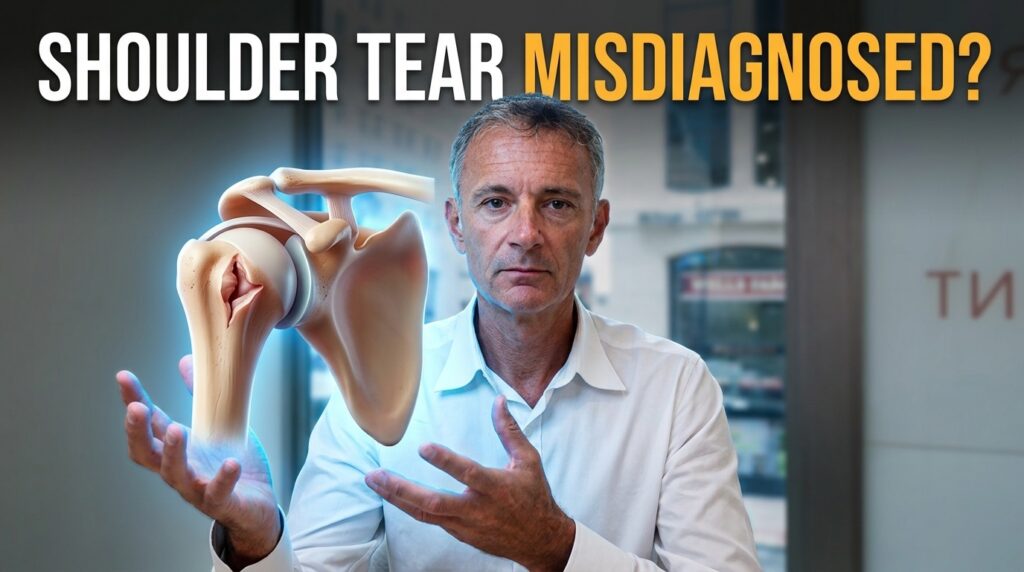
Being diagnosed with a SLAP tear doesn’t automatically mean you need shoulder surgery. For some patients, physical therapy can successfully reduce symptoms and restore function. For others—particularly young competitive athletes whose performance depends on overhead strength and stability—surgical repair may be considered.
So how does an orthopedic surgeon decide between physical therapy and surgery?
Dr. Leon Popovitz, a board-certified orthopedic surgeon and co-founder of New York Bone & Joint Specialists, specializes in shoulder, knee, and sports medicine conditions. His treatment philosophy emphasizes preservation: whenever possible, the goal is to preserve a patient’s natural tissues and avoid rushing into surgery.
Here, Dr. Popovitz explains how SLAP tears are treated, what happens when physical therapy doesn’t work, what SLAP repair surgery involves, and what athletes can expect during recovery.
Can a SLAP Tear Be Treated With Physical Therapy?
Whether physical therapy or surgery is recommended depends on several factors, including the type of SLAP tear, the patient’s age, symptoms, activity level, and physical demands.
For an older patient who does not have significant athletic demands, Dr. Popovitz generally favors trying physical therapy first. Physical therapy may also be appropriate for a Type I SLAP tear, in which the edges of the labrum are frayed rather than completely detached from the bone.
Degenerative labral tears can also respond well to conservative treatment.
The situation can be different for a young competitive athlete who needs to return to a high level of performance. A collegiate or professional athlete, for example, may need to regain significant strength, power, stability, and throwing ability. When a symptomatic tear prevents that despite rehabilitation, surgical treatment may become an option.
How Do You Know If Physical Therapy Has Failed for a SLAP Tear?
Symptoms and performance are important considerations.
A competitive athlete may complete physical therapy and then discover that the shoulder still doesn’t perform the way it did before the injury.
A throwing athlete may notice that the same power or strength hasn’t returned. A weightlifter may continue experiencing a painful click or find that the shoulder prevents them from lifting at their previous level.
Persistent symptoms and an inability to return to the patient’s required level of function can indicate that conservative treatment has not provided the desired result.
What Happens If You Wait Too Long to Treat a SLAP Tear?
One concern with a symptomatic SLAP tear is that the tear may progress and become larger.
Dr. Popovitz also explains that a labral tear can potentially contribute to micro-instability within the shoulder. Abnormal movement within the joint may create additional grinding against the cartilage, potentially contributing to further cartilage wear over time.
The significance of this depends on the individual patient and injury, which is why treatment decisions should be based on symptoms, diagnostic findings, activity level, and functional goals.
What Happens During SLAP Repair Surgery?
SLAP repair is performed arthroscopically using several very small incisions.
A small camera, or arthroscope, is inserted into the shoulder, allowing the surgeon to examine the inside of the joint on a monitor. Additional small openings allow specialized instruments to enter the joint.
The surgeon first evaluates the entire shoulder before identifying the labral tear.
At the site where the cartilage needs to be reattached, the bone is prepared to encourage healing. Sutures are then passed through the labral tissue and secured to small anchors placed into precise locations in the bone.
Depending on the size and location of the tear, multiple anchors may be necessary.
The objective is to restore and preserve the labrum as close as possible to its natural anatomical position.
What Makes SLAP Repair Technically Challenging?
Two considerations Dr. Popovitz identifies are capturing enough healthy labral tissue without damaging surrounding structures and positioning the repair correctly.
The biceps tendon attaches near the superior labrum and must be protected during the procedure.
Some tears can also occur in areas of the socket that are more difficult to access arthroscopically, making the angle and placement of surgical instruments particularly important.
What Are the Risks of SLAP Repair Surgery?
As with any surgical procedure, SLAP repair carries potential risks.
Dr. Popovitz notes that complications such as infection, blood clots, and nerve injury are possible but uncommon with arthroscopic surgery.
One of the more relevant postoperative concerns is shoulder stiffness.
Following the prescribed rehabilitation program is therefore an important component of recovery. Surgical technique, including appropriate positioning and tensioning of the anchors, is also important to restoring shoulder function.
What Is the Difference Between SLAP Repair and Biceps Tenodesis?
The biceps tendon and superior labrum are closely connected anatomically, which means the condition of the biceps tendon can influence the surgical approach.
During a SLAP repair, the surgeon attempts to restore the labrum to its anatomical position.
However, some patients also have inflammation or damage involving the biceps tendon. In those circumstances, a surgeon may consider a procedure called a biceps tenodesis.
During a tenodesis, the damaged portion of the biceps tendon is released from its attachment within the joint and reattached to the humerus.
According to Dr. Popovitz, patient age and the condition of the tendon can influence this decision. In younger patients, there may be a greater emphasis on anatomical labral repair, while biceps tenodesis may be considered more frequently as patients get older or when significant biceps tendon pathology is present.
The appropriate procedure ultimately depends on the individual patient’s anatomy, symptoms, activity level, and surgical findings.
Biceps Tenodesis vs. Tenotomy
A biceps tenotomy involves releasing the tendon without reattaching it.
While this may relieve symptoms in selected patients, Dr. Popovitz explains that simply releasing the tendon can produce a visible change in the shape of the biceps commonly referred to as a “Popeye” appearance and may also contribute to cramping.
With a biceps tenodesis, the tendon is instead reattached to the humerus after being released from its original attachment.
How Long Is Recovery After SLAP Repair?
Recovery is particularly important for throwing athletes.
Dr. Popovitz generally waits at least six months before allowing a patient to return to light throwing following SLAP repair.
Returning to high-level competitive throwing takes longer.
A pitcher, quarterback, tennis player, or other overhead athlete may require approximately nine to twelve months before returning to their previous competitive level. Once throwing resumes, additional time is necessary to rebuild conditioning, strength, mechanics, and performance.
This is why returning to competition and simply being medically cleared to begin throwing are not the same thing.
Can Athletes Return to Their Previous Level After SLAP Repair?
Return-to-sport rates vary among studies and depend on numerous factors, including the sport, position, severity of injury, surgical procedure, and rehabilitation.
Dr. Popovitz notes that published outcomes vary and discusses return-to-previous-level figures generally in the 70% to 85% range. He reports that New York Bone & Joint Specialists’ internal tracking has shown results around the 90% range.
Individual outcomes cannot be guaranteed, and return to sport depends on the circumstances of each athlete and injury.
What If a SLAP Tear Ends an Athlete’s Season?
Being told that an injury may cost an athlete an entire season can be extremely difficult, particularly for someone competing at a high level.
Dr. Popovitz encourages athletes to consider the bigger picture.
Missing months of competition and undergoing rehabilitation can be disappointing, but appropriately addressing a symptomatic injury may provide an opportunity to return to many more years of athletic activity.
For a high-level athlete with persistent symptoms and diagnostic findings confirming a SLAP tear, delaying appropriate treatment for an extended period may also allow the condition to progress.
Finding the Right Treatment for a SLAP Tear
Not every SLAP tear requires surgery, and treatment should not be determined by an MRI finding alone.
Age, tear type, symptoms, physical demands, athletic goals, examination findings, response to physical therapy, and diagnostic imaging all contribute to determining the appropriate treatment.
For some patients, physical therapy may provide the improvement necessary to return to normal activities. For others—particularly symptomatic competitive athletes who cannot regain their previous level of performance—arthroscopic treatment may be considered.
If you have persistent shoulder pain, painful clicking, weakness, or difficulty returning to sports despite physical therapy, an evaluation with a shoulder specialist can help determine the source of your symptoms and appropriate next steps.
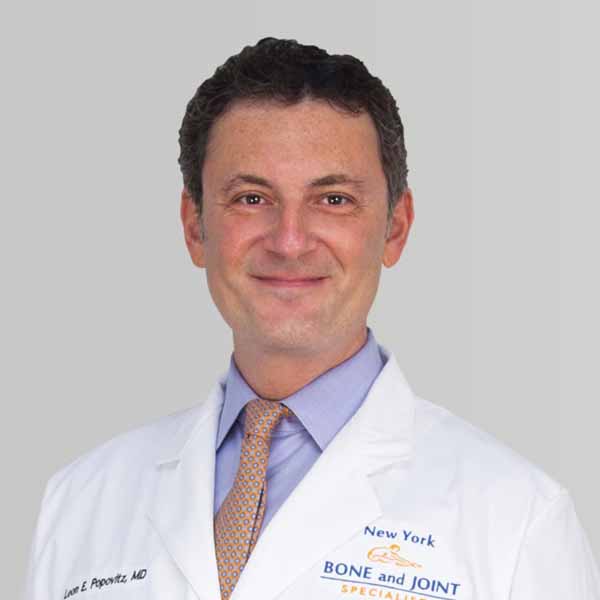
Board-Certified Orthopedic Surgeon (ABOS)
Fellow, American Academy of Orthopaedic Surgeons
Co-Founder, NY Bone & Joint Specialists
Team Physician, US Open Tennis Championships
Our Locations
-
Upper East Side: Full Service Orthopedic Center & Walk-In
1198 3rd Avenue, Between 69th and 70th Street New York, NY 10021Physicians: Monday–Friday 8:00am–6:00pm, Saturday 8:00am–5:00pm
Physical Therapy: Monday–Friday 7:00am–7:30pm, Saturday 8:00am–3:00pm
Sunday: ClosedPhone: (212) 759-4553 -

Orthopedic Doctor Midtown Manhattan NYC — New York Bone & Joint Specialists
425 Madison Ave, Suite 200 (second floor) New York, NY 10017 (corner of East 49th Street)Physician appointments: Mon–Fri 8:00 am–6:00 pm
Physical therapy: Mon–Fri 7 am–7:30 pm, Sat 8 am–3 pmPhone: (212) 759-4553 -

Orthopedic Doctor Upper East Side NYC — New York Bone & Joint Specialists
130 E 67th St New York, NY 10065Currently ClosedPhone: (212) 759-4553