SLAP Tears and Shoulder Labral Tears: Why They’re Often Misdiagnosed
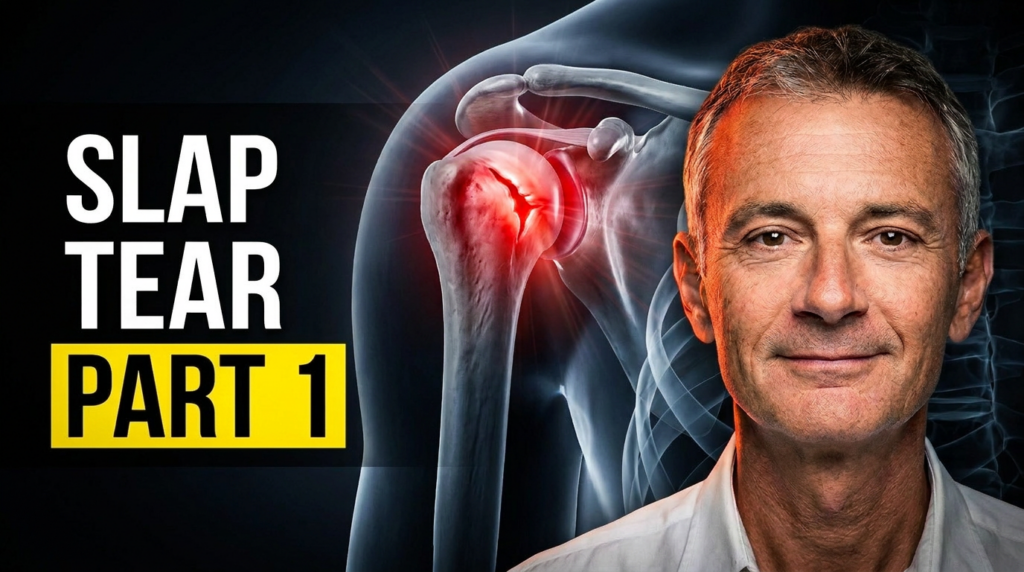
Shoulder pain is commonly associated with conditions such as bursitis or rotator cuff injuries. But for some patients—particularly athletes, weightlifters, and active individuals—the source of persistent shoulder pain may actually be a SLAP tear or shoulder labral tear.
These injuries can be particularly challenging to diagnose because the labrum sits deep within the shoulder joint and may not be clearly visible on standard imaging.
Dr. Leon Popovitz, a board-certified orthopedic surgeon and co-founder of New York Bone & Joint Specialists, specializes in treating conditions of the shoulder, knee, and sports-related injuries. His approach emphasizes tissue preservation and determining the correct diagnosis before rushing into surgical treatment.
In this discussion, Dr. Popovitz answers some of the most common questions patients have about SLAP tears, including their symptoms, causes, diagnosis, and the role of MRI arthrograms.
What Is a SLAP Tear and Why Does It Get Missed So Often?
SLAP stands for Superior Labrum Anterior to Posterior and refers to an injury involving the upper portion of the shoulder’s labrum.
The labrum is a cushion of cartilage that wraps around the rim of the shoulder socket, or glenoid. It helps support and stabilize the ball-and-socket joint.
Because the labrum is located deep within the shoulder and surrounded by other anatomical structures, a tear may be difficult to identify using a standard MRI or ultrasound. As a result, some patients may initially be diagnosed with other shoulder conditions.
Why Are Shoulder Labral Tears Hard to See on Standard Imaging?
Location is one of the biggest challenges.
The labrum sits deep inside the shoulder joint, with muscles, tendons, bones, and other structures surrounding it. The biceps tendon also travels into the shoulder and attaches at the upper portion of the labrum.
This layered anatomy can make a labral injury considerably harder to identify than some more superficial shoulder problems.
Dr. Popovitz emphasizes that shoulder pain should not automatically be presumed to originate from the rotator cuff. Understanding the patient’s symptoms, performing an appropriate physical examination, and ordering the correct imaging are all important parts of reaching an accurate diagnosis.
How Often Are SLAP Tears Initially Misdiagnosed?
According to Dr. Popovitz, it is common to see patients who have already sought treatment elsewhere for persistent shoulder symptoms.
Some may have been treated for presumed bursitis or received a cortisone injection without the underlying labral injury being identified. Others may have undergone an ultrasound or standard MRI that did not adequately visualize the labrum.
When clinical findings suggest a labral tear despite inconclusive standard imaging, an MRI arthrogram may provide a more detailed view of the joint.
Is There a Physical Exam Test for a SLAP Tear?
One examination Dr. Popovitz uses when evaluating a suspected labral injury is the O’Brien test.
During the examination, the patient’s arm is positioned across the body with the thumb pointing toward the floor, and the patient may be asked to raise the arm against resistance.
Pain generated within the joint during this maneuver can raise suspicion that there is pathology inside the shoulder joint. In a young, athletic patient with compatible symptoms, a labral injury may be among the conditions considered.
Who Typically Gets a Shoulder Labral Tear?
SLAP tears are particularly common among young, active people and overhead athletes.
Examples include:
- Baseball pitchers and other throwing athletes
- Tennis players
- Lacrosse players
- Weightlifters
- People performing repetitive overhead work
A labral tear can also result from trauma, including falling onto an outstretched arm or sustaining a direct impact, such as a tackle during football.
Can a SLAP Tear Happen Suddenly, or Does It Develop Over Time?
Both are possible.
A traumatic injury can cause a labral tear during a single event. However, many labral injuries develop gradually through repetitive stress.
For example, repeated overhead throwing or serving can continually place stress on the labrum. Over time, that repetitive motion may contribute to the cartilage tearing.
Can Older Adults Get SLAP Tears?
Yes, although Dr. Popovitz more commonly treats clinically significant SLAP tears in younger athletes, laborers, and weightlifters.
As people age, the labral tissue can become less elastic and more susceptible to degenerative wear and tearing. Consequently, finding some degree of labral degeneration in an older patient does not necessarily have the same significance as finding a tear in a young competitive athlete with matching symptoms.
What Does a SLAP Tear Feel Like?
Symptoms can be particularly revealing.
Patients with a labral tear may describe:
- Painful clicking inside the shoulder
- Catching or clunking
- Popping or snapping
- A sensation of looseness or instability
- Loss of strength or athletic performance
- Pain during overhead lifting or throwing
An athlete may notice a measurable decline in performance. A pitcher, for example, may notice reduced velocity, while a weightlifter may find that the affected shoulder no longer produces the same strength.
These mechanical symptoms can be an important clue that the problem is occurring inside the joint.
How Is a SLAP Tear Different From a Rotator Cuff Injury?
The labrum and rotator cuff perform different functions and can produce different symptom patterns.
The rotator cuff consists of tendons surrounding the shoulder that help move and stabilize the arm. Rotator cuff problems may cause pain along the outside of the shoulder and pain with raising the arm.
A labral tear occurs within the joint itself and is more likely to produce mechanical symptoms such as catching, snapping, popping, painful clicking, or instability.
Patient age, activity level, mechanism of injury, and physical examination findings can all help an orthopedic specialist distinguish between the two.
Can You Have a SLAP Tear and Rotator Cuff Injury at the Same Time?
Yes.
Dr. Popovitz explains that this combination can occur in both younger and older patients, although it may be more common with age.
Degenerative changes can affect both the labrum and rotator cuff. In other cases, a labral injury can contribute to shoulder instability. Repeated abnormal movement of the humeral head can then place additional stress on the underside of the rotator cuff and potentially contribute to partial tearing.
Identifying which structure is actually responsible for the patient’s symptoms is therefore an important part of treatment planning.
What Should I Do If My MRI Is Normal but I Still Suspect a Labral Tear?
A normal standard MRI does not necessarily rule out a labral tear.
When a patient’s history and physical examination strongly suggest a labral injury but a standard MRI is inconclusive, Dr. Popovitz may recommend an MRI arthrogram.
During an MRI arthrogram, contrast material is injected into the shoulder joint before imaging. This helps improve visualization of structures within the joint, including the labrum.
Newer high-field MRI systems can also provide excellent visualization in some circumstances. However, when appropriate imaging is unavailable or the initial study fails to provide an answer, an MRI arthrogram may offer greater diagnostic detail.
Does Everyone With a Suspected SLAP Tear Need an MRI Arthrogram?
Not necessarily.
The decision depends on factors such as the patient’s age, activity level, symptoms, examination findings, and the quality of MRI technology available.
For a young, active patient whose symptoms strongly suggest a labral tear, obtaining an MRI arthrogram earlier may help avoid delays in diagnosis.
In an older patient with degenerative labral changes, however, identifying a small labral tear may not carry the same clinical significance.
Are MRI Arthrograms Safe?
Complications are uncommon.
Dr. Popovitz notes that patients with a history of kidney disease should discuss the contrast material with the appropriate physician before undergoing the study. There is also a very small risk of infection associated with an injection into the joint.
Your physician can determine whether an MRI arthrogram is appropriate based on your individual medical history and symptoms.
Persistent Shoulder Pain Deserves the Right Diagnosis
Not every painful shoulder is a rotator cuff problem.
For patients experiencing persistent pain, clicking, catching, instability, or decreased performance—particularly after repetitive overhead activity or an injury—a labral tear may warrant consideration.
A thorough history, focused physical examination, and appropriate imaging can help determine the source of the problem and avoid treating the wrong condition.
If you are experiencing persistent shoulder pain or have been treated without improvement, an orthopedic evaluation can help determine whether a shoulder labral injury may be contributing to your symptoms.

Board-Certified Orthopedic Surgeon (ABOS)
Fellow, American Academy of Orthopaedic Surgeons
Co-Founder, NY Bone & Joint Specialists
Team Physician, US Open Tennis Championships
Our Locations
-

Upper East Side: Full Service Orthopedic Center & Walk-In
1198 3rd Avenue, Between 69th and 70th Street New York, NY 10021Physicians: Monday–Friday 8:00am–6:00pm, Saturday 8:00am–5:00pm
Physical Therapy: Monday–Friday 7:00am–7:30pm, Saturday 8:00am–3:00pm
Sunday: ClosedPhone: (212) 759-4553 -

Orthopedic Doctor Midtown Manhattan NYC — New York Bone & Joint Specialists
425 Madison Ave, Suite 200 (second floor) New York, NY 10017 (corner of East 49th Street)Physician appointments: Mon–Fri 8:00 am–6:00 pm
Physical therapy: Mon–Fri 7 am–7:30 pm, Sat 8 am–3 pmPhone: (212) 759-4553 -

Orthopedic Doctor Upper East Side NYC — New York Bone & Joint Specialists
130 E 67th St New York, NY 10065Tuesday & Thursday: 8:00am–6:00pm
All other days: ClosedPhone: (212) 759-4553