Wear Your Favorite High Heels Without The Aches And Pains
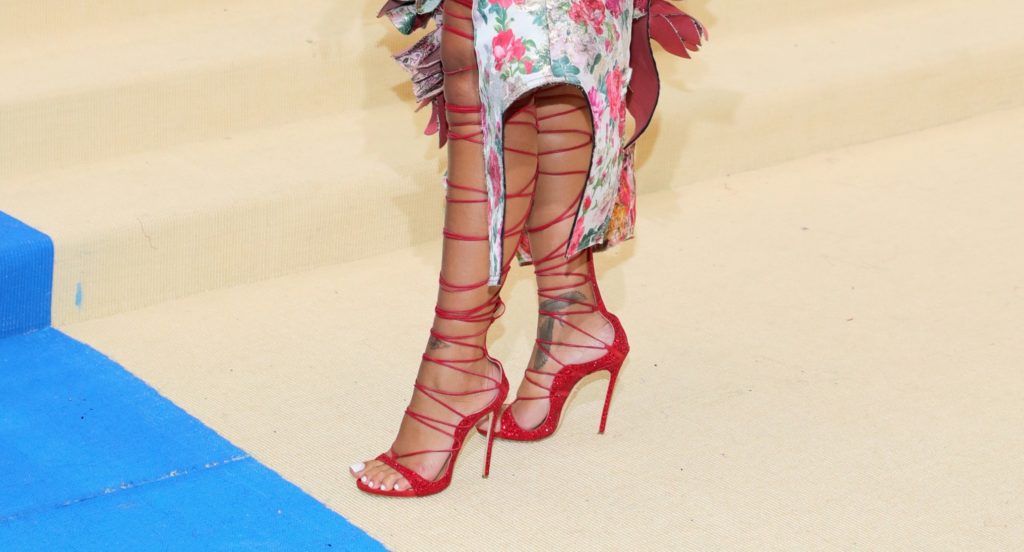
If you took a look at some of the best-dressed celebrities at the Met Gala last night you would’ve seen some sky high heels. For those who can’t say no to fashion, heels are a must. But oftentimes heels can be a source of aches and pains. Here’s the truth about how high heels affect your body and how you can avoid pain while dressing your best.
The accepted theory is that wearing high heels for a long period of time will surely lead to back pain. This is because your weight is shifted forward and you are forced to arch your back to compensate, placing strain on your lumbar spine, hips, and knees.
However, this is not true for everybody. Scientific studies are inconclusive when it comes to a correlation between high heeled shoes and back pain.
However, if you do feel a strain on your low back after a long day in heels, there are stretches to help. Simply lie on your back and pull your knees to your chest for a couple of reps to help alleviate low back aches. lying on your back with your feet planted on the floor and pushing your pelvis upward will also help relieve tension in your hip flexors which can cause achiness in the lumbar spine as well.
While back pain may not be your problem, you will definitely be putting your calf muscles to work by standing in heels for hours. Make sure to stretch your calf muscles before you put on your shoes and once you take them off. Do this by putting the ball of your foot on a low step or book and lowering your heel, thereby manually flexing your foot.
Putting all of your weight on the ball of your foot is also a common way to develop a neuroma or swollen, painful nerve in the ball of your foot. The best way to avoid this is to take breaks often when wearing heels for long periods and try to make sure your heels at least have a wide toe.
Ankle instability is perhaps the most common problem when it comes to wearing high heels. You are at a much higher risk of injuring your ankle in heels and once torn or damaged, the ligaments and tendons in your ankle are slow to heal and prone to constant reinjury. If you wear high heels often you should be sure to do ankle strengthening and balance exercises. This is also the key to walking effortlessly in very high heels! Easy exercises include balancing on one foot or pointing and flexing your foot with a resistance band.
There are a myriad of issues that may spring up if you wear high heels often. Visiting an orthopedist or physical medicine physician at NY Bone and Joint Specialists is the best way to quickly diagnose a problem and treat it before it causes you more severe pain. Your orthopedist will often recommend physical therapy, which is an excellent way to not only relieve symptoms of achiness, cramping, weakness, or stiffness, but the best way to condition your body to become stronger and better withstand wear and tear and avoid injury.
Our Locations
-

Upper East Side: Full Service Orthopedic Center & Walk-In
1198 3rd Avenue, Between 69th and 70th Street New York, NY 10021Monday–Friday: 9:00am–6:00pm
Saturday: 8:00am–5:00pm
Sunday: ClosedPhone: (212) 759-4553 -

Orthopedic Doctor Midtown Manhattan NYC — New York Bone & Joint Specialists
425 Madison Ave, Suite 200 (second floor) New York, NY 10017 (corner of East 49th Street)Physician appointments: Mon–Fri 8:00 am–6:00 pm
Physical therapy: Mon–Fri 7 am–7 pm, Sat 8 am–2 pmPhone: (212) 759-4553 -

Orthopedic Doctor Upper East Side NYC — New York Bone & Joint Specialists
130 E 67th St New York, NY 10065Tuesday & Thursday: 8:00am–6:00pm
All other days: ClosedPhone: (212) 759-4553