ACL Reconstruction Success: What Matters Most During Surgery and Recovery?

For patients facing ACL reconstruction, one question often comes up:
What actually makes an ACL surgery successful?
While many people focus on the graft itself, orthopedic surgeons know that successful ACL reconstruction depends on a combination of surgical precision, proper healing, and patient compliance during recovery.
We sat down with Dr. Leon Popovitz, orthopedic surgeon and sports medicine specialist, to discuss the critical factors that influence ACL reconstruction outcomes.
What Does a Meniscus Tear Look Like During Surgery Compared to an MRI?
Many ACL injuries occur alongside meniscus tears.
On MRI, a healthy meniscus appears as a solid, dark structure within the knee. A tear often appears as a bright line extending through the tissue.
During arthroscopic surgery, surgeons can directly visualize the meniscus. A normal meniscus appears smooth and stable, while a torn meniscus may appear jagged, unstable, or separated.
This direct visualization allows surgeons to confirm MRI findings and identify injuries that may not have been fully appreciated before surgery.
Why Is Tunnel Placement So Important During ACL Reconstruction?
According to Dr. Popovitz, tunnel placement is the single most important technical step of ACL reconstruction.
The ACL attaches to specific locations on both the femur (thigh bone) and tibia (shin bone). During surgery, tunnels are created in these bones so the new graft can be positioned exactly where the original ACL once existed.
Even small errors matter.
Research has shown that placing the tunnel just a few millimeters off its anatomical location can significantly affect knee stability and increase the risk of graft failure.
How Do Surgeons Know the Tunnel Is in the Correct Position?
Surgeons use several methods:
- Direct arthroscopic visualization
- Specialized measuring instruments
- Anatomical landmarks inside the knee
- Assessment of the tunnel’s back wall
Once the tunnel is created, Dr. Popovitz carefully evaluates its position to ensure the graft will function as naturally as possible.
The goal is to recreate the native ACL anatomy as accurately as possible on the first attempt.
What Is Graft Tensioning?
After the graft is placed into the tunnels, it must be secured with the proper amount of tension.
Too tight and the knee may become stiff or place excessive stress on the graft.
Too loose and the knee may continue to feel unstable.
The goal is to achieve the proper balance.
While specialized instruments can assist with tensioning, Dr. Popovitz notes that experience and anatomical tunnel placement are often even more important factors in achieving a successful result.
How Do Surgeons Test the New ACL During Surgery?
Once fixation is complete, the graft is examined arthroscopically.
Using a probe, the surgeon gently evaluates the tension of the reconstructed ACL.
A properly tensioned graft should feel stable and secure.
If the graft appears too loose, additional adjustments may be necessary before completing the procedure.
What Should a Reconstructed ACL Feel Like When Everything Goes Right?
The ultimate goal is for patients to eventually forget which knee underwent surgery.
When reconstruction is performed correctly and rehabilitation is completed successfully, patients can often return to:
- Recreational sports
- Collegiate athletics
- Professional athletics
- Physically demanding occupations
- Daily activities without limitations
According to Dr. Popovitz, many patients return years later and struggle to remember which knee was reconstructed because it feels so natural.
Why Are the First Six Weeks So Important?
One of the most critical periods following ACL reconstruction is the first four to six weeks.
Immediately after surgery, the graft is primarily held in place by the fixation devices used during surgery.
During this period, the body begins the process of incorporating the graft into the surrounding bone.
Until this biological healing occurs, the graft remains vulnerable.
This is why patients are often instructed to use:
- Crutches
- A knee brace
- Activity restrictions
These protective measures help prevent excessive stress on the healing graft.
Can Patients Feel the Graft Healing?
No.
Patients generally cannot feel the biological process of graft incorporation occurring.
Even though important healing is taking place, most patients are unaware of the microscopic changes happening inside the knee.
This makes it even more important to follow post-operative instructions carefully.
What Can Cause an ACL Graft to Fail Early?
The most common causes of early graft problems involve returning to activity too soon.
Examples include:
- Running before being cleared
- Jumping or pivoting activities
- Ignoring brace instructions
- Discontinuing crutches prematurely
- Excessive activity during the early healing phase
During the first six weeks, patience is one of the most important parts of recovery.
How Do Surgeons Monitor Recovery After ACL Surgery?
Recovery doesn’t end when the operation is complete.
Dr. Popovitz follows patients closely throughout the post-operative period.
Follow-up visits typically include:
Physical Examination
The knee is evaluated for:
- Stability
- Range of motion
- Swelling
- Overall healing
Imaging
Post-operative X-rays help evaluate:
- Tunnel position
- Hardware placement (when visible)
- Overall surgical alignment
Progress Assessments
Patients are monitored throughout rehabilitation to ensure recovery is progressing appropriately.
What Is the Most Important Thing Patients Should Understand About Recovery?
According to Dr. Popovitz, the most important word is:
Patience.
While recovery may seem slow initially, most patients progress steadily when they follow their rehabilitation program.
Recovery generally follows a gradual progression:
- Crutches and brace during the initial healing phase
- Increasing weight-bearing activities
- Light jogging after several months
- Progressive strengthening
- Return to sports when appropriate
Patients who remain patient and follow their surgeon’s recommendations typically achieve excellent outcomes.
The Bottom Line
ACL reconstruction is far more than simply replacing a torn ligament.
Successful outcomes depend on:
- Precise tunnel placement
- Proper graft tensioning
- Biological healing
- Careful rehabilitation
- Patient adherence to recovery guidelines
When all of these elements come together, patients can often return to the activities they love with confidence and stability.
If you’ve suffered an ACL injury and are considering reconstruction surgery, schedule an evaluation with Dr. Leon Popovitz and the team at New York Bone & Joint Specialists to discuss your treatment options and recovery plan.
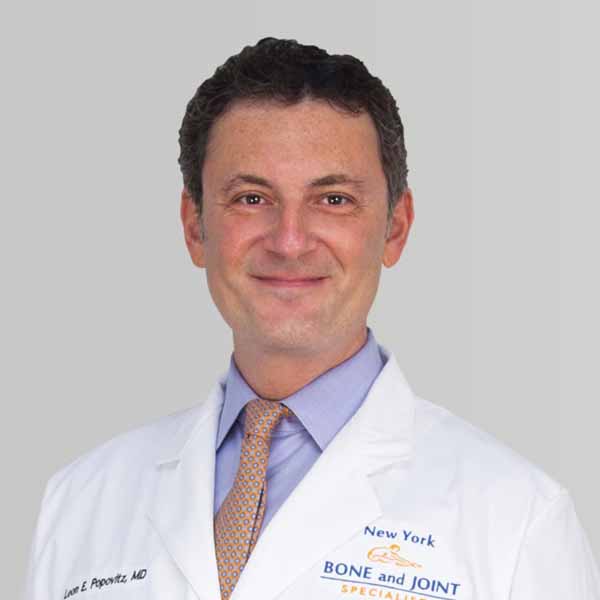
Board-Certified Orthopedic Surgeon (ABOS)
Fellow, American Academy of Orthopaedic Surgeons
Co-Founder, NY Bone & Joint Specialists
Team Physician, US Open Tennis Championships
Our Locations
-

Upper East Side: Full Service Orthopedic Center & Walk-In
1198 3rd Avenue, Between 69th and 70th Street New York, NY 10021Monday–Friday: 9:00am–6:00pm
Saturday: 8:00am–5:00pm
Sunday: ClosedPhone: (212) 759-4553 -

Orthopedic Doctor Midtown Manhattan NYC — New York Bone & Joint Specialists
425 Madison Ave, Suite 200 (second floor) New York, NY 10017 (corner of East 49th Street)Physician appointments: Mon–Fri 8:00 am–6:00 pm
Physical therapy: Mon–Fri 7 am–7 pm, Sat 8 am–2 pmPhone: (212) 759-4553 -

Orthopedic Doctor Upper East Side NYC — New York Bone & Joint Specialists
130 E 67th St New York, NY 10065Tuesday & Thursday: 8:00am–6:00pm
All other days: ClosedPhone: (212) 759-4553