Biceps Tenodesis NYC — Proximal Biceps Surgery at New York Bone & Joint
Written by: Dr. Leon E. Popovitz
Board-Certified Orthopedic Surgeon (ABOS) │ FAAOS │ Fellowship-Trained Sports Medicine, NYU Langone
Shoulder & Knee Surgery │ Co-Founder, New York Bone & Joint Specialists │ Surgery at Lenox Hill Hospital
Date Published: July 1, 2026
Last Updated: July 1, 2026
Last Medically Reviewed: July 1, 2026
This page has been written and reviewed by a fellowship-trained, board-certified orthopedic surgeon with over 20 years of clinical experience. All clinical claims are supported by peer-reviewed literature and current AAOS and AOSSM guidelines. See References section below.
At a glance
- What it is: Biceps tenodesis is a surgical procedure in which the long head of the biceps tendon is detached from its attachment at the superior labrum of the shoulder joint and reattached to the humerus (upper arm bone) below the shoulder. This eliminates the source of biceps-related shoulder pain while preserving the biceps muscle’s function and preventing the ‘Popeye’ deformity associated with an untreated rupture. [1]
- Who performs it: Dr. Leon E. Popovitz, board-certified orthopedic surgeon (ABOS), FAAOS, fellowship-trained in sports medicine at NYU Langone. Surgery at Lenox Hill Hospital as an outpatient procedure.
- Conditions treated: Biceps tendinopathy (chronic inflammation at the bicipital groove), partial biceps tendon tear at the proximal attachment, complete proximal biceps tendon rupture, and SLAP tear with significant biceps anchor involvement. [1] [4]
- Tenodesis vs. tenotomy: Biceps tenodesis reattaches the tendon to the humerus, preserving muscle length-tension relationship, preventing the Popeye deformity, and maintaining elbow flexion and supination strength. Biceps tenotomy simply cuts the tendon and allows retraction, which is simpler and faster, but produces the Popeye deformity and modest strength reduction. Tenodesis is appropriate for most patients under 55–60 who are active. Tenotomy is appropriate for older, lower-demand patients. [3]
- Recovery: Sling for 4–6 weeks. Return to desk work: 2–3 weeks. Return to overhead sport: 6–8 months with criteria-based clearance. Elbow flexion and supination strength typically return to symmetry by 6 months.
- Access: Same-week consultations at both Manhattan locations. No referral required.
Book a consultation
Prompt Appointments Available
Upper East Side: 1198 Third Ave | Midtown: 425 Madison Ave
Surgery performed at Lenox Hill Hospital - Northwell Health
About this page
Written by Dr. Leon E. Popovitz, board-certified orthopedic surgeon (ABOS), FAAOS, fellowship-trained sports medicine NYU Langone. Co-founder of New York Bone & Joint Specialists, Manhattan, New York City. Biceps tenodesis is performed as an outpatient procedure at Lenox Hill Hospital — Northwell Health.
Introduction
The long head of the biceps tendon originates at the superior glenoid labrum (the same attachment point involved in SLAP tears) and travels through the bicipital groove at the front of the humerus before it inserts on the forearm. Because of its path through the shoulder joint and along the bicipital groove, it is subject to both intra-articular pathology (SLAP tears, superior labral fraying, biceps anchor degeneration) and extra-articular pathology (tendinopathy within the groove, impingement, partial tearing). [1]
The distinguishing clinical feature is anterior shoulder pain specifically reproducible by palpating the bicipital groove and by resisted elbow flexion and forearm supination. When that clinical picture is confirmed by MRI or ultrasound, and when conservative management has been genuinely attempted and has not produced adequate relief, biceps tenodesis is the procedure that addresses the source.
Tenodesis vs. Tenotomy vs. SLAP Repair: The Decision Matrix
| Procedure | What it Does | Ideal Clinical Candidate |
| Biceps tenodesis | Detach biceps from labrum, reattach to humerus. Preserves muscle length-tension, prevents Popeye deformity, maintains strength. | Active patients under 55–60. Patients who require full elbow and supination strength. Any patient for whom cosmesis matters. |
| Biceps tenotomy | Cut biceps from labrum, allow retraction. Does not reattach. Produces Popeye deformity in most cases. Modest supination and elbow flexion strength loss. | Older (60+), lower-demand patients who want the simplest and fastest procedure. Cosmesis is not a concern. |
| SLAP repair | Reattach torn superior labrum to glenoid using suture anchors. Preserves the native biceps anchor. | Patients under 35 with genuine Type II SLAP tear, healthy tissue, and overhead athletic demand requiring intact labrum. Not appropriate in older patients with degenerative tissue. [4] |
At New York Bone & Joint, the decision between these three procedures is made based on: patient age, tissue quality found at the biceps anchor, the presence or absence of a SLAP tear, the patient’s activity demands, and in some cases on what’s found intraoperatively. Patients who are appropriate candidates for SLAP repair are discussed specifically. The decision is not made by default. [3] [5]
The Procedure
| Phase | What Happens |
| Anesthesia & setup | General anesthesia with a regional nerve block for post-operative pain control. Outpatient at Lenox Hill Hospital. Operative time is approximately 45–60 minutes. |
| Arthroscopic evaluation | The shoulder joint is surveyed arthroscopically. The biceps anchor and labrum are assessed directly. Any concurrent pathology (such as a tear requiring an arthroscopic rotator cuff repair or cartilage damage) is addressed in the same session. |
| Tendon release | The long head of the biceps tendon is released from its degenerated labral attachment under arthroscopic visualization. |
| Tenodesis fixation | The tendon is retrieved and reattached to the humerus (typically in the bicipital groove or just below it) using a surgical screw or suture anchor. [5] Fixation approach note: A suprapectoral approach is performed entirely arthroscopically within the bicipital groove; a subpectoral approach uses a small open mini-incision lower on the arm to completely bypass the groove. Both yield clinically comparable long-term outcomes: the choice is made based on anatomy, tissue quality, and intraoperative findings. [5] The fixation position is chosen based on the patient’s anatomy and the surgical approach. |
| Closure & discharge | Small incisions are closed. The arm is placed securely in a protective sling. The patient is discharged the same day with detailed instructions and a coordinated physical therapy protocol start date. |
Recovery and Functional Rehabilitation Timeline
| Phase | Timeframe | Permitted Activities & Physical Therapy Goals |
| Sling & protected motion | Weeks 0–4 | Sling full-time. Passive pendulum exercises only. No active shoulder or elbow use. Return to remote or desk work by weeks 2–3. |
| Active range of motion | Weeks 4–8 | Sling is gradually weaned. Active-assisted motion begins. Guided physical therapy progressively restores natural shoulder kinematics. |
| Strengthening | Months 2–4 | Progressive rotator cuff and periscapular strengthening. No loaded or resisted elbow flexion or supination until the tenodesis fixation is fully biologically healed. |
| Return to sport | Months 5–8 | Criteria-based advancement. Requires strength symmetry testing and functional movement assessment before return to overhead throwing sports or heavy manual labor. |
References
- AAOS. Biceps Tendon Tear at the Shoulder. OrthoInfo. orthoinfo.aaos.org/en/diseases–conditions/biceps-tendon-tear-at-the-shoulder
- Frantz TL et al. Biceps Tenodesis for Superior Labrum Anterior-Posterior Tear in the Overhead Athlete. Am J Sports Med. 2021. pubmed.ncbi.nlm.nih.gov/32579853
- Slenker NR et al. Biceps tenotomy versus tenodesis: clinical outcomes. Arthroscopy. 2012. pubmed.ncbi.nlm.nih.gov/22284407
- Deng ZJ et al. Outcomes and complications after primary arthroscopic suprapectoral versus open subpectoral biceps tenodesis for superior labral anterior-posterior tears or biceps abnormalities. Orthop J Sports Med. 2020. pubmed.ncbi.nlm.nih.gov/32923502
- Belk JW et al. Subpectoral versus suprapectoral biceps tenodesis yields similar clinical outcomes. J ISAKOS. 2021. pubmed.ncbi.nlm.nih.gov/34016736
FAQs
Biceps tenodesis is a surgical procedure in which the long head of the biceps tendon is detached from the shoulder joint and reattached to the upper arm bone to eliminate the source of chronic anterior shoulder pain. [1] It is performed when the biceps tendon at its proximal attachment is the confirmed source of shoulder pain—through tendinopathy, partial tearing, or involvement in a SLAP tear—and conservative management has not provided adequate relief.
Biceps tenodesis reattaches the tendon to the humerus after releasing it from the labrum, preserving the muscle’s length-tension relationship and preventing the Popeye deformity. Biceps tenotomy simply cuts the tendon without reattachment, producing the deformity and modest strength loss. [3] Tenodesis is appropriate for most active patients who care about cosmesis and strength. Tenotomy is appropriate for older, lower-demand patients for whom the simpler procedure is sufficient.
No—biceps tenodesis specifically prevents the Popeye deformity by structurally reattaching the tendon to the humerus before the muscle belly can retract downwards. [2] The Popeye deformity—a visible bulge in the mid-arm from a retracted muscle—occurs after a biceps tenotomy or an untreated complete traumatic rupture, not after a successful tenodesis.
A suprapectoral biceps tenodesis is performed entirely arthroscopically, reattaching the tendon within the bicipital groove at the top of the humerus. A subpectoral approach uses a small open mini-incision lower on the arm to reattach the tendon below the groove entirely. [5] Both approaches eliminate biceps-related shoulder pain and produce comparable long-term outcomes. The choice between them is made based on the patient’s anatomy, whether concurrent arthroscopic procedures are being performed, and the surgeon’s intraoperative assessment. Patients do not need to choose between them — Dr. Popovitz selects the approach that best matches the individual anatomy.
A protective shoulder sling is worn for four to six weeks while the tenodesis fixation securely heals to the bone. [2] Return to remote or desk work is typically achieved within two to three weeks. Return to full overhead sports or manual overhead labor ranges between six to eight months, strictly determined by strength symmetry testing and functional physical therapy milestones. Elbow flexion and supination strength typically return to full symmetry by six months.
Yes. For chronic biceps tendinopathy without a massive structural tear, non-surgical pathways—such as targeted physical therapy, ultrasound-guided cortisone injections into the bicipital groove sheath, and activity modification—frequently provide excellent long-term relief. [1] Surgery is indicated when comprehensive conservative management fails to offer relief after 8–12 weeks, or when acute structural tearing compromises function.
No — SLAP repair reattaches the torn superior labrum to the glenoid using suture anchors, preserving the native biceps anchor. Biceps tenodesis releases the biceps from the labrum entirely and reattaches it lower on the humerus. [4] SLAP repair is appropriate for younger patients under 35 with high overhead athletic demands and healthy tissue. Tenodesis is often preferred for patients over 35–40 or those with degenerative tissue quality at the anchor. The right procedure depends on age, tissue quality, and activity demands.
A complete proximal biceps tendon rupture in an older, lower-demand individual can frequently be managed non-operatively with highly acceptable results, though it will result in a permanent Popeye deformity and a modest reduction in supination power. [1] For younger, active individuals or those in manual labor trades, performing a biceps tenodesis within weeks of the initial rupture ensures the best functional and cosmetic result.
Yes—biceps tenodesis is routinely performed concurrently during an arthroscopic rotator cuff repair if significant biceps tendon fraying, subluxation, or partial tearing is discovered intraoperatively. [2] Addressing both conditions in the same surgical session avoids the necessity of a secondary operation, adds minimal surgical time, and integrates smoothly into the overall rehabilitation protocol.
Medically Reviewed by Dr. Popovitz.
You can book your appointment with New York Bone & Joint online by submitting the appointment request form here:
Book an appointmentOur Locations
-
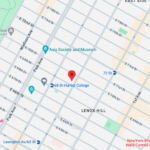
Upper East Side: Full Service Orthopedic Center & Walk-In
1198 3rd Avenue, Between 69th and 70th Street New York, NY 10021Physicians: Monday–Friday 8:00am–6:00pm, Saturday 8:00am–5:00pm
Physical Therapy: Monday–Friday 7:00am–7:30pm, Saturday 8:00am–3:00pm
Sunday: ClosedPhone: (212) 759-4553 -

Orthopedic Doctor Midtown Manhattan NYC — New York Bone & Joint Specialists
425 Madison Ave, Suite 200 (second floor) New York, NY 10017 (corner of East 49th Street)Physician appointments: Mon–Fri 8:00 am–6:00 pm
Physical therapy: Mon–Fri 7 am–7:30 pm, Sat 8 am–3 pmPhone: (212) 759-4553 -

Orthopedic Doctor Upper East Side NYC — New York Bone & Joint Specialists
130 E 67th St New York, NY 10065Currently ClosedPhone: (212) 759-4553