ORIF Fracture Surgery NYC — Orthopedic Fracture Fixation at New York Bone & Joint
Board-Certified Orthopedic Surgeon Dr. Leon Popovitz Performs Open Reduction Internal Fixation at Lenox Hill Hospital
Written by: Dr. Leon E. Popovitz
Board-Certified Orthopedic Surgeon (ABOS) | FAAOS | Fellowship-Trained Sports Medicine, NYU Langone
Fracture Surgery & Orthopedic Trauma | Co-Founder, New York Bone & Joint Specialists
Surgery at Lenox Hill Hospital — Northwell Health
Date Published: August 13, 2026
Last Updated: August 31, 2026
Last Medically Reviewed: August 31, 2026
This page has been written and reviewed by a fellowship-trained, board-certified orthopedic surgeon with over 20 years of clinical experience. All clinical claims are supported by peer-reviewed literature and current AAOS and AOSSM guidelines. See References section below.
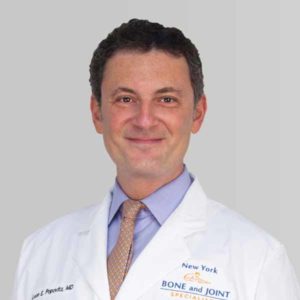
Leon E. Popovitz, MD
Board-Certified Orthopedic Surgeon (ABOS) | FAAOS | Fellowship-Trained Sports Medicine, NYU Langone
Co-Founder, NY Bone & Joint Specialists | US Open Tennis Championships Team Physician
Fractures are unforgiving. A displaced ankle fracture that heals in malposition, a tibial plateau fracture that is not anatomically reduced, a clavicle that unites in shortening — each of these produces long-term mechanical consequences that affect the patient for years. The goal of ORIF is not simply to get the bone to heal. It is to restore the anatomy so precisely that the joint mechanics are preserved, the risk of post-traumatic arthritis is minimized, and the patient can return to full function. That standard of care requires surgical precision and a commitment to getting it right the first time.
At NYBJ, fracture care is not a sideline service. Every fracture that requires surgical fixation receives the same level of pre-operative planning, intraoperative precision, and post-operative follow-through that we apply to our elective orthopedic procedures. The patient who comes in after a fall with an ankle fracture deserves the same quality of care as the athlete with an ACL tear.
— Leon E. Popovitz, MD, Co-Founder
At a glance
- What it is: Open Reduction Internal Fixation (ORIF) is a surgical procedure that restores fractured bone to its anatomical position (open reduction) and holds it in place with metal hardware — plates, screws, rods, or wires (internal fixation) — while the bone heals. It is performed when a fracture is displaced, unstable, or involves a joint surface that cannot be adequately managed with casting or splinting alone.
- Who performs it: Dr. Leon E. Popovitz — board-certified orthopedic surgeon (ABOS), FAAOS, fellowship-trained sports medicine NYU Langone. All ORIF procedures performed at Lenox Hill Hospital — Northwell Health as inpatient or same-day outpatient surgery depending on complexity.
- When ORIF is needed: Displaced fractures where bone ends are out of alignment. Intra-articular fractures where joint surface congruity must be restored to prevent post-traumatic arthritis. Fractures that are mechanically unstable and cannot be held with external immobilization. Open (compound) fractures requiring surgical debridement and stabilization.
- Fractures treated: Ankle fractures (bimalleolar, trimalleolar), distal radius fractures (wrist), tibial plateau fractures, tibial shaft fractures, clavicle fractures, proximal humerus fractures, patella fractures, fifth metatarsal fractures (Jones fracture), and other complex extremity fractures.
- Hardware used: Titanium or stainless steel plates and screws, intramedullary rods/nails, tension band wiring, cannulated screws. Hardware is low-profile and typically not removed unless causing symptoms.
- Recovery: Depends on fracture site and complexity. Protected weight-bearing from 0–6 weeks. Bone healing confirmed on X-ray at 6–12 weeks. Return to work (sedentary) 1–3 weeks for upper extremity. Return to full weight-bearing activity 3–6 months. Criteria-based return to sport.
- Access: Same-week consultations at New York Bone & Joint’s Upper East Side (1198 Third Ave) and Midtown (425 Madison Ave) locations. Urgent fracture evaluations available. Walk-in orthopedic urgent care at 1198 Third Ave — no appointment needed for acute fractures. Call 212-759-4553.
Book a consultation
Prompt Appointments Available
Upper East Side: 1198 Third Ave | Midtown: 425 Madison Ave
Surgery performed at Lenox Hill Hospital - Northwell Health
About this page
Written by Dr. Leon E. Popovitz, board-certified orthopedic surgeon (ABOS), FAAOS, fellowship-trained sports medicine NYU Langone. Co-founder of New York Bone & Joint Specialists. ORIF fracture surgery is performed at Lenox Hill Hospital — Northwell Health as inpatient or outpatient surgery. Consultations at New York Bone & Joint Upper East Side (1198 Third Ave, New York, NY 10021) and Midtown (425 Madison Ave, Suite 200, New York, NY 10017). Walk-in orthopedic urgent care for acute fractures at 1198 Third Ave.
Introduction to ORIF
WORKPLACE & PERSONAL INJURY FRACTURE CARE: New York Bone & Joint evaluates and treats fractures resulting from workplace accidents and personal injury. We coordinate directly with workers’ compensation case managers, handle rapid authorization, and provide detailed medico-legal documentation including operative reports, causality letters, and disability assessments. Same-day evaluations available — walk-in urgent care at 1198 Third Ave requires no appointment. Call 212-759-4553 for authorization guidance.
A fracture that is displaced — where the bone ends have separated from their anatomical position
Open Reduction Internal Fixation addresses this directly. Open reduction means the fracture is surgically exposed and the bone fragments are reduced — repositioned to their correct anatomical alignment. Internal fixation means hardware is applied to hold that reduction while the bone heals. The hardware does the work that a cast cannot: it maintains three-dimensional fracture alignment under the mechanical forces of healing tissue.
Not every fracture requires ORIF. Non-displaced fractures, minimally displaced fractures in non-critical locations, and fractures in patients with significant surgical risk factors are frequently managed non-operatively with casting, splinting, or functional bracing. The decision to operate is made on the basis of fracture pattern, displacement, joint involvement, patient age and activity level, and the expected functional consequences of each management approach.
When ORIF Is Indicated
| Indication | Clinical Rationale |
| Displaced fractures | Bone ends out of anatomical alignment that cannot be reduced or maintained with closed manipulation and casting. Malposition leads to malunion and functional deficit. |
| Intra-articular fractures | Fractures that enter a joint surface require anatomical reduction to restore articular congruity. Even 1–2mm of articular step-off significantly increases post-traumatic arthritis risk. [2] |
| Unstable fracture patterns | Fractures that are mechanically unstable — spiral, comminuted, or involving multiple bone fragments — cannot be reliably held in position by external immobilization. |
| Open (compound) fractures | Fractures where bone has penetrated the skin require surgical debridement of contaminated tissue and stable fixation to prevent infection and facilitate healing. |
| Fractures at risk for non-union | Certain fracture sites (Jones fracture, scaphoid, femoral neck) have poor blood supply and high non-union rates without surgical stabilization. |
| Polytrauma | Multiple concurrent fractures in a trauma patient are stabilized early to reduce bleeding, pain, and systemic inflammatory response, and to allow earlier mobilization. |
Fractures Treated at New York Bone & Joint
| Fracture Type | Anatomy | Common ORIF Approach |
| Ankle fracture (bimalleolar, trimalleolar) — For ankle and foot fractures, Dr. Haydée Brown, MD (ABOS) and Dr. Christine Ellie, DPM (ABFAS) provide subspecialty foot & ankle expertise. | Medial malleolus, lateral malleolus, posterior malleolus of the tibia | Lag screws and/or plate fixation of the medial malleolus; lateral plate and screws on the fibula; posterior fragment fixation when indicated. Syndesmotic screw if unstable. |
| Distal radius fracture | Wrist joint surface and distal radius shaft | Volar locking plate most common. Restores radial height, inclination, and volar tilt. Fragment-specific fixation for complex patterns. |
| Tibial plateau fracture — Complex knee joint fractures. For cases involving total joint reconstruction or severe articular damage, Dr. Rupesh Tarwala, MD provides joint reconstruction expertise. | Proximal tibia articular surface (knee joint) | Dual plating for bicondylar patterns. Rafting screws and bone graft for articular depression. CT-guided planning for complex comminution. |
| Clavicle fracture | Mid-shaft or lateral clavicle | Superior or anteroinferior clavicle plate. Indicated for severely displaced, shortened, or comminuted mid-shaft fractures with >2cm shortening. [3] |
| Proximal humerus fracture | Shoulder joint (humeral head and tuberosities) | Proximal humerus locking plate for 3- and 4-part fractures with adequate bone quality. Arthroplasty reserved for severely comminuted patterns. |
| Patella fracture | Kneecap (knee extensor mechanism) | Tension band wiring or anterior plate fixation. Restores extensor mechanism continuity. Early range of motion after fixation. |
| Fifth metatarsal (Jones) fracture — Subspecialty foot & ankle expertise from Dr. Haydée Brown, MD and Dr. Christine Ellie, DPM. | Base of the fifth metatarsal (foot) | Intramedullary screw fixation. High non-union rate with casting alone in athletes and active patients. [4] |
| Tibial shaft fracture | Tibial diaphysis (lower leg) | Intramedullary nail most common. Early weight-bearing possible with reamed, locked nail. |
The ORIF Procedure
| Phase | What Happens |
| Pre-operative planning | Fracture is evaluated with X-rays and CT scan when joint surface detail is needed. Fracture pattern, displacement, and bone quality are assessed. Hardware selection and surgical approach planned. Medical clearance obtained. |
| Anesthesia | General anesthesia or regional nerve block depending on fracture site and patient factors. Regional blocks provide post-operative pain control. |
| Open reduction | Surgical approach exposes the fracture site. Fracture hematoma is evacuated. Bone fragments are mobilized, cleaned of interposed soft tissue, and reduced to anatomical position under direct visualization and fluoroscopic X-ray confirmation. |
| Internal fixation | Hardware is applied to maintain the reduction: plates are contoured to the bone surface and secured with screws; intramedullary nails are inserted through the bone canal; screws are placed across fracture lines for compression. Final position is confirmed fluoroscopically. |
| Wound closure | Wound is irrigated and closed in layers. Drain placed if significant dead space. Splint or cast applied for initial immobilization. |
| Recovery room | Patient observed 1–2 hours. Same-day discharge for outpatient procedures. Overnight stay for more complex fixations or medical management. |
When ORIF Is Not Needed
The majority of fractures do not require surgery. Non-displaced fractures, stable minimally displaced fractures in non-articular locations, and stress fractures are managed non-operatively at New York Bone & Joint with casting, splinting, protective weight-bearing, and structured rehabilitation. Fractures that heal with acceptable alignment and do not involve critical joint surfaces are excellent candidates for non-operative management.
Dr. Popovitz evaluates every fracture individually. When the fracture pattern, displacement, and expected functional outcome support non-operative management, that is the recommendation. Surgery is recommended when the alternative is a predictably worse outcome — not as a default response to every fracture.
Recovery After ORIF
| Fracture Site | Protected Weight-Bearing | Bone Healing (X-ray) | Return to Work (Sedentary) | Return to Full Activity |
| Ankle | 0–6 weeks NWB in boot | 6–12 weeks | 2–4 weeks | 4–6 months |
| Distal radius (wrist) | N/A (upper extremity) | 6–10 weeks | 1–3 weeks | 4–6 months |
| Tibial plateau | 6–12 weeks NWB | 10–16 weeks | 3–6 weeks | 6–12 months |
| Clavicle | Sling 4–6 weeks | 6–10 weeks | 1–2 weeks | 4–6 months |
| Patella | Brace 0–6 weeks | 8–12 weeks | 2–4 weeks | 4–6 months |
| Jones fracture (5th MT) | Boot 4–6 weeks | 8–12 weeks | 1–2 weeks | 3–4 months |
| Tibial shaft | Weight-bearing as tolerated with nail | 8–16 weeks | 3–6 weeks | 6–12 months |
All return-to-activity clearance at New York Bone & Joint is criteria-based — radiographic healing plus functional strength and mobility testing. Timeline estimates are guidelines, not guarantees. Physical therapy is integrated from early post-operative care through return to full function.
Peer-Reviewed Clinical References
- AAOS. Fractures (Broken Bones). OrthoInfo. orthoinfo.aaos.org/en/diseases–conditions/fractures-broken-bones
- Matta JM et al. Articular fractures: does an anatomic reduction really change the result? J Bone Joint Surg Am. 1996. pubmed.ncbi.nlm.nih.gov/8609124
- McKee MD et al. Deficits following nonoperative treatment of displaced midshaft clavicular fractures. J Bone Joint Surg Am. 2006. pubmed.ncbi.nlm.nih.gov/16428704
- Mologne TS et al. Early plate osteosynthesis in patients with a Jones fracture. Am J Sports Med. 2005. pubmed.ncbi.nlm.nih.gov/15716268
- Bhandari M et al. Operative compared with nonoperative treatment of displaced intra-articular calcaneal fractures. J Bone Joint Surg Am. 2014. pubmed.ncbi.nlm.nih.gov/25336165
FAQs
ORIF (Open Reduction Internal Fixation) is a surgical procedure that corrects a displaced or unstable fracture by surgically repositioning the bone fragments to their anatomical alignment (open reduction) and holding them in place with metal hardware — plates, screws, rods, or wires — while the bone heals (internal fixation). [1] It is performed when a fracture cannot be adequately managed with casting or splinting alone, particularly when the fracture involves a joint surface or is mechanically unstable.
No — the majority of fractures do not require surgery. Non-displaced fractures, minimally displaced fractures in non-articular locations, and fractures that can be adequately held in alignment with casting or splinting are managed non-operatively. [1] ORIF is indicated when the fracture is displaced, when it involves a joint surface that must be anatomically restored, when it is mechanically unstable, or when non-operative management would predictably result in malunion and functional deficit.
ORIF procedure time varies by fracture site and complexity. Simple ankle or wrist fractures typically take 45–90 minutes. More complex fractures (tibial plateau, proximal humerus, polytrauma) may take 2–4 hours. Most ORIF procedures at New York Bone & Joint are performed as outpatient same-day surgery at Lenox Hill Hospital, with discharge the same day for uncomplicated cases.
In the majority of cases, hardware is left in place permanently. Modern titanium implants are well-tolerated by the body and do not need to be removed unless they cause symptoms — pain, hardware prominence, impingement on adjacent structures, or infection. Removal is a secondary procedure and is performed electively when indicated. Routine hardware removal is not recommended.
A cast maintains fracture position through external immobilization — it holds the limb still so the fracture can heal in the position achieved by closed manipulation. ORIF restores fracture position surgically under direct visualization and holds it with internal hardware that is mechanically stable independent of external immobilization. ORIF allows more precise restoration of fracture alignment, particularly for intra-articular fractures, and permits earlier mobilization than casting in many fracture types. [2]
Recovery depends on the fracture site and complexity. Most patients are partially or fully weight-bearing within 2–6 weeks for lower extremity fractures. Bone healing is confirmed on X-ray at 6–16 weeks depending on the fracture. Return to sedentary work is typically 1–6 weeks. Return to full physical activity and sport requires 3–12 months depending on the fracture. All clearances at New York Bone & Joint are criteria-based — combining radiographic healing with functional testing — not simply calendar-based.
Yes — New York Bone & Joint evaluates and treats fractures resulting from workplace accidents and personal injury. We work with workers’ compensation carriers and personal injury cases. Prompt evaluation is available — same-week consultations and walk-in urgent fracture care at 1198 Third Ave without an appointment. Call 212-759-4553 for authorization guidance.
Go directly to the emergency room for open (compound) fractures where bone is visible through the skin, fractures with vascular injury (absent pulse, pale or cold limb), fractures with progressive neurological deficit, or fractures following high-energy trauma (motor vehicle accidents, falls from height) that may involve multiple injuries. For closed extremity fractures from lower-energy mechanisms — sports injuries, falls, twisting injuries — New York Bone & Joint’s walk-in orthopedic urgent care at 1198 Third Ave provides same-day evaluation and imaging without an ER wait. Call 212-759-4553 if unsure.
Medically Reviewed by Dr. Popovitz.
You can book your appointment with New York Bone & Joint online by submitting the appointment request form here:
Book an appointmentOur Locations
-
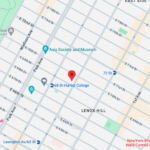
Upper East Side: Full Service Orthopedic Center & Walk-In
1198 3rd Avenue, Between 69th and 70th Street New York, NY 10021Physicians: Monday–Friday 8:00am–6:00pm, Saturday 8:00am–5:00pm
Physical Therapy: Monday–Friday 7:00am–7:30pm, Saturday 8:00am–3:00pm
Sunday: ClosedPhone: (212) 759-4553 -

Orthopedic Doctor Midtown Manhattan NYC — New York Bone & Joint Specialists
425 Madison Ave, Suite 200 (second floor) New York, NY 10017 (corner of East 49th Street)Physician appointments: Mon–Fri 8:00 am–6:00 pm
Physical therapy: Mon–Fri 7 am–7:30 pm, Sat 8 am–3 pmPhone: (212) 759-4553 -

Orthopedic Doctor Upper East Side NYC — New York Bone & Joint Specialists
130 E 67th St New York, NY 10065Currently ClosedPhone: (212) 759-4553