Returning to Sports After an Orthopedic Injury: What Clearance Really Means
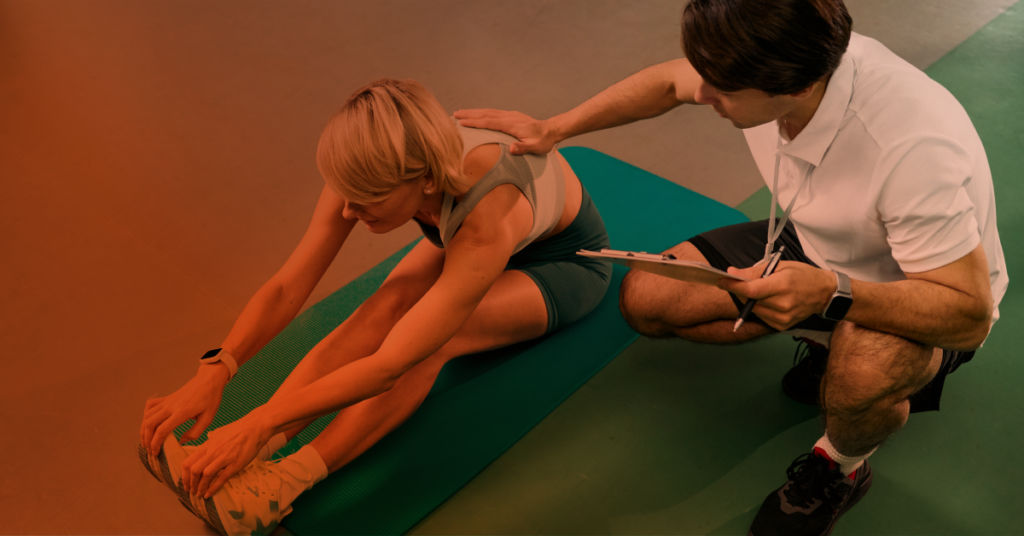
The short answer: Being cleared to return to sports means more than reaching a certain point on the calendar or no longer having pain. Your orthopedic team considers how the injury has healed, your strength and motion, how well you control the injured area, and whether you can handle the specific demands of your sport. [1][2]
What doctors look for: The exact criteria depend on the injury. An evaluation may include pain and swelling, range of motion, strength, joint stability, functional movement, sport-specific tasks, and your confidence using the injured area again. [1][2]
Clearance is a progression: Sports medicine experts describe recovery as a continuum that can move from return to participation, to return to sport, and finally return to your previous level of performance. [1]
Why time alone is not enough: A recovery timeline gives your body time to heal, but reaching six weeks, six months, or another milestone does not automatically prove that you are ready for unrestricted activity. NYBJ uses criteria-based return-to-sport assessment in its injury-specific rehabilitation protocols.
The goal: Return when your injury has recovered well enough for the activity you want to do, not simply when you are tired of sitting on the sidelines.er: Back pain that keeps returning usually means the underlying cause — not just the symptom — was never addressed. Pain can fade while the condition or movement pattern that produced it remains. Roughly one in three people who recover from an episode of low back pain has a recurrence within a year. [2]
You have finished treatment. The pain is almost gone. You can walk, climb stairs, or get through a normal day without thinking much about your injury.
So, are you cleared to play?
Maybe. But feeling better and being ready for sports are not always the same thing.
Returning to sports after an orthopedic injury requires your body to handle much more than everyday activity. Running, jumping, cutting, throwing, landing, pivoting, and absorbing contact all place different demands on the joints and soft tissues.
That is why a sports medicine specialist looks at more than the date of your injury before giving you the green light.
What Does Sports Clearance Actually Mean?
Sports clearance is a medical decision about whether you are ready to safely progress back into athletic activity.
That does not necessarily mean you are immediately ready for a full game, race, tournament, or practice at your previous intensity.
International sports medicine consensus describes return to sport as a process rather than a single moment. The athlete may first return to some level of participation, then return to the sport itself, and later return to their previous level of performance. [1]
Think of it this way: being able to jog for ten minutes is not the same as being ready for a soccer game. Hitting a few tennis balls is not the same as playing a three-set match. Shooting baskets by yourself does not reproduce the jumping, cutting, contact, and fatigue of a competitive game.
Clearance has to consider where you are going next.
What Your Orthopedic Doctor Looks for Before Clearing You
There is no single return-to-sport test that applies to every orthopedic injury.
An athlete recovering from an ankle sprain needs different testing than someone coming back from shoulder surgery. A runner has different demands than a baseball player. Even two people recovering from the same injury may progress at different rates.
The evaluation should match the injury and the sport.
| Part of Sports Clearance | What May Be Evaluated | Why It Matters |
| Pain and swelling | Symptoms at rest, during activity, and after exercise | Increasing symptoms may indicate that the injured area is not tolerating the current workload |
| Healing | Clinical examination and imaging when appropriate | Injured tissue needs adequate healing before it is exposed to higher forces |
| Range of motion | How well the joint moves compared with expected function | Restricted movement can interfere with running, throwing, landing, or other sport-specific mechanics |
| Strength | Strength of the injured area and surrounding muscles | Everyday strength may not be enough for the demands of competition |
| Stability and control | Balance, coordination, joint stability, and movement quality | Good control helps the body manage sudden or unpredictable movement |
| Functional performance | Running, hopping, jumping, landing, cutting, throwing, or other appropriate tasks | Testing should reflect what the athlete will actually need to do |
| Readiness and confidence | Comfort using the injured area during increasingly difficult activity | Hesitation or fear may affect how an athlete moves and performs |
Research and consensus recommendations support combining clinical findings with functional and sport-specific information instead of making return decisions from time alone. The exact criteria vary with the injury. [1][2]
Pain Is Important, But It Is Not the Whole Test
Pain is one of the easiest signs of recovery to notice. It is also one reason athletes sometimes return too early.
The injured area may stop hurting before strength, stability, balance, or movement control has fully returned. NYBJ makes the same distinction in its current ankle rehabilitation guidance: symptoms can improve while functional deficits remain.
The opposite can also be true. Some symptoms may still occur during later rehabilitation without automatically meaning that recovery has failed. Your doctor has to consider what you feel, what the examination shows, and how the injured area responds as activity becomes more demanding.
What matters is the complete picture.
Strength and Range of Motion Need to Match the Injury
Strength and motion are common parts of return-to-sport assessment, but there is no universal percentage or test that applies to every injury.
For example, NYBJ’s ACL reconstruction protocol uses objective strength and functional criteria before unrestricted sports clearance. Shoulder and ankle injuries use criteria appropriate to those joints and the movements they perform.
This is an important distinction.
A strength benchmark used after ACL reconstruction should not automatically be applied to a shoulder repair, ankle sprain, or hip injury. Your orthopedic doctor and physical therapist select the measurements that make sense for your diagnosis and your goals.
Return to Sport Happens in Stages
Getting back to sports is rarely an all-or-nothing decision.
The widely used return-to-sport continuum separates recovery into three general stages. [1]
1. Return to Participation
You are active again, but you may not be participating fully.
This could mean completing rehabilitation exercises, beginning a running progression, practicing non-contact drills, throwing at a reduced intensity, or taking part in only certain portions of practice.
2. Return to Sport
You have returned to your sport, but you may not yet be performing exactly as you did before the injury.
You may still be rebuilding conditioning, timing, confidence, or tolerance for repeated high-intensity activity.
3. Return to Performance
This is the later goal: returning toward your previous level of performance.
For a recreational athlete, that may mean finishing a usual running route comfortably. For a competitive athlete, it could mean returning to the same level of training and competition as before the injury.
These stages help explain why receiving clearance for increased activity does not necessarily mean your recovery is finished. [1]
Functional Testing Shows What Everyday Movement Cannot
Walking through Manhattan without pain is progress. It does not tell your doctor how your knee will respond when you cut sharply to the left or how your ankle will handle a landing after a rebound.
This is where functional testing becomes valuable.
Depending on your injury and sport, testing might include:
- Single-leg balance or strength tasks
- Running and stopping
- Jumping and landing
- Hopping
- Accelerating and decelerating
- Cutting or changing direction
- Throwing or overhead movement
- Sport-specific drills
The purpose is not simply to see whether you can finish the movement. Your care team may also look at control, stability, symptoms, confidence, and how the injured area responds as the task becomes harder.
Different injuries require different tests. An international consensus on lateral ankle sprains, for example, identified pain, ankle impairments, sensorimotor control, athlete perception, and sport or functional performance as important areas to consider before return. [4] Shoulder experts have likewise emphasized injury-specific rehabilitation and return-to-sport decision-making rather than a one-size-fits-all approach. [5]
Want to know what those assessments actually look like in physical therapy? Our companion article, Return-to-Sport Testing: How Physical Therapists Know You’re Ready, explains how therapists evaluate strength, movement, balance, and sport-specific function before progressing an athlete back to full activity.
Why Your Sport Matters
Your diagnosis tells your orthopedic team what was injured. Your sport tells them what that injured area needs to do next.
Consider the difference:
A distance runner repeatedly loads the hips, knees, ankles, and feet over thousands of steps.
A basketball player must accelerate, stop, jump, land, and change direction.
A tennis player repeatedly rotates through the trunk and places significant demands on the shoulder during serving and overhead shots.
A soccer player needs running endurance as well as cutting, kicking, balance, and control during contact.
That is why sports medicine rehabilitation is built around both the injury and the activities a patient wants to return to. NYBJ’s sports medicine rehabilitation program evaluates an athlete’s recovery goals and progresses treatment based on individual needs.
Passing a basic office examination may be one part of clearance. Showing that your body can handle your sport is another.
What Can Keep You From Being Cleared?
Not being cleared does not necessarily mean something has gone wrong.
Sometimes healing is progressing normally, but your body has not yet regained everything it needs for unrestricted sports.
Your doctor or therapist may want to see more improvement if you still have:
- Pain that increases with higher-level activity
- Recurrent or significant swelling
- Limited range of motion
- Strength deficits
- Joint instability or repeated giving way
- Poor control during jumping, landing, cutting, or another required movement
- Difficulty completing sport-specific activity
- Significant hesitation when using the injured area
The next step should be based on what is missing.
That may mean additional strengthening, balance work, mobility treatment, conditioning, or more advanced sport-specific rehabilitation. Physical therapy at NYBJ includes assessment of range of motion, strength, movement patterns, and functional limitations so the program can be adjusted as recovery progresses.
In other words, “not yet” should come with a reason.
Does Clearance Mean There Is No Risk of Another Injury?
No return-to-sport decision can make athletic activity completely risk-free.
Sports involve unpredictable movement, fatigue, contact, falls, and forces that cannot be perfectly reproduced in a clinic.
Clearance means your medical team has evaluated the factors relevant to your injury and determined that you are ready to progress based on the available clinical information. Modern return-to-sport models frame that decision around risk assessment and risk tolerance rather than a guarantee that another injury cannot happen. [1][2]
That is another reason athletes should continue rebuilding conditioning and sport-specific performance even after they begin returning to play.
When Should You Get Re-Evaluated Before Returning?
If you are returning from an orthopedic injury and something still does not feel right, do not use the first practice or workout as your test.
An evaluation is especially important when:
- Pain returns as activity increases
- Swelling repeatedly comes back after exercise
- A joint feels unstable
- Your motion has not returned
- The injured side still feels noticeably weaker
- You cannot perform the movements your sport requires
- You have had repeated injuries to the same area
- You are unsure whether your injury has healed enough for sports
A sports medicine doctor can evaluate the injury and determine whether additional rehabilitation, testing, imaging, or treatment is appropriate before you return.
Get Back to Your Sport Without Guessing
Athletes naturally want a date.
But the better question is not, “How many weeks has it been?”
It is, “Can my body safely handle what I am about to ask it to do?”
At New York Bone & Joint Specialists, orthopedic physicians and physical therapists work together to treat sports injuries and guide patients through rehabilitation and return to activity. NYBJ’s current injury-specific protocols use criteria such as strength, movement, function, and physician assessment rather than relying on the calendar alone.
If you are recovering from an orthopedic injury and want to get back to running, training, recreational sports, or competition, schedule an evaluation with New York Bone & Joint Specialists. We can assess where you are in your recovery and what still needs to happen before you return.
Frequently Asked Questions
What does it mean to be cleared to return to sports?
Sports clearance means your healthcare team has evaluated your recovery and determined that you are ready to progress back into athletic activity. The decision may consider healing, symptoms, range of motion, strength, stability, functional performance, sport-specific demands, and other injury-specific factors. [1][2]
Can I return to sports as soon as I am pain-free?
Not necessarily. Pain relief is important, but strength, stability, movement control, and sport-specific function may still be recovering. The decision should be based on the full clinical picture rather than symptoms alone.
Is sports clearance based on a certain number of weeks or months?
Recovery timelines are useful, but time alone does not establish readiness for every injury. Current return-to-sport consensus supports criteria-based decision-making, with the exact criteria determined by the injury and activity. [1][3]
What tests are used for return-to-sport clearance?
Testing depends on the injury and sport. It may include range-of-motion and strength assessment, balance testing, hopping or jumping, running, cutting, landing mechanics, throwing, or other sport-specific tasks.
Is returning to my sport the same as returning to my previous performance level?
No. Return-to-sport models distinguish between returning to participation, returning to the sport itself, and returning to your previous level of performance. Conditioning, confidence, and sport-specific ability may continue improving after you begin playing again. [1]
What happens if I am not cleared?
Your orthopedic doctor or physical therapist can identify what still needs to improve. Additional rehabilitation may focus on strength, mobility, stability, balance, conditioning, movement control, or sport-specific skills before you are reassessed.
Peer-Reviewed Clinical References
[1] Ardern CL, Glasgow P, Schneiders A, et al. 2016 Consensus statement on return to sport from the First World Congress in Sports Physical Therapy, Bern. British Journal of Sports Medicine. 2016;50(14):853-864. PubMed PMID: 27226389.
[2] Herring SA, Putukian M, Kibler WB, et al. Team Physician Consensus Statement: Return to Sport/Return to Play and the Team Physician: A Team Physician Consensus Statement – 2023 Update. Current Sports Medicine Reports. 2024;23(5):183-191.
[3] Meredith SJ, Rauer T, Chmielewski TL, et al. Return to sport after anterior cruciate ligament injury: Panther Symposium ACL Injury Return to Sport Consensus Group. Knee Surgery, Sports Traumatology, Arthroscopy. 2020;28(8):2403-2414. PubMed PMID: 32347344.
[4] Smith MD, Vicenzino B, Bahr R, et al. Return to sport decisions after an acute lateral ankle sprain injury: introducing the PAASS framework – an international multidisciplinary consensus. British Journal of Sports Medicine. 2021. PubMed PMID: 34158354.
[5] Schwank A, Blazey P, Asker M, et al. 2022 Bern Consensus Statement on Shoulder Injury Prevention, Rehabilitation, and Return to Sport for Athletes at All Participation Levels. Journal of Orthopaedic & Sports Physical Therapy. 2022;52(1):11-28. PubMed PMID: 34972489.
Our Locations
-

Upper East Side: Full Service Orthopedic Center & Walk-In
1198 3rd Avenue, Between 69th and 70th Street New York, NY 10021Physicians: Monday–Friday 8:00am–6:00pm, Saturday 8:00am–5:00pm
Physical Therapy: Monday–Friday 7:00am–7:30pm, Saturday 8:00am–3:00pm
Sunday: ClosedPhone: (212) 759-4553 -

Orthopedic Doctor Midtown Manhattan NYC — New York Bone & Joint Specialists
425 Madison Ave, Suite 200 (second floor) New York, NY 10017 (corner of East 49th Street)Physician appointments: Mon–Fri 8:00 am–6:00 pm
Physical therapy: Mon–Fri 7 am–7:30 pm, Sat 8 am–3 pmPhone: (212) 759-4553 -

Orthopedic Doctor Upper East Side NYC — New York Bone & Joint Specialists
130 E 67th St New York, NY 10065Currently ClosedPhone: (212) 759-4553