ACL Surgery Graft Options Explained by an Orthopedic Surgeon
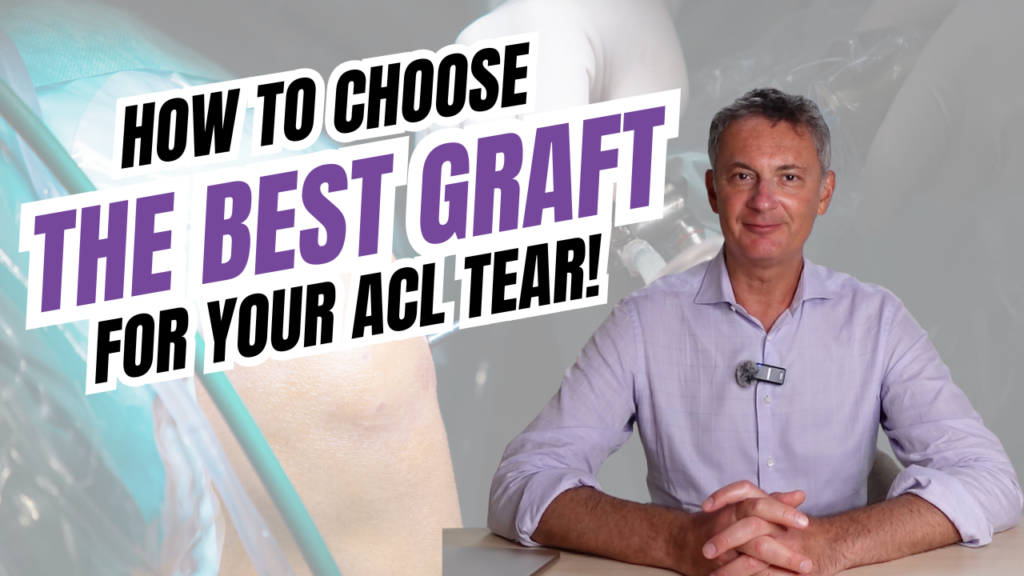
What Is the Best ACL Graft?
Dr. Leon Popovitz Explains ACL Reconstruction, Repair, Recovery & Graft Selection
One of the most important decisions a patient makes before ACL surgery is not simply whether to have surgery — it’s deciding which graft should be used for the reconstruction.
Many patients are surprised to learn that there are multiple graft options available for ACL reconstruction, each with its own advantages, trade-offs, recovery considerations, and ideal patient profile.
In this blog, orthopedic sports medicine surgeon Dr. Leon Popovitz explains:
- Why the ACL usually cannot heal on its own
- When ACL repair may be possible
- The difference between ACL repair vs. reconstruction
- The four main ACL graft options
- Why graft selection matters
- Which grafts are best for athletes
- Why tunnel placement is critical during surgery
- How surgeons minimize ACL re-tear risk
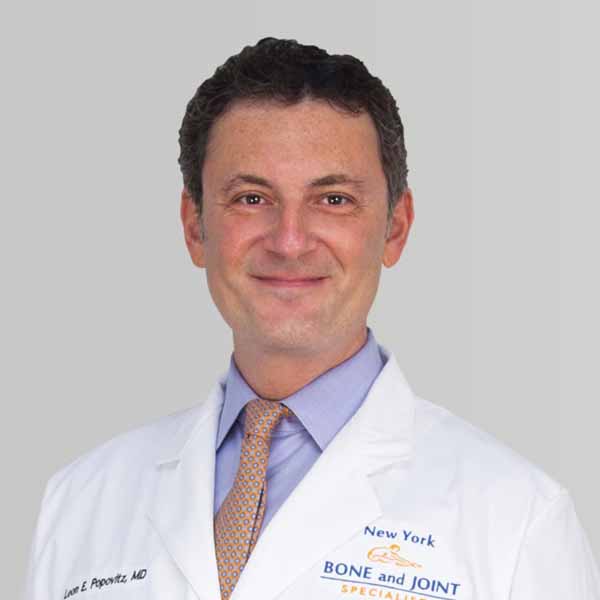
Meet Dr. Leon Popovitz
Dr. Leon Popovitz is an orthopedic surgeon and co-founder of New York Bone & Joint Specialists specializing in:
- Sports medicine
- Knee surgery
- Shoulder surgery
- ACL reconstruction
- Joint preservation
His philosophy centers around one core principle:
“Preservation is the key to longevity.”
That philosophy guides both surgical and non-surgical treatment decisions throughout the practice.
Why Can’t the ACL Simply Heal or Be Sewn Back Together?
“Why does the ACL need to be replaced instead of repaired?”
According to Dr. Popovitz, the ACL usually cannot heal naturally because of where it sits inside the knee joint.
The ACL is located inside the knee capsule, surrounded by synovial fluid. Unlike ligaments outside the joint, such as the MCL, the ACL lacks the blood supply necessary to form a stable healing clot or “scaffold.”
Without that scaffold:
- The ligament cannot reconnect properly
- Healing tissue washes away
- And the ACL remains unstable
This is why traditional ACL tears usually require reconstruction rather than simple repair.
Is ACL Repair Ever an Option?
“Can an ACL ever be repaired instead of reconstructed?”
In select situations, yes.
Dr. Popovitz explains that ACL repair has recently regained popularity because of improvements in surgical fixation technology.
However, ACL repair only works in very specific cases:
- The ligament must tear directly off the bone (an avulsion injury)
- There must be enough healthy tissue remaining
- And the patient generally should not be a high-demand athlete
For most ACL tears occurring in the middle of the ligament (mid-substance tears), reconstruction remains the gold standard.
What Is “Ligamentization” After ACL Surgery?
“What happens to the new graft after ACL reconstruction?”
One of the most fascinating parts of ACL reconstruction is a process called ligamentization. During surgery, surgeons commonly take a tendon graft from another part of the body and place it into the knee to replace the torn ACL.
Over time:
- The tendon transforms biologically
- Adapts to its new role
- And eventually behaves like a ligament
This process typically takes:
- 12–18 months
- Rehabilitation and strengthening
The 4 Main ACL Graft Options
“What are the different ACL graft choices?”
Dr. Popovitz walks patients through four primary ACL graft options:
1. Patellar Tendon Graft (Bone-Patellar Tendon-Bone)
This is Dr. Popovitz’s most commonly used graft.
Advantages
- Strongest fixation
- Bone-to-bone healing on both sides
- Excellent for athletes and high-demand patients
- Very durable long-term
Best For
- Soccer players
- Basketball players
- Athletes who pivot and jump
- Heavy laborers
- Younger active patients
Potential Downsides
- Temporary kneeling discomfort
- Front-of-knee soreness
- Small numb areas around incision
- Risk of temporary patellofemoral pain during rehab
Dr. Popovitz explains that much of the anterior knee discomfort patients experience after surgery is actually related to temporary quad weakness during rehabilitation, not necessarily the graft itself.
2. Hamstring Tendon Graft
“What are the benefits of a hamstring graft?”
The hamstring graft uses tendons from the inside/back portion of the knee.
Advantages
- Smaller incision
- Less kneeling discomfort
- Less irritation in the front of the knee
Best For
- Active patients with moderate physical demands
- Patients concerned about kneeling pain
Downsides
- Soft tissue-to-bone fixation
- Not as strong as bone-to-bone fixation
- May not be ideal for elite athletes or heavy laborers
3. Quadriceps Tendon Graft
“What is a quadriceps tendon ACL graft?”
The quadriceps tendon graft is harvested from above the kneecap. This option has become increasingly popular in recent years.
Advantages
- Strong graft option
- Useful for revision ACL surgery
- Can avoid using cadaver tissue
Best For
- Revision ACL reconstruction
- Patients who already used another graft previously
Downsides
- Only partial bone fixation
- Not quite as strong as full patellar tendon fixation
4. Cadaver Graft (Allograft)
“When is a cadaver ACL graft used?”
Cadaver grafts use donated tissue rather than the patient’s own tissue.
Advantages
- Smaller surgery
- Less post-operative donor site pain
- No tissue harvest from the patient’s knee
Downsides
- Higher re-tear rates in younger patients
- Less ideal for high-demand athletes
Dr. Popovitz strongly discourages cadaver grafts in patients under age 30 due to increased failure rates shown in published studies.
Which ACL Graft Is Best for Athletes?
“What graft would you recommend for a 22-year-old soccer player?”
For highly active athletes, Dr. Popovitz generally recommends:
Bone-Patellar Tendon-Bone Graft
Why?
- Strongest fixation
- Highest durability
- Ideal for cutting/pivoting sports
- Best suited for high-demand knees
Why Is Tunnel Placement So Important During ACL Surgery?
“Why does tunnel placement matter so much?”
Dr. Popovitz explains that tunnel placement is one of the most technically critical aspects of ACL surgery.
During reconstruction:
- Tunnels are drilled into the femur and tibia
- The graft is passed through these tunnels
- Fixation is secured
If the tunnels are even 1–2 millimeters off, the reconstructed ACL may fail biomechanically.
Improper placement can lead to:
- Instability
- Graft stretching
- Poor ligamentization
- Eventual re-tear
This is one reason why surgeon experience matters tremendously in ACL reconstruction.
Does Surgeon Experience Matter for ACL Surgery?
“Should patients choose a sports medicine specialist?”
According to Dr. Popovitz: absolutely.
ACL surgery requires:
- Advanced arthroscopic skill
- Precise tunnel placement
- Understanding of graft biomechanics
- High-volume sports medicine experience
Patients should ask:
- How often their surgeon performs ACL reconstruction
- What grafts they commonly use
- How they decide which graft is appropriate
What is the ACL Re-Tear Rate?
Dr. Popovitz notes that published ACL re-tear rates can range from 4% to 10%, and sometimes higher depending on the patient population studied.
At New York Bone & Joint Specialists, their ACL re-tear rate is approximately:
1–3%
He attributes this to:
- Surgical experience
- Meticulous tunnel placement
- Careful graft selection
- Attention to rehabilitation
Final Thoughts: ACL Surgery isn’t One-Size-Fits-All
ACL reconstruction is highly individualized.
The “best” graft depends on:
- Age
- Activity level
- Athletic goals
- Prior surgeries
- Occupation
- Lifestyle
That’s why a detailed discussion with an experienced orthopedic sports medicine surgeon is essential before surgery.
Need an ACL Specialist in NYC?
If you’ve been diagnosed with an ACL tear or suspect a knee ligament injury, the team at New York Bone & Joint Specialists can help evaluate your options and create a personalized treatment plan.
Dr. Leon Popovitz specializes in:
- ACL reconstruction
- Sports medicine
- Knee preservation surgery
- Revision ACL procedures
- Meniscus injuries
- Arthroscopic knee surgery
Schedule an evaluation to discuss both surgical and non-surgical treatment options.
Board-Certified Orthopedic Surgeon (ABOS)
Fellow, American Academy of Orthopaedic Surgeons
Co-Founder, NY Bone & Joint Specialists
Team Physician, US Open Tennis Championships
Our Locations
-
Upper East Side: Full Service Orthopedic Center & Walk-In
1198 3rd Avenue, Between 69th and 70th Street New York, NY 10021Monday–Friday: 9:00am–6:00pm
Saturday: 8:00am–5:00pm
Sunday: ClosedPhone: (212) 759-4553 -

Orthopedic Doctor Midtown Manhattan NYC — New York Bone & Joint Specialists
425 Madison Ave, Suite 200 (second floor) New York, NY 10017 (corner of East 49th Street)Physician appointments: Mon–Fri 8:00 am–6:00 pm
Physical therapy: Mon–Fri 7 am–7 pm, Sat 8 am–2 pmPhone: (212) 759-4553 -

Orthopedic Doctor Upper East Side NYC — New York Bone & Joint Specialists
130 E 67th St New York, NY 10065Tuesday & Thursday: 8:00am–6:00pm
All other days: ClosedPhone: (212) 759-4553