Bankart Repair & Shoulder Stabilization NYC — Specialists at NY Bone & Joint
Written by: Dr. Popovitz.
Board-Certified Orthopedic Surgeon | Fellowship-Trained Sports Medicine, NYU Langone Medical Center | FAAOS
Co-Founder, NY Bone & Joint Specialists | Lenox Hill Hospital - Northwell Health
Recognized: New York Magazine Best Doctor | New York Times Super Doctor | IAOS Leading Physician of the World | IAOS Top Orthopedic Surgeon in New York
Date Published: May 5, 2026
Last Updated: June 26, 2026
Last Medically Reviewed: June 26, 2026
This page has been written and reviewed by a fellowship-trained, board-certified orthopedic surgeon with over 20 years of clinical experience. All clinical claims are supported by peer-reviewed literature and current AAOS and AOSSM guidelines. See References section below.
At a glance
- What it is: Arthroscopic surgery to repair a torn anterior labrum with ligaments which are vital for stability (the Bankart lesion) that results from a traumatic shoulder dislocation. The repair reattaches the torn labrum, ligaments and capsule to the glenoid rim using suture anchors, restoring the shoulder’s anterior restraint mechanism and preventing recurrent dislocation.
- What it treats: Bankart lesions from traumatic anterior shoulder dislocation, recurrent shoulder instability and subluxation, first-time dislocation in high-risk young athletes, and anterior labral tears without dislocation. For patients with significant glenoid bone loss (>20–25%), the Latarjet procedure is recommended over Bankart repair.
- Who performs it: Dr. Leon Popovitz and the New York Bone & Joint fellowship-trained surgical team, board-certified orthopedic surgeons with subspecialty training in shoulder surgery and 20+ years of Bankart repair and shoulder stabilization experience. Surgery at Lenox Hill Hospital.
- Where: Consultations, imaging, and physical therapy at two Manhattan offices: Upper East Side (1198 Third Ave) and Midtown (425 Madison Ave). Surgery at Lenox Hill Hospital.
- Recovery: Sling 4 weeks. Return to desk work: 2–3 weeks. Return to non-contact sport: 4–6 months. Return to full contact sport: 5–6 months. All clearance is criteria-based, not time-based alone.
- New York Bone & Joint outcomes: Re-dislocation rate under 4% after Bankart repair in appropriately selected patients — significantly below the published benchmark of 5–15% — achieved through pre-operative bone loss assessment, anatomic repair technique, and structured rehabilitation. Without surgery, published recurrence rates exceed 70% in patients under 25. [4]
- Insurance: Most major insurance accepted. Coverage for Bankart repair is typically covered when medically indicated. Coverage verified before your procedure.
Book a consultation
Prompt Appointments Available
Upper East Side: 1198 Third Ave | Midtown: 425 Madison Ave
Surgery performed at Lenox Hill Hospital - Northwell Health
About this page
This page was written and is maintained by Leon Popovitz, MD, and the New York Bone & Joint surgical team. New York Bone & Joint Specialists is a private orthopedic surgery and sports medicine practice with two Manhattan locations — Upper East Side and Midtown. Dr. Popovitz is fellowship-trained in sports medicine at NYU Langone Medical Center and has specialized in shoulder surgery, including Bankart repair, shoulder stabilization, and the Latarjet procedure, for over 20 years. Bankart repair and shoulder stabilization surgery are performed by Dr. Popovitz and the New York Bone & Joint surgical team at Lenox Hill Hospital, part of the Northwell Health system. Dr. Popovitz served as former team physician for the US Open Tennis Championships and has treated contact sport athletes, overhead athletes, and recreational patients with shoulder instability at professional, collegiate, and recreational levels. New York Bone & Joint is independent of hospital systems and operates as a private practice serving patients across New York City and the surrounding region.
Introduction
A shoulder dislocation is the most common major joint dislocation in sports and one of the most undertreated injuries in young athletes. The conventional approach of immobilization, physical therapy, and return to play without surgical stabilization produces a predictable result: recurrence. In patients under 20 years of age, the recurrence rate ranges from 72–100%, and 20-30 year-olds have 70–82% recurrence rate. [13] The rate decreases as you get older, but it is strongly affected by activity level. Thus, someone older that has high demand activities and responsibilities would increase their risk of dislocation. With each dislocation, the labral tear extends, the cartilage erodes, and the anatomy that surgical repair depends upon deteriorates further.
At New York Bone & Joint Specialists, we approach every shoulder dislocation patient with a clear framework: confirm the anatomy, quantify any cartilage loss, and focus on re-creating the original anatomy so that your own body heals and stabilizes your shoulder. A Bankart repair focused on preserving the right anatomy, with the right technique, in an appropriately selected patient, produces durable stability and return to full activities.
Based on our surgical outcomes, the re-dislocation rate after Bankart repair at New York Bone & Joint is under 4% in appropriately selected patients, significantly below the published benchmark of 5–15%. That result is built on expertise, experience, pre-operative assessment, anatomic repair, and a rehabilitation protocol coordinated directly between our surgical team and our in-house physical therapists.
What is a Bankart Lesion, and What Causes Shoulder Instability?
The shoulder is the most mobile joint in the body, and that mobility comes at the cost of inherent stability. The glenoid socket is relatively shallow, and the shoulder depends heavily on soft tissue structures (the labrum, the capsule, and the ligaments) to keep the humeral head engaged in the socket during the extreme demands placed on it by athletics and daily life.
The labrum is a ring of fibrocartilage that deepens the glenoid and serves as the attachment point for the glenohumeral ligaments. When the shoulder dislocates anteriorly (the most common type of dislocation, in which the humeral head moves forward and out of the socket), the anterior labrum is torn from the glenoid rim as the humeral head forces its way out. The torn labrum takes the very important inferior glenohumeral ligaments along with it. This tear is the Bankart lesion. Without the intact labrum anchoring the anterior capsule and ligaments to the glenoid, the shoulder’s anterior restraint mechanism is gone, and the shoulder is vulnerable to recurrent dislocation with progressively less force required each time.
“What patients are often not aware of is that the first dislocation isn’t the injury that causes the most damage. It’s the second, third, and fourth. Each time the shoulder dislocates, the labral tear extends, the glenoid rim loses more bone, and the Hill-Sachs lesion (a divot in the bone) on the humeral head grows deeper. But, most consequential is that the articular cartilage, that lines the bones in the joint, gets repeatedly damaged with each dislocation and in time can degenerate. [14] This, ultimately, leads to irreversible and premature arthritis. This can be devastating for a young person and our ultimate goal is to avoid such a result.” — Leon Popovitz, MD
Types of Shoulder Instability
Not every shoulder instability presentation is the same. Understanding the type of instability guides the surgical approach.
| Type | Mechanism | Clinical Presentation | Surgical Approach |
| Traumatic Anterior Instability | Anterior dislocation from a discrete traumatic event, typically a fall, collision, or forced abduction / external rotation. Creates the classic Bankart lesion. | Apprehension with arm in abduction / external rotation. History of discrete dislocation event. Positive apprehension and relocation tests on examination. | Arthroscopic Bankart repair and stabilization procedure |
| Recurrent Anterior Instability | Multiple dislocation or subluxation episodes following the initial traumatic event. Often with progressive bone loss on both the glenoid (inverted pear deformity) and humeral head (Hill-Sachs lesion). | Instability with lower-energy activities over time. Increasing apprehension. May have significant glenoid bone loss on CT imaging. | Arthroscopic Bankart repair and stabilization procedure- majority of the time. Laterjet procedure if excessive amount of dislocations has caused over 20-25% bone loss |
| First-Time Dislocation in Young Athlete | Single traumatic dislocation in an athlete under 25 in a contact or overhead sport. High recurrence risk without surgery. | Classic Bankart lesion on MRI. Apprehension. Patient and family asking whether surgery is necessary after one event. | Strong evidence supports early surgical stabilization in young patients with those under 20 years of age, the recurrence rate ranges from 72–100%, and 20-30 year-olds have 70–82% recurrence rate. [13] The anatomy is cleanest at this point, before subsequent dislocations accumulate bone loss. |
| Posterior Instability | Posterior labral tear from a posterior force to the shoulder, common in football linemen, weightlifters, and patients with posterior capsular laxity. Produces posterior subluxation rather than full dislocation. | Pain with cross-body loading. Positive posterior apprehension. Often misdiagnosed as impingement or rotator cuff pathology. | Arthroscopic posterior labral repair with posterior capsular plication. Different portal positioning and technique from anterior Bankart repair. |
| Multidirectional Instability (MDI) | Global capsular laxity without a discrete traumatic event. Common in hypermobile patients and overhead athletes with excessive training volume. | Instability in multiple directions, sulcus sign on examination. Often no single dislocation event. History of ‘loose shoulders.’ | Non-operative treatment (rotator cuff and scapular stabilization physical therapy) is first-line. Surgical capsular plication reserved for MDI that fails 6+ months of structured physical therapy. |
Glenoid Bone Loss: An Important Pre-Operative Assessment for Recurrent Dislocations
A very important pre-operative variable in shoulder stabilization surgery for those that suffer multiple dislocations is glenoid bone loss, and it’s the assessment that is most commonly skipped by surgeons who default to arthroscopic Bankart repair regardless of the anatomy. [6]
When the shoulder dislocates anteriorly, the anteroinferior glenoid rim impacts against the humeral head. With each dislocation, bone is lost from this portion of the glenoid. When bone loss exceeds approximately 20–25% of the glenoid surface area, the critical threshold established in the published literature, the contact arc of the glenoid is insufficient to support a standard Bankart repair. [6] An arthroscopic Bankart repair performed in this setting fails at unacceptably high rates because the repair is anchored to a rim that no longer has enough surface area to provide stability.
At New York Bone & Joint, every patient that has shoulder instability and suffered multiple dislocations is evaluated for bone loss. The initial evaluation is a high field MRI and X-ray. If bone loss is suspected, then a CT scan with 3D reconstruction is the most accurate imaging method for glenoid bone loss assessment.
| The On-Track / Off-Track Framework: What it Means for Your Surgery Beyond glenoid bone loss, the Hill-Sachs lesion on the humeral head must also be assessed. A Hill-Sachs lesion is a compression fracture on the posterior humeral head that occurs when the humeral head impacts the anterior glenoid rim during dislocation. When this lesion is large enough (specifically, when it is ‘off-track’ relative to the glenoid contact arc), it engages the glenoid rim with the arm in functional positions and acts as a latch mechanism that re-dislocates the shoulder even after a technically successful Bankart repair. [7] On-track Hill-Sachs: the lesion remains within the contact arc of the glenoid throughout the shoulder’s range of motion. Standard Bankart repair is appropriate. Off-track Hill-Sachs: the lesion engages the anterior glenoid rim in functional positions, acting as a lever that re-dislocates the shoulder. Standard Bankart repair is insufficient. Remplissage (arthroscopic filling of the Hill-Sachs defect with posterior capsule and infraspinatus tendon) is performed concurrently with the Bankart repair to prevent engagement. [7] |
Bankart Repair vs. The Latarjet Procedure: When Each is Indicated
The Latarjet procedure is not a fallback for surgeons who can’t do a Bankart repair. It’s the correct primary procedure for a specific anatomical situation, and performing a Bankart repair when the anatomy requires a Latarjet is a surgical error that produces predictable failure.
| Decision Factor | Arthroscopic Bankart Repair | Latarjet Procedure |
| Glenoid bone loss | <20% of glenoid surface area | ≥20–25% of glenoid surface area (critical threshold) [6] |
| Hill-Sachs lesion | On-track: standard Bankart repair Off-track: Bankart + remplissage [7] | Latarjet provides coracoid graft that eliminates off-track engagement by restoring glenoid arc |
| Number of prior dislocations | First dislocation or limited recurrence with adequate bone stock | Recurrent instability with significant bone loss from multiple events |
| Athlete type | Any sport; contact athletes with adequate bone stock | High-demand contact athletes or patients with bone loss who cannot accept a Bankart failure risk |
| Recovery timeline | Return to contact sport: 5–6 months | Return to contact sport: 6–9 months (longer due to coracoid graft healing) |
| Procedure type | All-arthroscopic; 2–3 small portals | Arthroscopic-assisted or mini-open; coracoid transfer with fixation |
| Re-dislocation rate | <4% based on our internal 5-year data. <10% in literature. | Lowest re-dislocation rates of any shoulder stabilization procedure in high bone-loss cases [9] |
“I saw a 31-year-old patient recently that had been experiencing multiple dislocations since he was 17. He originally had an arthroscopic Bankart repair by a highly regarded surgeon, but it failed and he began recurrently dislocating again. So, a few years later, he underwent an open stabilization procedure so to make the repair as secure as possible, by the same surgeon. Unfortunately, that eventually failed, as well. He has been living with the recurrent dislocations for years. But now, he is an adult, has a family, and works as a heavy laborer. He was having trouble providing for his family and asked me for help.
“I obtained X-rays, a high field MRI to evaluate the labrum, ligaments and articular cartilage and a CT with 3D imaging to evaluate the bone loss. Much of his cartilage was remarkable relatively intact but his bone loss was greater than 25%. A routine stabilization procedure would not help him. I performed a Latarjet procedure for him. This involved transferring the coracoid bone along with its attached muscles, to the front of the shoulder joint. This enlarges the area of the glenoid socket bone which prevents the humeral head from coming out. Instead, it slides back into place.” — Leon Popovitz, MD
Are You a Candidate for Bankart Repair?
Not every shoulder dislocation requires immediate surgery, but the evidence is clear that for a specific group of patients, early surgical stabilization produces substantially better outcomes than non-operative management. [4]
Bankart repair is typically recommended when:
- You have sustained a traumatic anterior shoulder dislocation and are under the age of 30. In those under 20 years of age, the recurrence rate ranges from 72–100%, and 20-30 year-olds have 70–82% recurrence rate with non-operative management. [13] Therefore, for this group early stabilization is the evidence-based recommendation [4]
- You have experienced two or more shoulder dislocations or significant subluxation events that prevent return to sport, work or normal activity.
- You have confirmed Bankart lesion on MRI with anterior instability symptoms, glenoid bone loss below the critical threshold on CT, and an on-track Hill-Sachs lesion (or an off-track lesion suitable for Bankart plus remplissage).
- You are a contact or overhead athlete or worker in whom recurrent instability (even subluxation rather than full dislocation) prevents performance at your level.
Bankart repair is generally not recommended for patients with glenoid bone loss exceeding 20–25% (Latarjet is appropriate), patients with multidirectional instability from capsular laxity without a discrete Bankart lesion (non-operative physical therapy is first-line), and patients with atraumatic instability without structural labral pathology on imaging.
A Latarjet procedure is recommended when bone loss assessment reveals a shoulder that cannot be adequately stabilized by a soft tissue repair alone. At New York Bone & Joint, this recommendation is made based on the imaging, not on intraoperative surprise.
| From Dr. Popovitz: Why the Third Dislocation Costs More Than the First A 22-year-old collegiate lacrosse player came to see me in the spring of his junior year after his third shoulder dislocation in 18 months. The first two had been managed at his university sports medicine program with immobilization and physical therapy: six weeks each time, cleared to return to play, and back on the field. Each time, he had been told his shoulder was ‘strong enough’ and that another dislocation was unlikely if he kept up his strengthening program. The third dislocation happened on a routine check. Nothing extraordinary, just the kind of contact that happens dozens of times in a lacrosse game. He felt the shoulder go out, got it relocated on the sideline, and came to me two weeks later. He told me he was afraid to go back to playing. Not because of the pain, but because he no longer trusted his shoulder. I reviewed his MRI and ordered a CT with 3D reconstruction. The MRI confirmed a classic Bankart lesion. The CT showed approximately 18% glenoid bone loss: below the critical threshold for Latarjet, but meaningful. I assessed the Hill-Sachs lesion: it was off-track, which meant a standard Bankart repair alone carried a high risk of re-engagement and failure. The operative plan was Bankart repair with remplissage. What I told him before surgery was the same thing I tell every patient in this situation: every dislocation you have from here forward is bone being ground off the glenoid rim. At 18%, you’re still a Bankart candidate. At 25%, you’re a Latarjet candidate, and the recovery is longer and the reconstruction is more complex. The best time to fix this was after the first dislocation. The second best time is now. We performed the arthroscopic Bankart repair with remplissage. He was in a sling for four weeks, in a structured physical therapy program through the fall, and cleared for full contact lacrosse at seven months. He completed his senior season without a recurrence. The shoulder that gets properly stabilized after the first or second dislocation is a simpler operation than the shoulder that comes in after the sixth. That is the conversation I wish more young athletes and their families had earlier. — Leon Popovitz, MD |
The Procedure: What Happens During Bankart Repair
Arthroscopic Bankart repair at New York Bone & Joint is performed under general anesthesia, typically combined with an interscalene nerve block for post-operative pain control. Most procedures take 60–90 minutes. Patients go home the same day. [3]
Your surgeon will:
- Create two or three small portals around the shoulder, typically less than a centimeter each.
- Perform a complete arthroscopic survey of the entire shoulder: the labrum, the Bankart lesion, the capsule, the rotator cuff, the biceps anchor, the subacromial space, and the articular surfaces. The Hill-Sachs lesion is visualized and its track relationship to the glenoid arc is assessed intraoperatively.
- Prepare the glenoid rim: The bone at the anteroinferior glenoid is debrided to create a vascular bed that supports labral reattachment. The quality and freshness of the bone edge is assessed directly.
- Place suture anchors and repair the labrum: Suture anchors are placed along the glenoid rim at the site of labral detachment. Sutures are passed through the labrum and capsule, pulling them back to the glenoid rim and restoring the anterior restraint mechanism. Typically 2-3 anchors are placed depending on the extent of the tear.
- Capsular shift if indicated: For patients with associated capsular laxity or hyperlaxity contributing to instability, the capsule is tightened as part of the repair to reduce overall joint volume.
- Remplissage if indicated: For off-track Hill-Sachs lesions, the posterior capsule and infraspinatus tendon are arthroscopically sutured into the Hill-Sachs defect, converting it from an intra-articular to an extra-articular structure and preventing engagement with the glenoid rim. [7]
- Close the portals and apply a sling. You leave with clear post-operative instructions and a physical therapy protocol.
“A nuance that shapes every Bankart repair: the quality of the tissue repair depends on more than anchor placement. The tension of the capsular repair, how much the capsule is tightened, must be calibrated to restore stability without creating the post-operative stiffness that is the most common cause of patient dissatisfaction after shoulder stabilization. Too loose, and the shoulder re-dislocates. Too tight, and the patient loses external rotation and overhead mobility. That balance is a surgical judgment that cannot be prescribed by a protocol. It’s made in the operating room based on the tissue, the anatomy, and 20 years of understanding what stable and free feel like at the same time.” — Dr. Leon Popovitz, MD
| Bankart Lesions vs. SLAP Tears: Related but Distinct Both Bankart lesions and SLAP tears are labral injuries, but they affect different parts of the labrum, arise from different mechanisms, and require different surgical approaches. Bankart lesion: Anterior labral tear at the 3–6 o’clock position, caused by anterior shoulder dislocation. Produces instability, apprehension, and recurrent subluxation or dislocation. Treated with arthroscopic Bankart repair to restore the shoulder’s anterior restraint mechanism. SLAP tear: Superior labrum tear at the biceps anchor at the 12 o’clock position, caused by overhead mechanics, traction injury, or fall on outstretched arm. Produces pain and clicking with overhead activity but not instability. Treated with SLAP repair or biceps tenodesis depending on patient profile. The two can occur together: a shoulder dislocation can produce both a Bankart lesion and a SLAP component. When both are present, they are addressed in the same procedure. |
Recovery and Rehabilitation
Bankart repair recovery is structured around the biology of labral healing. The repaired labrum must reattach to the glenoid bone before it can tolerate the forces of sport, a process that takes 8–12 weeks for the initial structural healing and 4–6 months for full maturation.
| Phase | Timeframe | Goals & Activities |
| Protection | Weeks 0–4 | Sling worn continuously. Pendulum exercises begin at 1–2 weeks to prevent stiffness. No active use of the repaired shoulder. No external rotation beyond neutral for the first 4 weeks. This is the position that stresses the anterior repair. Return to desk work by week 2–3. |
| Passive Motion | Weeks 4–8 | Progressive passive range-of-motion under physical therapist direction. Gradual external rotation progression. No active use of the shoulder musculature against resistance yet. |
| Active Motion & Strengthening | Weeks 8–16 | Active range-of-motion begins. Rotator cuff and periscapular strengthening. External rotation limits progressively expanded. Sport-specific conditioning begins. |
| Sport-Specific Training | Months 4–5 | Non-contact sport-specific drills. Throwing athletes begin interval programs. Contact athletes begin non-contact training drills. |
| Return to Full Sport | Months 5–6 | Return to full contact sport with criteria-based clearance: strength symmetry testing, functional instability testing, and physician sign-off. [12] Not time-based alone. |
For patients who undergo remplissage concurrently with Bankart repair, the external rotation progression is managed slightly more conservatively in the early weeks due to the infraspinatus involvement. Your surgeon will provide a specific protocol based on what was performed intraoperatively.
For Latarjet patients, the timeline is longer: the coracoid graft must undergo bony union before the shoulder can be loaded, typically extending the return-to-full-contact-sport timeline to 6–9 months.
In-House Physical Therapy: Why the External Rotation Protocol is Everything
After Bankart repair, the most consequential variable in the rehabilitation protocol is the management of external rotation. The anterior labral repair is placed under maximum tension when the arm is in abduction and external rotation, which is the throwing or tackling position. Progressing external rotation too quickly risks pulling the repair off the glenoid before it has healed. Progressing too slowly produces the posterior capsular contracture that is the most common cause of long-term stiffness and functional limitation after shoulder stabilization.
At New York Bone & Joint, your physical therapist and surgeon work in the same center. Your physical therpaist has reviewed your operative report before your first session, including the number of anchors placed, the degree of capsular shift performed, and any concurrent procedures such as remplissage. The external rotation progression is calibrated to your specific repair, not to a standard template.
For contact and throwing athletes, our return-to-sport progression uses objective strength testing, instability provocation testing, and sport-specific functional assessment at each milestone. Clearance is not granted on a time basis: it requires passing each objective criterion.
Risks and Considerations
Arthroscopic Bankart repair is a safe and well-established procedure. The overall complication rate for shoulder arthroscopy is less than 1%. [11] Specific risks to understand:
- Re-dislocation or repair failure: The primary risk specific to Bankart repair. Published re-dislocation rates after arthroscopic Bankart repair range from 5–15% in appropriately selected patients, rising significantly when performed in the presence of bone loss exceeding the critical threshold. [8] At New York Bone & Joint, our re-dislocation rate is under 4%, based on our in-house 5-year data, in appropriately selected patients (significantly below the published benchmark) the result of pre-operative bone loss assessment, proper procedure selection, and structured rehabilitation.
- Stiffness: Loss of external rotation is the most common post-operative complaint after Bankart repair. Over-tightening the capsule or excessive immobilization in the protection phase can produce lasting limitation. Carefully staged external rotation progression under coordinated PT supervision significantly reduces this risk.
- Infection: Rare. Less than 1% with standard arthroscopic technique and sterile protocol. [11]
- Axillary nerve injury: The axillary nerve runs near the inferior capsule and is at risk with inferior anchor placement. Rare in experienced hands with anatomic portal positioning.
- Progression to Latarjet: If a Bankart repair fails and imaging reveals progressive bone loss crossing the critical threshold, revision with a Latarjet procedure may be required. This is extremely uncommon. Nevertheless, proper patient selection and bone loss assessment before the first operation matters: avoiding a failed Bankart repair avoids the need for a more complex revision.
Why Choose New York Bone & Joint for Bankart Repair?
| New York Bone & Joint Advantage | What It Means for You |
| Pre-operative bone loss assessment as standard | Every shoulder instability patient is evaluated for glenoid bone loss and, if necessary, a CT scan quantification before surgery is planned. We do not discover significant bone loss intraoperatively. [6] |
| On-track/off-track Hill-Sachs assessment | The Hill-Sachs lesion is assessed for engagement before every Bankart repair. If remplissage is indicated, it is planned pre-operatively and performed as part of the same procedure. [7] |
| Re-dislocation rate under 4% (vs. published 5–15%) | Based on our surgical outcomes in appropriately selected patients. Built on proper pre-operative assessment, anatomic repair technique, and coordinated post-operative rehabilitation. |
| Latarjet capability when indicated | When bone loss assessment reveals a shoulder that requires bone augmentation, New York Bone & Joint has the capability to perform the Latarjet procedure. We do not default to Bankart repair when the anatomy calls for Latarjet. |
| Capsular shift precision | The tension of the capsular repair is calibrated to restore stability without eliminating external rotation. That balance requires surgical judgment and experience, not a formula. |
| In-house PT — same center | Your surgeon and physical therapist communicate directly. External rotation protocol is calibrated to your specific repair. Return-to-contact-sport clearance uses objective criteria, not time. |
| Early stabilization counseling | For young athletes after a first dislocation, we have the evidence-based conversation about recurrence risk honestly and early, before the anatomy deteriorates further. |
| Same surgeon, start to finish | The physician who evaluates you is the surgeon who operates on you. |
| The bottom line The shoulder that gets properly assessed and stabilized after the first or second dislocation is a faster recovery, simpler procedure, and more durable outcome than the shoulder that comes in after the fifth. The pre-operative bone loss assessment isn’t an optional extra: it’s what determines whether the surgery you are about to have is the right surgery. At New York Bone & Joint, that question is answered before you reach the operating room. |
- American Academy of Orthopaedic Surgeons. Shoulder Dislocation. OrthoInfo. orthoinfo.aaos.org/en/diseases–conditions/dislocated-shoulder
- American Academy of Orthopaedic Surgeons. Shoulder Instability. OrthoInfo. orthoinfo.aaos.org/en/diseases–conditions/chronic-shoulder-instability
- American Academy of Orthopaedic Surgeons. Shoulder Arthroscopy. OrthoInfo. orthoinfo.aaos.org/en/treatment/shoulder-arthroscopy
- Owens BD et al. Incidence of glenohumeral instability in collegiate athletics. Am J Sports Med. 2009. pubmed.ncbi.nlm.nih.gov/19556471
- Balg F & Boileau P. Editorial Commentary: Should We Condemn the Shoulder Instability Severity Index Scoring System? Not at All!… Can We Improve Its Radiographic Component? Yes, We Can!. Arthroscopy. 2021. pubmed.ncbi.nlm.nih.gov/33896494
- Burkhart SS & De Beer JF. Traumatic glenohumeral bone defects and their relationship to failure of arthroscopic Bankart repairs: significance of the inverted-pear glenoid and the humeral engaging Hill-Sachs lesion. Arthroscopy. 2000. pubmed.ncbi.nlm.nih.gov/11027751
- Itoi E. ‘On-track’ and ‘off-track’ shoulder lesions. EFORT Open Rev. 2017. pmc.ncbi.nlm.nih.gov/articles/PMC5590004
- Zhu YM et al. Arthroscopic Bankart repair combined with remplissage technique. Am J Sports Med. 2011. pubmed.ncbi.nlm.nih.gov/21505080
- Rosso C et al. Latarjet procedure updated evidence. Knee Surg Sports Traumatol Arthrosc. 2016. pubmed.ncbi.nlm.nih.gov/24817106
- Bottoni CR et al. Arthroscopic versus open shoulder stabilization for recurrent anterior shoulder instability. Am J Sports Med. 2006. pubmed.ncbi.nlm.nih.gov/16735589
- Shin JJ et al. Complications after arthroscopic shoulder surgery. J Am Acad Orthop Surg Glob Res Rev. 2018. pubmed.ncbi.nlm.nih.gov/30680371
- Elsenbeck MJ et al. Return to Sports After Shoulder Stabilization Surgery for Anterior Shoulder Instability. Curr Rev Musculoskelet Med. 2017. pubmed.ncbi.nlm.nih.gov/29076041
- Polyzois I et al. Traumatic First Time Shoulder Dislocation: Surgery vs Non-Operative Treatment. Arch Bone Jt Surg. 2016. pubmed.ncbi.nlm.nih.gov/27200385
- Krych AJ et al. The effect of cartilage injury after arthroscopic stabilization for shoulder instability. Orthopedics. 2015. pubmed.ncbi.nlm.nih.gov/26558675
FAQs
A Bankart lesion is a tear of the anterior labrum (the cartilage ring at the front of the shoulder socket) caused by anterior shoulder dislocation, which destabilizes the shoulder’s primary anterior restraint and leads to recurrent instability. [1] When the humeral head dislocates anteriorly, it tears the labrum from the glenoid rim as it forces its way out of the socket. Without the intact labrum, and the critical ligament that attach to it, anchoring the anterior capsule and ligaments, the shoulder loses its anterior restraint mechanism and is prone to repeated dislocation with progressively less force required.
For young athletes under 30 years of age, the published evidence strongly supports early surgical stabilization after a first dislocation because non-operative management results in recurrence rate of 72-100%. [13] [4] For older patients in lower-demand activities, non-operative management with structured physical therapy is a reasonable first approach. The decision depends on your age, sport, work, bone stock, and the characteristics of your Bankart lesion. At New York Bone & Joint, we make this recommendation based on your specific anatomy, not a generic protocol.
Bankart repair reattaches the torn anterior labrum, and the critical ligaments attached to it, to the glenoid rim using suture anchors and is appropriate when glenoid bone loss is less than 20–25%; the Latarjet procedure transfers the coracoid process to the glenoid to restore bone and provides additional soft tissue stabilization, and is indicated when bone loss exceeds the critical threshold or Bankart repair would fail. [6] [9] The choice is determined by glenoid bone loss quantification on CT, not surgeon preference. At New York Bone & Joint, every instability patient receives an assessment before a procedure is selected.
A Hill-Sachs lesion is a compression fracture on the posterior humeral head that occurs when the humerus impacts the anterior glenoid rim during dislocation, and when it is large enough to be ‘off-track’ relative to the glenoid arc, it requires an additional procedure called remplissage to prevent re-dislocation after Bankart repair. [7] An on-track Hill-Sachs lesion does not engage the glenoid rim and does not require additional treatment. An off-track lesion engages the rim in functional positions and causes the shoulder to re-dislocate even after a technically correct Bankart repair. At New York Bone & Joint, the on-track/off-track assessment is performed before every Bankart case.
Most patients return to desk work within 2–3 weeks, to non-contact sport within 4–6 months, and to full contact sport with criteria-based clearance at 5–6 months. [12] The most critical period is the first 4–6 weeks, during which the external rotation must be protected to allow the labral repair to heal against the glenoid. Progression through rehabilitation is criteria-based (strength testing, functional instability testing, and physician sign-off) not based on time alone.
In appropriately selected patients (those with adequate glenoid bone stock and an on-track Hill-Sachs lesion or an off-track lesion managed with remplissage), arthroscopic Bankart repair produces re-dislocation rates of 5–15% in the published literature; with New York Bone & Joint’s in house data, outcomes under 4% (significantly below the published benchmark). [8] Success rates are significantly lower when Bankart repair is performed in the presence of significant glenoid bone loss, which is why pre-operative bone loss assessment is the most important part of surgical planning.
Yes, when both a Bankart lesion and a SLAP tear are present, both are addressed in the same arthroscopic procedure. This combined labral pathology can occur after a shoulder dislocation that tears both the anterior labrum and the superior labrum at the biceps anchor. We assess the entire labrum during every shoulder arthroscopy and address concurrent findings in the same operative session. Your pre-operative MRI and clinical examination will indicate whether concurrent labral pathology is present.
Remplissage is an arthroscopic procedure performed concurrently with Bankart repair in which the posterior capsule and infraspinatus tendon are sutured into a large Hill-Sachs defect to prevent it from engaging the glenoid rim and causing re-dislocation. [7] The word means ‘filling in’ in French. By converting the Hill-Sachs defect from an intra-articular to an extra-articular structure, remplissage eliminates the engagement that causes failure of standard Bankart repair in off-track cases. It adds minimal time to the procedure and does not significantly affect external rotation in most patients.
Arthroscopic Bankart repair for confirmed traumatic anterior shoulder instability with documented labral pathology and recurrent instability or functional limitation is typically covered by major insurance plans when medically indicated. Our team will verify your coverage before your procedure and provide a clear picture of your out-of-pocket responsibility in advance.
Medically Reviewed by Dr. Popovitz.
You can book your appointment with New York Bone & Joint online by submitting the appointment request form here:
Book an appointmentOur Locations
-
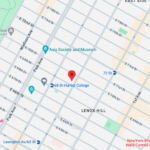
Upper East Side: Full Service Orthopedic Center & Walk-In
1198 3rd Avenue, Between 69th and 70th Street New York, NY 10021Physicians: Monday–Friday 8:00am–6:00pm, Saturday 8:00am–5:00pm
Physical Therapy: Monday–Friday 7:00am–7:30pm, Saturday 8:00am–3:00pm
Sunday: ClosedPhone: (212) 759-4553 -

Orthopedic Doctor Midtown Manhattan NYC — New York Bone & Joint Specialists
425 Madison Ave, Suite 200 (second floor) New York, NY 10017 (corner of East 49th Street)Physician appointments: Mon–Fri 8:00 am–6:00 pm
Physical therapy: Mon–Fri 7 am–7:30 pm, Sat 8 am–3 pmPhone: (212) 759-4553 -

Orthopedic Doctor Upper East Side NYC — New York Bone & Joint Specialists
130 E 67th St New York, NY 10065Currently ClosedPhone: (212) 759-4553