Hip Arthroscopy & Labral Repair NYC — FAI Surgery Specialists at New York Bone & Joint
Written by: Dr. Popovitz.
Board-Certified Orthopedic Surgeon | Fellowship-Trained Sports Medicine, NYU Langone Medical Center | FAAOS
Co-Founder, NY Bone & Joint Specialists | Lenox Hill Hospital - Northwell Health
Recognized: New York Magazine Best Doctor | New York Times Super Doctor | IAOS Leading Physician of the World | IAOS Top Orthopedic Surgeon in New York
Date Published: June 3, 2026
Last Updated: June 3, 2026
Last Medically Reviewed: June 3, 2026
This page has been written and reviewed by a fellowship-trained, board-certified orthopedic surgeon with over 20 years of clinical experience. All clinical claims are supported by peer-reviewed literature and current AAOS and AOSSM guidelines. See References section below.
From the Co-Founders
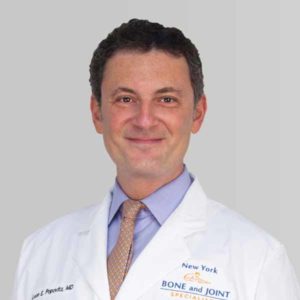
Leon E. Popovitz, MD
Board-Certified Orthopedic Surgeon (ABOS)
When I founded New York Bone & Joint Specialists, I built it around a conviction that has guided every decision we have made since: that preserving your body’s own tissue is the foundation of long-term health. Surgery, when it is the right answer, is how we restore what has been damaged. But the most important surgery is often the one we perform early, before a problem that is still correctable becomes one that isn’t.
Hip arthroscopy is one of the clearest expressions of that philosophy. Femoroacetabular impingement (the abnormal bone contact between the femoral head and the acetabulum that is the most common correctable cause of hip pain in active adults) is a condition that destroys the hip’s articular cartilage progressively and silently. Left untreated, it creates the joint damage that leads to early arthritis and, eventually, hip replacement. Treated early, with precise arthroscopic correction of the bony impingement and repair of the labrum, it preserves the hip for decades. That’s hip preservation. That’s why we have it at New York Bone & Joint.
Dr. Rupesh Tarwala brings something exceptional to this practice: four subspecialty fellowships, including a dedicated hip preservation fellowship at Ohio State University, and international training across seven programs in five countries. He doesn’t just perform hip arthroscopy: he has dedicated a significant part of his career to understanding the hip in a way that allows him to preserve it. I am proud to have him at New York Bone & Joint.
— Dr. Leon Popovitz │ Founder, New York Bone & Joint Specialists
PT Staff
Aayushi Chavda, PT | Cecilia Manubay, PT | Hetali Patel, PT | Nishtha Sharma, PT | Riddhi Patel, DPT | Samay Patel, PT, DPT
At a glance
What it is: Minimally invasive arthroscopic surgery to correct femoroacetabular impingement (FAI), repair or reconstruct a torn hip labrum, and address concurrent cartilage damage — all through small portals, without open surgery. The goal is to eliminate pain, restore function, and protect the hip joint from the progressive cartilage damage that FAI and labral tears cause if left untreated.
What it treats: Cam-type FAI, pincer-type FAI, combined FAI, hip labral tears, chondral (cartilage) damage associated with impingement, loose bodies in the hip joint, snapping hip syndrome (internal), and gluteus medius tears. Not appropriate for advanced hip arthritis.
Who performs it: Dr. Rupesh Tarwala, one of a small number of surgeons in the country to have completed four subspecialty fellowships, including a hip preservation fellowship at Ohio State University. Attending Orthopedic Surgeon and Clinical Assistant Professor, Northwell/Lenox Hill Hospital. Surgery at Lenox Hill Hospital.
Where: Consultations, imaging, and physical therapy at two Manhattan offices — Upper East Side (1198 Third Ave,th) and Midtown (425 Madison Ave). Surgery at Lenox Hill Hospital — Northwell Health.
Recovery: Crutches 2–6 weeks depending on procedure. Return to desk work: 1–2 weeks. Return to low-impact sport: 4–6 months. Return to full competitive sport: 7-9 months. Studies show 93% return to professional sport after hip arthroscopy for FAI in elite athletes. [5]
Why treat early: Untreated FAI causes progressive cartilage damage that eventually leads to hip arthritis and, potentially, hip replacement. Hip arthroscopy corrects the impingement before that damage becomes irreversible. The earlier the correction, the better the cartilage that is preserved. [9]
Insurance: Most major insurance accepted. Coverage for hip arthroscopy for documented FAI and labral pathology is typically covered when medically indicated. Coverage verified before your procedure.
Book a consultation
Prompt Appointments Available
Upper East Side: 1198 Third Ave | Midtown: 425 Madison Ave
Surgery performed at Lenox Hill Hospital - Northwell Health
About this page
This page was written and is maintained by Rupesh Tarwala, MD, an orthopedic surgeon with four subspecialty fellowships including a hip preservation fellowship at Ohio State University. Dr. Tarwala practices at New York Bone & Joint Specialists, a private orthopedic surgery and sports medicine practice with two Manhattan locations (Upper East Side and Midtown) founded by Dr. Leon Popovitz. Dr. Tarwala performs hip arthroscopy, FAI correction, and labral repair at Lenox Hill Hospital, part of the Northwell Health system, where he also serves as Attending Orthopedic Surgeon and Clinical Assistant Professor. New York Bone & Joint is independent of hospital systems and operates as a private practice serving patients across New York City and the surrounding region.
Introduction
Hip pain in an active adult, such as the deep groin ache that worsens with sitting for long periods, the sharp catch with pivoting or cutting, or the stiffness that never fully resolves, is one of the most commonly mismanaged conditions in sports medicine. The symptoms overlap with muscle strain, athletic pubalgia, and lumbar pathology. Standard X-rays often look normal. And standard MRI misses a significant proportion of labral tears in the hip. The result is a pattern that appears repeatedly in my practice: a patient who has been managed for months or years for the wrong diagnosis, with treatments that addressed the pain but not its source. [8]
At New York Bone & Joint Specialists, hip arthroscopy for femoroacetabular impingement (FAI) and labral repair is performed by Dr. Rupesh Tarwala. Dr Tarwala completed his fellowship at Ohio State University and has trained internationally across seven programs in five countries. The procedure he performs is not generic hip arthroscopy. It is a precisely planned correction of the structural bony pathology causing the impingement, combined with repair of the labral tissue that the impingement has damaged, and management of any cartilage injury that has resulted. Done correctly and at the right stage of the disease, this surgery can eliminate pain, restore full athletic function, and protect the hip from the progressive articular cartilage damage that untreated FAI inevitably produces. [9]
Published studies show 93% return to professional sport after hip arthroscopy for FAI in elite athletes, and long-term outcome data demonstrates that 84% of patients maintain or improve their Harris Hip Score at 10-year follow-up when appropriate candidates are selected. [4] [5] The key word is appropriate. Patient selection is the most important variable in hip arthroscopy outcomes, and that’ i’s a judgment that requires subspecialty depth.
Understanding FAI and the Hip Labrum
The hip joint is a ball-and-socket joint, meaning the femoral head (ball) sits within the acetabulum (socket). In a normal hip, this articulation allows smooth, full-range motion without bony conflict. The labrum is a ring of fibrocartilage that lines the rim of the acetabulum, deepening the socket, creating a seal that distributes load across the joint surface, and stabilizing the femoral head. [3]
Femoroacetabular impingement is an anatomical mismatch between the femoral head and the acetabulum that creates abnormal bony contact during hip motion. With every step, squat, and athletic movement, the impingement damages the labrum and the adjacent articular cartilage. Over time, this produces the labral tears and cartilage lesions that are the structural cause of the symptoms patients ultimately present with. [9]
“What I want patients to understand is that FAI is not primarily a pain problem. It’s a structural problem that produces pain. The labral tear is not the root cause. It’s the result of the impingement that has been occurring with every hip movement for years. If you repair the labrum without correcting the underlying bony impingement, you’re treating the consequence rather than the cause. The impingement continues, and the repaired labrum tears again. This is why the osseous correction, by which we mean reshaping the femoral head and/or the acetabular rim, is the core of the procedure, not an afterthought.” — Dr. Rupesh Tarwala
Types of FAI: Cam, Pincer, and Combined
FAI is classified by where the bony abnormality originates. Most patients have a combination of both types, which is why accurate pre-operative imaging is essential.
| Type | Anatomical Source | What Happens | Who Gets It | Surgical Correction |
| Cam-type FAI | Aspherical prominence on the femoral head; the ball is not perfectly round. Measured by the alpha angle on MRI or X-ray; >55° is the diagnostic threshold. [6] | The non-spherical femoral head jams against the acetabular rim during hip flexion, shearing the labrum and the adjacent articular cartilage with repetitive motion. | Most common in young, active males. Athletes who perform deep hip flexion: soccer, hockey, football, gymnastics, martial arts. | Femoral head osteoplasty: arthroscopic removal of the abnormal bony prominence to restore a spherical femoral head. Labral repair performed concurrently. |
| Pincer-type FAI | Excess coverage of the femoral head by the acetabular rim: the socket overcrowds the ball. Can be focal (localized overcoverage) or global (coxa profunda, protrusio). | The acetabular rim directly impacts the femoral neck with hip flexion, compressing the labrum between the rim and the femoral neck. | More common in middle-aged, active females; hypermobile patients; and those with deep acetabuli. | Acetabular rim trimming: arthroscopic removal of the excess acetabular bone to create appropriate coverage without overcrowding. Labral repair or re-fixation performed concurrently. |
| Combined FAI | Both cam and pincer pathology present simultaneously. | The most common presentation in clinical practice. Both the femoral head and the acetabular rim require surgical correction. | Athletes and active adults of both sexes. Most patients undergoing hip arthroscopy. | Femoral head osteoplasty + acetabular rim trimming, combined with labral repair. Requires careful pre-operative planning to address both components accurately. |
| The Alpha Angle: What the Number Means The alpha angle is the primary radiographic measurement used to quantify cam-type FAI. It’s measured on MRI or X-ray as the angle between the femoral neck axis and a line drawn from the center of the femoral head to the point where the head loses its sphericity. An alpha angle greater than 55° is the established diagnostic threshold for cam-type FAI. [6] The higher the alpha angle, the more prominent the cam lesion and the more extensive the osteoplasty required to restore a spherical head. Pre-operative alpha angle measurement is one of the primary tools Dr. Tarwala uses to plan the extent of bone removal needed for each patient. |
Hip Labral Tears: Why They Matter and Why They Need Repair
A hip labral tear is almost never an isolated injury in the FAI patient. It’s a structural consequence of the impingement, meaning the labrum is torn because the bony cam or pincer lesion has been abrading it with every hip movement for years. [3] This is the most important clinical distinction in hip arthroscopy: the labral tear is the damage, and the FAI is the mechanism. Addressing the tear without addressing the impingement produces predictable failure.
Labral repair vs. debridement: The evidence is clear that labral repair (that is, reattaching the torn labrum to the acetabular rim using suture anchors) produces significantly superior outcomes to labral debridement (trimming away the torn tissue) at 2-year follow-up. [7] At New York Bone & Joint, our approach is preservation-first: repair the labrum whenever the tissue quality and tear pattern allow. Debridement is reserved for cases where the labral tissue is too frayed or degenerated to support a durable repair.
Labral reconstruction: In cases where the labrum has been extensively damaged (where there’s insufficient tissue remaining after debridement of irreparably torn segments) labral reconstruction using a graft (iliotibial band autograft or allograft) can restore the joint seal and labral function. This is a more complex procedure reserved for specific anatomical situations. [11]
“The labral repair decision is made intraoperatively. Pre-operative MRI arthrogram gives me the best available picture of the tear pattern and tissue quality, but the final assessment is made with the labrum directly in view. Some tears that look repairable on imaging prove, on direct visualization, to have frayed or degenerated tissue that will not hold suture anchors reliably. The goal in every case is to preserve as much labral tissue as possible and restore the joint seal that the labrum provides.” — Dr. Rupesh Tarwala
Diagnosis: Why Standard MRI is Often not Enough
The diagnostic workup for FAI and hip labral tears requires more than a standard MRI and a set of X-rays. Standard MRI has documented limitations in detecting hip labral tears. Studies show it misses a clinically significant proportion of tears, particularly partial-thickness tears and posterior lesions. [8] MRI arthrogram, in which contrast is injected into the hip joint before imaging, significantly improves sensitivity and specificity and is the preferred imaging modality for hip labral pathology.
At New York Bone & Joint, Dr. Tarwala reviews every hip MRI himself, not just the radiology report. When the clinical examination is strongly suggestive of FAI or labral pathology but standard MRI is negative or inconclusive, he will recommend MRI arthrogram. This is the step that most frequently establishes the diagnosis that prior providers missed.
The clinical examination also provides critical information that imaging cannot. Hip impingement tests, such as the anterior impingement test (FADIR), the FABER test, and the internal rotation range-of-motion assessment, establish the clinical picture that guides both the imaging choice and the surgical planning.
Are You a Candidate for Hip Arthroscopy?
Patient selection is the most consequential variable in hip arthroscopy outcomes. The procedure produces excellent results in the right patient, and poor results in the wrong one. [10] The most important exclusion criterion is advanced hip arthritis: patients with Tonnis grade 2 or 3 arthritis, significant joint space narrowing on weight-bearing X-ray, or advanced chondral damage are not good candidates for arthroscopy and should be counseled about hip replacement or other options.
Hip arthroscopy for FAI and labral repair is typically appropriate when:
- You have confirmed FAI on imaging (cam lesion with alpha angle >55°, pincer-type overcoverage, or combined) with correlating clinical examination findings
- You have a confirmed hip labral tear on MRI arthrogram with symptoms consistent with the tear: groin pain with activity, clicking or locking, stiffness at end range of motion
- You have failed an appropriate course of conservative management (physical therapy, activity modification, and/or anti-inflammatory treatment) that typically runs 3–6 months
- Your hip joint space is preserved on weight-bearing X-ray, indicating that the articular cartilage has not been lost to the degree that arthroscopy will not provide meaningful benefit
- You are an athlete or active adult whose symptoms prevent return to sport or meaningful activity
Hip arthroscopy is generally not appropriate for patients with advanced osteoarthritis (Tonnis grade 2+), severe cartilage damage at the time of arthroscopy, or those whose primary symptoms are better explained by lumbar spine pathology, athletic pubalgia, or other non-hip sources. At your consultation, Dr. Tarwala will review your imaging, perform a thorough examination, and give you a direct answer about whether you are a candidate. And if you’re not, he’ll discuss what the appropriate next step is.
| From Dr. Tarwala: Eighteen Months to a Diagnosis A 26-year-old, high performance athlete came to see me after 18 months of right groin pain. He had seen three providers: his primary care doctor, a sports medicine physician locally, and a physical therapist who treated him for a hip flexor strain for four months. He had received two cortisone injections into the hip flexor region, neither of which provided more than a week of partial relief. He had a standard MRI that was read as showing ‘mild bursitis and no labral tear.’ He had been told the problem was a muscle issue and to keep working on his hip flexor flexibility. When I examined him, the anterior impingement test was strongly positive, his internal rotation was limited to 10 degrees compared to 35 on the left, and he had the classic pattern of groin pain with prolonged sitting and acceleration. This wasn’t a hip flexor strain. I ordered an MRI arthrogram. The arthrogram showed a Type II cam lesion with an alpha angle of 63 degrees, a full-thickness anterior labral tear, and a small area of acetabular cartilage delamination at the chondrolabral junction. None of this had been visible on the standard MRI. The cortisone injections had gone into the peritrochanteric soft tissue, not the hip joint. They had never addressed the structural problem. We performed arthroscopic cam osteoplasty, removing the bony prominence on the femoral head to restore a spherical contour, combined with labral repair using three suture anchors and chondroplasty of the delaminated cartilage segment. At nine months post-surgery, he was back to preinjury level sports activities. He has been followed for two years with no recurrence. The eighteen months matter. The cartilage delamination we found, the early-stage articular damage adjacent to the labral tear, was manageable at the time of surgery. Had he continued another year or two with the same activity level, that delamination would likely have progressed to a full-thickness chondral defect that changes the long-term prognosis of the hip significantly. Early diagnosis and treatment of FAI is not just about getting an athlete back to sport. It is about protecting the joint for a lifetime. — Dr. Rupesh Tarwala |
The Procedure: What Happens During Hip Arthroscopy
Hip arthroscopy at New York Bone & Joint is performed under general anesthesia with the patient on a specialized traction table that allows distraction of the hip joint for access. Most procedures take 90–150 minutes depending on the complexity of the pathology being addressed. Patients go home the same day. [1]
Dr. Tarwala will:
- Position you on the traction table and gently distract the hip joint to create space for the arthroscopic portals.
- Create two or three small portals around the hip (typically less than a centimeter each) to access the central compartment (inside the joint) and the peripheral compartment (outside the joint capsule, where the cam lesion lives).
- Perform a complete arthroscopic survey of the hip joint: labrum, articular cartilage, ligamentum teres, and joint lining. The extent and character of all pathology is documented intraoperatively.
- Cam osteoplasty (if indicated): Using an arthroscopic burr, the bony prominence on the femoral head is carefully removed under fluoroscopic guidance to restore a spherical contour. The alpha angle is re-checked fluoroscopically during the procedure to confirm adequate correction. This step is performed in the peripheral compartment with traction released.
- Acetabular rim trimming (if indicated): Excess acetabular bone is removed to address pincer-type overcoverage. The labrum is temporarily detached from the rim, the bone is trimmed, and the labrum is re-fixed to the rim.
- Labral repair: The torn labrum is prepared and reattached to the acetabular rim using suture anchors, restoring the joint seal and labral function. The number and position of anchors depends on the extent of the tear.
- Chondral management: Articular cartilage damage is addressed at the time of surgery: chondroplasty for low-grade lesions and microfracture for full-thickness defects in areas where it is indicated based on size and location.
- Release traction, close portals, apply dressings and a compression wrap. You will leave on crutches with a clear post-operative protocol.
“A nuance that I think about in every hip arthroscopy: the amount of bone removed during cam osteoplasty must be precisely calibrated. Too little and the impingement persists: the labral repair fails because the mechanism that caused the tear in the first place is still there. Too much and you weaken the femoral neck, creating a risk of stress fracture and loss of suction seal. The fluoroscopic intraoperative check is not optional: it’s how I confirm the correction before closing. The pre-operative planning using 3 D reconstruction CT, the intraoperative measurement, and the fluoroscopic verification together are what make the difference between a cam osteoplasty that corrects the impingement and one that does not.” — Dr. Rupesh Tarwala
Recovery and Rehabilitation
Recovery after hip arthroscopy depends on the procedures performed and the extent of the cartilage pathology addressed. Labral repair requires protected weight-bearing for the repair to heal against the acetabular bone, progressing too quickly risks failure of the repair before it has healed.
| Phase | Timeframe | Goals & Activities |
| Protection | Weeks 0–2 (simple debridement) or 0–6 (labral repair) | Crutches for protected weight-bearing. Flat-foot weight-bearing typically begins day 1 for debridement cases; labral repair requires more protection. Hip brace may be used. No hip flexion beyond 90 degrees. Stationary bike with no resistance begins early for range of motion. |
| Progressive Weight-Bearing | Weeks 2–6 | Gradual crutch weaning under PT direction. Hip flexion restrictions lifted progressively. Aqua therapy may begin. Hip strengthening begins for gluteus medius and external rotators. |
| Strengthening | Months 2–5 | Progressive hip strengthening program. Closed-chain exercises. Elliptical, cycling. Core and pelvis stabilization. No running yet. |
| Return to Running / Sport-Specific | Months 6–8 | Running program begins with criteria-based progression. Sport-specific training. Agility and change-of-direction drills for athletes. |
| Return to Full Sport | Months 8-9 | Return to competitive sport with criteria-based clearance: strength symmetry testing, functional sport-specific assessment, and physician sign-off. [5] |
For patients who undergo microfracture for chondral defects, the return-to-sport timeline is typically extended by 2–3 months to allow the fibrocartilage repair tissue to mature before full loading.
In-House Physical Therapy: Why it Matters After Hip Arthroscopy
Hip arthroscopy rehabilitation is one of the most protocol-sensitive procedures in orthopedic surgery. The protection requirements differ based on whether labral repair, cam osteoplasty, microfracture, or a combination was performed. The hip flexion restrictions in the early weeks are specific and non-negotiable. Violating them risks failure of the labral repair before it has healed against the bone.
At New York Bone & Joint, your physical therapist and surgeon work in the same center. Before your first physical therapy session after hip arthroscopy, your therapist will have reviewed your operative report with Dr. Tarwala, confirmed the specific procedures performed, and built a protocol calibrated to your surgery. You won’t receive a generic hip arthroscopy template here. The progression from protected weight-bearing to strengthening to running to sport-specific training is staged precisely to what was done in the operating room.
Risks and Considerations
Hip arthroscopy is a safe procedure in experienced hands. The overall complication rate for hip arthroscopy is less than 1% for major complications. [12] Specific risks:
- Traction-related nerve injury: The traction required to distract the hip joint places the pudendal nerve and the sciatic nerve at risk if traction time is excessive or incorrectly applied. Experienced hip arthroscopy surgeons minimize traction time and use padded positioning to reduce this risk. Typically transient if it occurs.
- Labral repair failure: If the repaired labrum fails to heal against the acetabular rim, the tear may recur. This is more common when the cam osteoplasty is incomplete; the impingement persists and re-tears the repair. Intraoperative fluoroscopic confirmation of adequate cam correction is the primary safeguard.
- Heterotopic ossification: Formation of extra bone in the soft tissue around the hip after surgery. More common with extensive procedures. Prophylactic NSAIDs may be recommended post-operatively.
- Femoral neck fracture: Extremely rare complication of excessive cam osteoplasty that removes too much femoral neck bone. Prevented by intraoperative fluoroscopic monitoring and precise surgical technique.
- Infection: Rare. Less than 1% with standard arthroscopic technique and sterile protocol. [12]
- Poor outcomes in advanced arthritis: The single most important risk is operating on a patient who isn’t a good candidate. Patients with advanced hip arthritis, significant joint space narrowing, or advanced chondral damage do not respond well to hip arthroscopy and may require hip replacement. Pre-operative patient selection is the primary safeguard. [10]
Why Choose New York Bone & Joint for Hip Arthroscopy?
| The New York Bone & Joint Advantage | What It Means for You |
| Hip Preservation Fellowship-trained surgeon | Dr. Tarwala completed a Hip Preservation Fellowship at Ohio State University. This wasn’t a general sports medicine fellowship with some hip exposure but a subspecialty fellowship specifically in hip preservation surgery. This is the training that distinguishes a hip preservation specialist from a generalist who performs hip arthroscopy. |
| Four subspecialty fellowships | One of a small number of surgeons in the country to have completed four subspecialty fellowships, including international training across seven programs in five countries. This depth of training translates directly to the precision of pre-operative planning and intraoperative decision-making. |
| Attending Surgeon & Faculty at Northwell/Lenox Hill | Dr. Tarwala serves as Attending Orthopedic Surgeon and Clinical Assistant Professor at Lenox Hill Hospital, where all New York Bone & Joint hip surgeries are performed. He trains the next generation of orthopedic surgeons in the procedures he performs for patients. |
| MRI arthrogram as standard for equivocal cases | Standard MRI misses a significant proportion of hip labral tears. [8] When the clinical examination suggests FAI and standard MRI is negative or inconclusive, Dr. Tarwala orders the arthrogram. This is the step most often missed by providers without hip preservation subspecialty depth. |
| Cam correction precision with fluoroscopic confirmation | The amount of bone removed during cam osteoplasty is confirmed intraoperatively with fluoroscopy. Inadequate correction is the primary cause of labral repair failure. Fluoroscopic verification before closing is non-negotiable. |
| Preservation-first labral approach | We repair whenever possible. Reconstruction when the tissue requires it. We never debride when we can repair; the evidence clearly supports repair over debridement at every follow-up interval. [7] |
| In-house physical therapy | Your surgeon and physical therapist communicate directly. The protocol is built from the operative report, not a template. |
| New York Bone & Joint founding philosophy | Hip arthroscopy is the preservation-first approach applied to the hip. Every element of how we approach this procedure (early diagnosis, arthrogram when needed, osseous correction, labral repair, careful patient selection) reflects the conviction that preserving your own tissue is the foundation of long-term joint health. |
| The bottom line A hip that’s treated early, when the FAI is present but the cartilage is still intact, can be preserved for decades. A hip that’s treated late, after years of impingement have destroyed the cartilage, has a different conversation ahead of it. The window eventually closes. New York Bone & Joint and Dr. Tarwala exist to identify when that window is open and to act with the precision that keeps it that way. |
References
- American Academy of Orthopaedic Surgeons. Hip Arthroscopy. OrthoInfo. orthoinfo.aaos.org/en/treatment/hip-arthroscopy
- American Academy of Orthopaedic Surgeons. Femoroacetabular Impingement. OrthoInfo. orthoinfo.aaos.org/en/diseases–conditions/femoroacetabular-impingement
- American Academy of Orthopaedic Surgeons. Hip Labral Tear. OrthoInfo. orthoinfo.aaos.org/en/diseases–conditions/hip-labral-tear
- Martínez JM et al. Hip arthroscopy for femoroacetabular impingement with 10-year minimum follow-up. Rev Esp Cir Ortop Traumatol. 2024. pubmed.ncbi.nlm.nih.gov/37406732
- Baker HP et al. Return to Sport and Outcomes After Hip Arthroscopic Surgery for Treatment of Femoroacetabular Impingement in Professional Athletes. Am J Sports Med. 2025. pubmed.ncbi.nlm.nih.gov/41251309
- Clohisy JC et al. A systematic approach to the plain radiographic evaluation of the young adult hip. J Bone Joint Surg Am. 2009. pubmed.ncbi.nlm.nih.gov/18984718
- Larson CM et al. Arthroscopic hip labral repair and labral reconstruction. Am J Sports Med. 2012. pubmed.ncbi.nlm.nih.gov/22307078
- Neumann J et al. Validation of scoring hip osteoarthritis with MRI (SHOMRI) scores using hip arthroscopy as a standard of reference. Eur Radiol. 2019. pubmed.ncbi.nlm.nih.gov/29987419
- Mardones RM et al. Surgical treatment of femoroacetabular impingement: evaluation of the effect of the size of the resection. J Bone Joint Surg Am. 2005. pubmed.ncbi.nlm.nih.gov/15687147
- Kyin C et al. Mid- to Long-Term Outcomes of Hip Arthroscopy: A Systematic Review. Arthroscopy. 2021. pubmed.ncbi.nlm.nih.gov/33220468
- Selley RS et al. Revision Hip Arthroscopy: Identifying Indications and Outcomes With a Mean 5-Year Follow-up. Am J Sports Med. 2025. pubmed.ncbi.nlm.nih.gov/41105462
- Shin JJ et al. Complications After Arthroscopic Shoulder Surgery. J Am Acad Orthop Surg Glob Res Rev. 2018. pubmed.ncbi.nlm.nih.gov/30680371
FAQs
Hip arthroscopy is a minimally invasive surgical procedure that uses a small camera and specialized instruments inserted through tiny portals to diagnose and treat conditions inside and around the hip joint, including FAI correction, labral repair, and cartilage management. [1] Unlike open hip surgery, arthroscopy requires no large incision, no dislocation of the hip joint, and allows patients to go home the same day. It’s the primary surgical treatment for femoroacetabular impingement and hip labral tears in patients with adequate remaining joint space.
Femoroacetabular impingement (FAI) is an abnormal bony contact between the femoral head and the acetabular rim during hip motion, caused by either a non-spherical femoral head (cam type), excess acetabular coverage (pincer type), or both, which progressively damages the hip labrum and articular cartilage. [2] FAI is the most common correctable structural cause of hip pain in active adults and athletes. Left untreated, it leads to labral tears, cartilage damage, and early hip arthritis. Arthroscopic correction of the impingement, such as cam osteoplasty and/or acetabular rim trimming, eliminates the mechanism that is causing the damage. [9]
The classic symptoms of a hip labral tear are deep groin pain that worsens with prolonged sitting, pivoting, or athletic activity, often accompanied by a clicking or locking sensation in the hip. A positive anterior impingement test and limited internal rotation on clinical examination raise the index of suspicion significantly. Standard MRI has limited sensitivity for hip labral tears: MRI arthrogram is the preferred imaging study and significantly more accurate. [8] At New York Bone & Joint, Dr. Tarwala orders arthrogram when the clinical picture warrants it and standard MRI is insufficient.
Labral repair reattaches the torn labrum to the acetabular rim using suture anchors and is preferred whenever the tissue quality allows, producing significantly better outcomes than debridement; labral reconstruction uses a graft to replace a labrum that is too damaged to support a durable repair. [7] [11] At New York Bone & Joint, the preservation-first approach means we repair whenever possible. Reconstruction is reserved for situations where the labral tissue has been too extensively damaged (such as by prior surgery, advanced degeneration, or severe tearing) to hold suture anchors reliably.
Most patients use crutches for 2 to 6 weeks depending on the procedures performed, return to desk work within 1 to 2 weeks, and return to full competitive sport at 8 to 9 months with criteria-based clearance. [5] Labral repair cases require a longer protected weight-bearing period than simple debridement cases. Return to sport is criteria-based (on strength symmetry testing and functional assessment) not time-based alone. Published data shows 93% return to professional sport in elite athletes after hip arthroscopy for FAI. [5]
Long-term studies show that 84% of patients maintain or improve their Harris Hip Score at 10-year follow-up after hip arthroscopy for FAI, and 93% of elite athletes return to professional sport. [4] [5] Outcomes are highly dependent on patient selection, the adequacy of cam correction, and the quality of labral repair. Patients with advanced arthritis or significant cartilage damage have significantly worse outcomes. Appropriate patient selection is the most important determinant of result.
For patients with FAI and labral tears who have adequate remaining joint space, hip arthroscopy can correct the impingement mechanism and protect the cartilage from further damage, potentially delaying or preventing the arthritic progression that leads to hip replacement. [9] The key is timing: hip arthroscopy performed before significant cartilage loss produces better and more durable outcomes than surgery performed after the damage has accumulated. This is the core principle of hip preservation. For patients with already-advanced arthritis, hip arthroscopy is not the appropriate treatment.
MRI arthrogram is significantly more sensitive and specific than standard MRI for hip labral tears and is the preferred imaging study when labral pathology is suspected but standard MRI is negative or inconclusive. [8] Standard hip X-rays are used to assess FAI morphology, measure the alpha angle, evaluate joint space, and screen for arthritis. Dr. Tarwala reviews all imaging himself and will recommend arthrogram when the clinical picture warrants it. New York Bone & Joint coordinates prompt imaging at affiliated facilities.
Hip arthroscopy for documented FAI and labral pathology with confirmed symptoms and failed conservative treatment is typically covered by major insurance plans when medically indicated. Pre-authorization requirements vary by insurer. New York Bone & Joint will verify your specific coverage before scheduling and provide a clear picture of any out-of-pocket responsibility in advance.
Medically Reviewed by Dr. Popovitz.
You can book your appointment with New York Bone & Joint online by submitting the appointment request form here:
Book an appointmentOur Locations
-
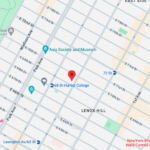
Upper East Side: Full Service Orthopedic Center & Walk-In
1198 3rd Avenue, Between 69th and 70th Street New York, NY 10021Physicians: Monday–Friday 8:00am–6:00pm, Saturday 8:00am–5:00pm
Physical Therapy: Monday–Friday 7:00am–7:30pm, Saturday 8:00am–3:00pm
Sunday: ClosedPhone: (212) 759-4553 -

Orthopedic Doctor Midtown Manhattan NYC — New York Bone & Joint Specialists
425 Madison Ave, Suite 200 (second floor) New York, NY 10017 (corner of East 49th Street)Physician appointments: Mon–Fri 8:00 am–6:00 pm
Physical therapy: Mon–Fri 7 am–7:30 pm, Sat 8 am–3 pmPhone: (212) 759-4553 -

Orthopedic Doctor Upper East Side NYC — New York Bone & Joint Specialists
130 E 67th St New York, NY 10065Currently ClosedPhone: (212) 759-4553