Hip Labral Repair NYC — Hip Labral Tear Surgery at New York Bone & Joint
Written by: Dr. Popovitz.
Board-Certified Orthopedic Surgeon | Fellowship-Trained Sports Medicine, NYU Langone Medical Center | FAAOS
Co-Founder, NY Bone & Joint Specialists | Lenox Hill Hospital - Northwell Health
Recognized: New York Magazine Best Doctor | New York Times Super Doctor | IAOS Leading Physician of the World | IAOS Top Orthopedic Surgeon in New York
Date Published: June 3, 2026
Last Updated: June 3, 2026
Last Medically Reviewed: June 3, 2026
This page has been written and reviewed by a fellowship-trained, board-certified orthopedic surgeon with over 20 years of clinical experience. All clinical claims are supported by peer-reviewed literature and current AAOS and AOSSM guidelines. See References section below.
From the Co-Founders
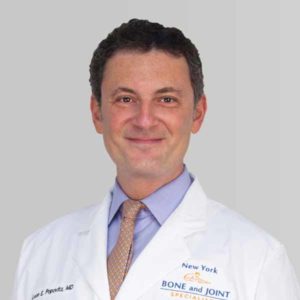
Leon E. Popovitz, MD
Board-Certified Orthopedic Surgeon (ABOS)
The hip labrum does something that no surgeon can fully replicate once it’s gone: it seals the hip joint. It creates the pressure that holds the femoral head centered in the socket, distributes load evenly across the articular cartilage, and protects the joint surface from the contact stresses that, without it, accelerate cartilage loss. When the labrum tears and is left unrepaired, the seal is broken. The joint begins to degenerate in ways that are quiet, progressive, and, past a certain point, irreversible.
The most important word in hip labral care is early. A labral tear that is repaired before it causes significant cartilage damage gives the patient the best chance of a hip that functions well for decades. A labral tear that is ignored, or managed with treatments that relieve pain without addressing the structural problem, gives the cartilage damage time to accumulate. That’s the difference between a patient who returns to full activity and one who is eventually discussing hip replacement.
At New York Bone & Joint, we built this practice around the conviction that preserving your own tissue is the foundation of long-term health. Dr. Rupesh Tarwala brings that conviction to every hip patient he sees: with the subspecialty training, the surgical precision, and the diagnostic discipline to identify labral tears early, repair them correctly, and protect the hip for the long term.
PT Staff
Aayushi Chavda, PT | Cecilia Manubay, PT | Hetali Patel, PT | Nishtha Sharma, PT | Riddhi Patel, DPT | Samay Patel, PT, DPT
At a glance
What it is: Arthroscopic surgery to reattach a torn hip labrum to the acetabular rim using suture anchors, restoring the labral seal that protects articular cartilage and stabilizes the femoral head in the socket. The goal is to eliminate pain, restore function, and halt the progressive cartilage damage that an unrepaired labral tear produces.
What it treats: Anterior, posterior, and posterosuperior labral tears; labral tears associated with FAI; labral tears in athletes and dancers from repetitive extreme range-of-motion loading; acute traumatic labral tears; and labral tears diagnosed after initial negative standard MRI.
Why repair, not just debride: Studies show significantly superior outcomes with labral repair vs. debridement at 2-year follow-up. [4] Debridement removes the torn tissue but does not restore the labral seal — the function that protects the cartilage. Repair restores both structure and function.
Who performs it: Dr. Rupesh Tarwala, hip preservation fellowship-trained at Ohio State University, four subspecialty fellowships, Attending Orthopedic Surgeon and Clinical Assistant Professor at Northwell/Lenox Hill Hospital. Surgery at Lenox Hill Hospital.
Recovery: Crutches 4–6 weeks for labral repair. Return to desk work: 1–2 weeks. Return to low-impact activity: 3–4 months. Return to full sport or performance: 8–9 months. Studies show 93% return to professional sport in elite athletes. [6]
Natural history without repair: Untreated labral tears lead to progressive chondral damage over time as the labral seal is absent and contact stress increases on the unprotected cartilage. [3] [7] The longer the tear goes unrepaired in an active patient, the greater the cartilage damage that accumulates.
Insurance: Most major insurance plans cover hip labral repair when medically indicated with documented symptoms and imaging. Coverage verified before your procedure.
Book a consultation
Prompt Appointments Available
Upper East Side: 1198 Third Ave | Midtown: 425 Madison Ave
Surgery performed at Lenox Hill Hospital - Northwell Health
About this page
This page was written and is maintained by Rupesh Tarwala, MD, an orthopedic surgeon with a hip preservation fellowship from Ohio State University and four total subspecialty fellowships. Dr. Tarwala practices at New York Bone & Joint Specialists, a private orthopedic surgery and sports medicine practice with two Manhattan locations, founded by Leon Popovitz, MD. Hip labral repair and reconstruction are performed by Dr. Tarwala at Lenox Hill Hospital, part of the Northwell Health system, where he also serves as Attending Orthopedic Surgeon and Clinical Assistant Professor. New York Bone & Joint is independent of hospital systems and operates as a private practice serving patients across New York City and the surrounding region.
Introduction
A hip labral tear is one of the most frequently missed and most frequently mismanaged diagnoses in sports medicine. The pain it produces (deep in the groin, sometimes radiating to the anterior thigh or buttock, often described as a clicking or locking sensation with specific movements) overlaps with muscle strains, hip flexor tendinitis, and lumbar pathology. Standard MRI misses a clinically significant proportion of labral tears.
The conventional response to an inconclusive workup (cortisone injections, a course of physical therapy, and activity restriction) can relieve pain without addressing the structural problem, creating the illusion of improvement while the cartilage damage continues to accumulate beneath the surface. [5]
At New York Bone & Joint Specialists, hip labral repair is performed by Dr. Rupesh Tarwala — a hip preservation fellowship-trained orthopedic surgeon who completed four subspecialty fellowships and international training across seven programs in five countries. His approach is grounded in a single conviction that guides every decision he makes about the labrum: the labral seal is the hip’s primary protection against the cartilage damage that leads to early arthritis. Repair it correctly, early, and the hip can last a lifetime. Leave it unrepaired, and the damage accumulates silently until it does not.
This page covers the hip labrum as a structure: what it does, what happens when it tears, how it is accurately diagnosed, and why repair is the preservation-first surgical answer. For the full technical detail of the arthroscopic procedure, including information about cam osteoplasty, portal technique, and fluoroscopic verification, [click here].
What is the Hip Labrum and What Does It Do?
The hip labrum is a ring of fibrocartilage attached to the rim of the acetabulum, which is the socket of the hip joint. It’s continuous around the entire rim except at the inferior aspect, where a transverse ligament bridges the gap. It is triangular in cross-section, with its base fixed to the acetabular rim and its free edge projecting inward over the femoral head.
The labrum serves three critical functions that together explain why its loss is so consequential: [7]
- Deepening: The labrum extends the acetabular socket by approximately 22%, significantly increasing the contact area between the femoral head and the acetabulum. Without it, the femoral head is less contained and the contact stress on the articular cartilage increases substantially with every load-bearing activity.
- Sealing: The labrum creates a fluid seal between the femoral head and the acetabular cartilage, maintaining the intra-articular fluid pressure that distributes load evenly across the joint surface. This seal is the most important protective mechanism in the hip. When the labrum tears, the seal is broken, the fluid distributes abnormally, and the concentrated contact stress on unprotected cartilage accelerates its degradation. [7]
- Stabilizing: The labrum contributes to hip joint stability, particularly at the extremes of range of motion. This function is most clinically significant in athletes and dancers who place repeated demands on the hip at the end of its range.
“What I want every patient with a labral tear to understand is that the labrum isn’t just a source of pain. It’s a functional structure that is actively protecting your cartilage. When it tears, the pain is the signal, but the cartilage damage that follows in the absence of repair is the consequence that matters for the long-term health of the joint. Repairing the labrum isn’t just about getting you out of pain. It’s about restoring the seal that protects your hip for decades to come.” — Dr. Rupesh Tarwala
What Happens to an Untreated Hip Labral Tear
The natural history of an untreated hip labral tear in an active patient is progressive. Without the labral seal, contact stress on the articular cartilage increases. The chondrolabral junction (the zone where the labrum meets the articular cartilage) is particularly vulnerable: labral tears frequently extend into this zone, and the unstable labral tissue that remains after a tear is often the starting point for progressive chondral delamination. [3]
The timeline varies by patient, activity level, and whether an underlying structural cause (such as FAI) is present and producing ongoing impingement. In athletes and dancers who continue to train through labral pain, the accumulation of damage can be faster. In less active patients, the progression may be slower, but it doesn’t stop.
| The progression from labral tear to arthritis: why timing matters Stage 1: Labral tear present. Labral seal partially or fully broken. Pain with activity. Cartilage intact or with early softening at the chondrolabral junction. This is the window for labral repair with the best possible outcome. Stage 2: Labral tear with chondrolabral delamination. The articular cartilage adjacent to the labral tear has begun to separate from the subchondral bone. Pain more persistent. Cartilage damage is manageable at surgery but the prognosis is already slightly worse than Stage 1. Stage 3: Full-thickness chondral defect. Articular cartilage loss to bone in the affected zone. Labral repair can still be performed, but the cartilage damage requires additional management (chondroplasty, microfracture) and the long-term prognosis is significantly affected by the extent of cartilage loss. Stage 4: Advanced hip OA. Significant joint space narrowing on weight-bearing X-ray. Hip arthroscopy is unlikely to produce meaningful or durable improvement. Conversation shifts to hip replacement. “I think about this progression every time I see a patient who has been living with hip pain for one or two years. The question I ask is: where in this progression are we? If the cartilage is intact, repair gives us the best chance of a hip that functions well for thirty years. If the damage has already accumulated, we can still do a great deal, but we can’t undo what was lost. The earlier the repair, the more there is to preserve.” — Dr. Rupesh Tarwala |
Types of Hip Labral Tears
Hip labral tears are classified by location and pattern. Understanding the tear type guides the surgical plan and helps explain the mechanism.
| Tear Location / Pattern | Mechanism | Who Gets It | Surgical Approach |
| Anterior labral tear | FAI-associated: cam or pincer impingement shears the anterosuperior labrum with hip flexion and internal rotation. Most common type in FAI patients. | Young to middle-aged athletes in sports requiring deep hip flexion, such as soccer, hockey, football, martial arts. | Labral repair with suture anchors after cam osteoplasty and/or acetabular rim trimming to eliminate the impingement mechanism. |
| Posterosuperior labral tear | Extreme external rotation and hip extension loading the posterior labrum repeatedly. Classic pattern in ballet dancers and gymnasts. Also seen with posterior FAI. | Dancers, gymnasts, figure skaters, yoga practitioners; patients with posterior femoroacetabular impingement. | Labral repair. Identification of any posterior structural cause (posterior CAM, posterior overcoverage) is critical; repair without addressing the cause fails. |
| Posterior labral tear | Posterior hip dislocation or subluxation. Can also occur with repetitive loading of the posterior compartment. | Contact athletes (football linemen), patients with posterior instability. | Labral repair with attention to posterior capsular stability. Occasionally associated with posterior osseous pathology requiring correction. |
| Bucket-handle tear | A large longitudinal tear where a central segment of labrum displaces into the joint, causing mechanical symptom; locking, catching. | Acute injury or acute-on-chronic in patients with pre-existing labral pathology. | Reduction of the displaced fragment and repair. Resection of the bucket handle if tissue quality is insufficient for repair. |
| Degenerative tear / fraying | Gradual labral degeneration without a discrete mechanical event. Common in middle-aged patients with early hip OA. | Middle-aged patients, often with some degree of early hip arthritis or FAI. | Debridement if tissue is too degenerated for repair. Repair attempted first whenever tissue quality allows. Patient counseling about cartilage status and realistic expectations. |
“The posterior and posterosuperior tear pattern is the one most commonly missed by providers who aren’t specifically looking for it. The anterior impingement test, the FADIR maneuver, is negative or equivocal in posterior tears. The examination finding is posterior hip pain with hip extension and external rotation loading, or pain with the FABER test. If you are a dancer or gymnast with hip pain and you have been told your impingement test is negative, ask whether a posterior tear was specifically evaluated. Standard MRI has even lower sensitivity for posterior labral tears than anterior ones. [5] The MRI arthrogram, read by a physician who knows what to look for in the posterior compartment, is what makes the diagnosis.” — Dr. Rupesh Tarwala
Labral Repair vs. Debridement vs. Reconstruction
This is the most important surgical decision in hip labral care, and it’s one that requires genuine intraoperative judgment as well as pre-operative planning.
| Why the evidence clearly supports repair over debridement: Studies comparing labral repair to labral debridement consistently show that repair produces significantly superior patient-reported outcomes at 2-year follow-up. [4] Debridement removes the torn tissue and eliminates the mechanical catching and pain source, but it doesn’t restore the labral seal. The labral fluid seal is a functional structure, not just anatomical continuity. Removing the torn labrum achieves pain relief in the short term at the cost of the cartilage protection that the intact labrum provides. For any patient with an active lifestyle, debridement is the wrong answer whenever repair is possible. |
| Approach | What It Does | When It Is Appropriate | When It Is Not Appropriate |
| Labral Repair | Reattaches the torn labrum to the acetabular rim using suture anchors, restoring both structural continuity and the labral fluid seal. The preservation-first approach. | Good tissue quality. Tear pattern amenable to repair. Patient is active. This should be the default approach whenever technically possible. [4] | Extensively degenerated tissue that will not hold suture reliably. Very small, incidental fraying tears without clear contribution to symptoms. |
| Labral Debridement | Trims or removes the torn labral tissue. Eliminates mechanical symptoms but does not restore the seal. | Degenerative tears with poor tissue quality in lower-demand patients where reconstruction is not warranted. Adjunct to repair for small fraying zones adjacent to a repaired tear. | Active patients with reparable tissue. Younger patients. Any patient where the labral seal can be restored. Debridement in a reparable hip is a disservice to the patient. |
| Labral Reconstruction | Replaces the damaged labrum with a graft (iliotibial band autograft or allograft) to restore labral volume and joint seal when native tissue is insufficient for repair. | Revision cases where prior labral debridement has left the hip labral-deficient. Extensively damaged labrum from multiple prior operations or severe degeneration. [9] | Primary cases where native tissue is adequate for repair. Reconstruction adds complexity and graft-related risks; it’s reserved for hips where repair isn’t possible. |
Diagnosis: Getting it Right
Accurate diagnosis of a hip labral tear requires three components: a thorough clinical history and physical examination, appropriate imaging, and a physician who specifically looks for labral pathology rather than accepting a negative standard MRI as a normal hip.
Clinical Examination
The examination findings that raise the index of suspicion for a labral tear:
- Deep groin pain with the FADIR test (hip Flexion, Adduction, and Internal Rotation): the anterior impingement test
- Positive FABER test (Flexion, Abduction, External Rotation) for posterior tears
- Restricted and/or painful internal rotation compared to the contralateral hip
- Clicking or clunking with range-of-motion testing
- Deep groin pain reproduced with resisted straight-leg raise (the apprehension sign for anterior labral tears)
Imaging
Weight-bearing X-rays are the first imaging study. They assess FAI morphology (alpha angle, lateral center-edge angle, acetabular version), joint space, and arthritis staging. Standard MRI provides soft tissue detail but has documented limitations for hip labral tears. [5] MRI arthrogram with intra-articular contrast is significantly more sensitive and specific and is the preferred imaging modality for hip labral pathology.
“My standard approach: if the clinical examination strongly suggests a labral tear and standard MRI is negative or reads as ‘mild bursitis’ or ‘no significant labral pathology,’ I order the arthrogram. In my experience, the arthrogram establishes the diagnosis in the majority of these cases. The negative standard MRI isn’t the end of the diagnostic workup. It’s the prompt to order better imaging. — Dr. Rupesh Tarwala
Are You a Candidate for Hip Labral Repair?
Labral repair is appropriate when the structural problem is confirmed, the symptoms are attributable to the labral tear, conservative management has been genuinely tried, and the hip joint has sufficient remaining cartilage to benefit from repair. [10]
Surgery is typically appropriate when:
- You have a confirmed hip labral tear on MRI arthrogram with symptoms consistent with the tear, such as groin pain, clicking, stiffness at end range, or pain with activity
- You have failed an appropriate course of conservative management: physical therapy targeting hip rotator strengthening and lumbopelvic stability, activity modification, and anti-inflammatory treatment
- Your hip joint space is preserved on weight-bearing X-ray, indicating the articular cartilage has not been lost to a degree that makes arthroscopy unlikely to provide durable benefit [10]
- You are an active patient such as an athlete, dancer, or recreational adult whose symptoms prevent return to your desired activity level
Surgery is generally not appropriate for patients with advanced hip arthritis (Tonnis grade 2 or higher, significant joint space narrowing), patients whose primary pain source is outside the hip joint (lumbar spine, athletic pubalgia, adductor pathology), and patients who have not completed an appropriate trial of conservative treatment.
| From Dr. Tarwala: The Tear That Was There All Along A 23-year-old ballet dancer came to see me after 11 months of right hip pain. She had seen two providers: a sports medicine physician who diagnosed hip flexor tendinitis and treated her with physical therapy and a cortisone injection into the hip flexor region, and an orthopedic surgeon who ordered a standard MRI that was read as showing ‘mild trochanteric bursitis and no labral abnormality.’ She had been told her hip looked fine on the MRI and that she needed to rest and continue her physical therapy exercises. When I saw her, the FABER test reproduced her pain immediately: deep and sharp, exactly where she described it during performance. The FADIR test was also positive. Her internal rotation was limited on the right. These weren’t the findings of hip flexor tendinitis or trochanteric bursitis. This was a labral tear until proven otherwise. I ordered an MRI arthrogram with attention to the posterior compartment. The arthrogram showed a full-thickness posterosuperior labral tear extending from the 11 o’clock to the 1 o’clock position, precisely the location that takes the highest load in a ballet dancer’s extreme external rotation positions. The standard MRI hadn’t shown this because posterior labral tears are harder to visualize without contrast and because the radiologist wasn’t specifically looking for posterior pathology. The mechanism was straightforward once we had the diagnosis. Ballet dancers load the posterior labrum repeatedly in the positions of extreme turnout: the first, second, and fifth positions all require hip external rotation that places the posterior labrum under tensile load. Over years of professional training, cumulative microtrauma produces the tear. This is a well-described pattern in the literature. [8] The diagnosis had been missed for 11 months because providers were looking for an anterior impingement pattern. We performed an arthroscopic posterosuperior labral repair using three suture anchors. At nine months post-surgery, she was back to full professional performance, including pointe work and partner lifts. The posterosuperior labrum was repaired and the seal was restored. What I want other providers to understand from this case is that not all hip labral tears look the same. The anterior tear in a soccer player presents differently than the posterior tear in a dancer. The examination findings are different. The tear location on arthrogram is different. And the standard MRI misses both at a rate that makes arthrogram essential when clinical suspicion is high. The diagnosis was there all along. It just required the right test and the right examiner to find it. — Dr. Rupesh Tarwala |
| The Surgical Procedure: Covered in Full on Our Hip Arthroscopy Page Hip labral repair is performed as part of hip arthroscopy, which is a minimally invasive procedure using small portals, a camera, and specialized instruments. The labral repair itself involves reattaching the torn labrum to the acetabular rim using suture anchors, after the underlying structural cause (if FAI is present) has been corrected with cam osteoplasty and/or acetabular rim trimming. For the complete technical detail of the procedure including portal placement, cam osteoplasty technique, fluoroscopic alpha angle verification, labral repair suture technique, and concurrent cartilage management, click here. Dr. Tarwala’s specific intraoperative clinical nuances are described there in full. |
Recovery: What to Expect After Hip Labral Repair
Labral repair requires protected weight-bearing for the repaired labrum to heal against the acetabular bone. The protocol is staged to protect the repair while preventing the hip stiffness that is the primary complication of over-immobilization.
| Phase | Timeframe | Key Milestones |
| Protected weight-bearing | Weeks 0–6 | Crutches. Flat-foot weight-bearing from day 1 but no full loading. Hip flexion restricted to 90 degrees for first 4–6 weeks. Stationary bike with no resistance for early range of motion. Return to desk work typically week 1–2. |
| Progressive motion | Weeks 4–8 | Crutch weaning under physical therapist direction. Hip flexion restriction lifted. Strengthening of hip external rotators and gluteus medius begins. Aqua therapy may begin. |
| Strengthening | Months 3–6 | Progressive hip strengthening. Closed-chain exercises. Elliptical and cycling. Core and pelvis stabilization program. Running not yet started. |
| Return to activity | Months 6–8 | Running program begins. Sport-specific training. For dancers: barre work begins; full repertoire not yet. |
| Return to full performance/sport | Months 8–9 | Full return to competitive sport or professional performance with criteria-based clearance. Strength symmetry testing and physician sign-off required. Studies show 93% return to professional sport in elite athletes. [6] |
Dancers have a specific recovery consideration: the extreme external rotation demanded by ballet and other dance forms places the posterior labrum under tensile load. Return to full turnout positions and pointe work is graduated carefully and cleared only when strength, range of motion, and labral healing are confirmed. Dr. Tarwala works directly with New York Bone & Joint’s in-house physical therapists to calibrate the return-to-dance protocol for each patient.
In-House Physical Therapy: Why Coordination is Critical After Labral Repair
Hip labral repair rehabilitation is protocol-sensitive. The hip flexion restrictions in the first four to six weeks are non-negotiable. Violating them can tear the repair from the acetabular rim before it has healed. The progression from protected motion to strengthening to sport-specific loading must be calibrated to what was done in the operating room: the number of anchors placed, the tear extent, and whether concurrent procedures like cam osteoplasty or microfracture were performed.
At New York Bone & Joint, your physical therapist and surgeon work in the same center. Before your first session, your therapist will have reviewed Dr. Tarwala’s operative report and confirmed the specific protocol for your repair. Questions that arise during recovery are answered the same day. The return-to-sport and return-to-dance progressions use objective criteria at each milestone.
Risks & Considerations
Hip labral repair is a safe procedure with a low complication rate in experienced hands. Specific risks to understand: [2]
- Repair failure or re-tear: The primary risk specific to labral repair. Most commonly occurs when the underlying structural cause (FAI) isn’t adequately corrected and the impingement continues to stress the repaired labrum. Intraoperative fluoroscopic confirmation of cam correction is the primary safeguard on Dr. Tarwala’s end; protocol adherence in rehabilitation is the primary safeguard on the patient’s end.
- Traction-related nerve injury: The hip traction required during arthroscopy places the sciatic and pudendal nerves at risk if traction time is excessive. Minimized by limiting traction time and using padded positioning. Typically transient if it occurs.
- Stiffness: Particularly in the first months if progression through the passive motion phase is too slow. Prevented by early gentle range-of-motion exercises under physical therapist supervision beginning day 1–2 post-surgery.
- Heterotopic ossification: Extra bone formation in soft tissue around the hip. More common after extensive procedures. Prophylactic NSAIDs may be prescribed post-operatively.
- Incomplete relief: Patients with advanced cartilage damage at the time of surgery have less predictable outcomes than those whose cartilage is intact. Pre-operative patient selection and honest counseling about what repair can and cannot accomplish are part of every pre-operative consultation.
Why Choose New York Bone & Joint for Hip Labral Repair?
| The New York Bone & Joint Advantage | What It Means for You |
| Hip Preservation Fellowship-trained | Dr. Tarwala completed his hip preservation fellowship at Ohio State University. Hip labral repair isn’t a procedure he performs occasionally: it’s the center of his subspecialty practice. |
| Four subspecialty fellowships | The depth and breadth of training that produces surgical judgment, not just surgical skill. One of a small number of surgeons in the country to have completed four fellowships. |
| MRI arthrogram as standard for equivocal cases | Standard MRI misses too many labral tears, especially posterior ones. [5] When the examination suggests a labral tear and standard MRI is negative, Dr. Tarwala orders the arthrogram. This is the step most often missed. |
| Repair-first philosophy | We never debride when we can repair. The evidence supports repair, the preservation philosophy demands it, and the patient’s long-term joint health requires it. [4] |
| Posterior tear expertise | Not every hip surgeon specifically evaluates and treats posterior and posterosuperior labral tears. Dr. Tarwala understands the distinct examination and imaging profile of posterior tears and the specific patient populations (dancers, gymnasts) in whom they predominate. |
| In-house physical therapy | Protocol built from the operative report. Direct surgeon-physical therapist communication. Hip flexion restriction managed precisely. |
| Honest candidacy assessment | We tell you when labral repair will and will not produce a durable result. Advanced arthritis is a contraindication, and we say so directly. |
References
- American Academy of Orthopaedic Surgeons. Hip Labral Tear. OrthoInfo. orthoinfo.aaos.org/en/diseases–conditions/hip-labral-tear
- American Academy of Orthopaedic Surgeons. Hip Arthroscopy. OrthoInfo. orthoinfo.aaos.org/en/treatment/hip-arthroscopy
- Groh MM & Herrera J. A comprehensive review of hip labral tears. Curr Rev Musculoskeletal Med. 2009. pubmed.ncbi.nlm.nih.gov/19468871
- Larson CM et al. Arthroscopic hip labral repair and labral reconstruction. Am J Sports Med. 2012. pubmed.ncbi.nlm.nih.gov/22307078
- Carstensen SE et al. Magnetic Resonance Imaging (MRI) and Hip Arthroscopy Correlations. Sports Med Arthrosc Rev. 2017. pubmed.ncbi.nlm.nih.gov/29095399
- Fabricant PD et al. Hip arthroscopy improves symptoms associated with FAI in selected adolescent athletes. Clin Orthop Relat Res. 2012. pubmed.ncbi.nlm.nih.gov/21833657
- Ferguson SJ et al. The acetabular labrum seals the hip joint. J Biomech. 2003. pubmed.ncbi.nlm.nih.gov/12547354
- Maldonado DR et al. Dancers Show Significant Improvement in Outcomes and Favorable Return-to-Dance Rates After Primary Hip Arthroscopy With Femoral Head Cartilage Status Being a Predictor of Secondary Surgical Procedures at Mid-Term Follow-Up. Arthroscopy. 2024. pubmed.ncbi.nlm.nih.gov/37532163
- Selley RS et al. Revision Hip Arthroscopy: Identifying Indications and Outcomes With a Mean 5-Year Follow-up. Am J Sports Med. 2025. pubmed.ncbi.nlm.nih.gov/41105462
- Wagner M et al. Radiological predictors of outcomes in hip arthroscopy for femoroacetabular impingement. Bone Joint J. 2024. pubmed.ncbi.nlm.nih.gov/39084659
FAQs
A hip labral tear is a tear of the fibrocartilage ring that lines the rim of the hip socket, disrupting the labral seal that protects articular cartilage, stabilizes the femoral head, and distributes load evenly across the joint. [1] The labrum performs three essential functions: deepening the socket, creating a fluid seal, and contributing to stability. Loss of the labrum accelerates the cartilage damage that leads to hip arthritis. Labral tears can be anterior (most common, associated with FAI), posterosuperior (associated with extreme external rotation loading in dancers), or posterior (from traumatic or repetitive posterior loading).
Hip labral tears do not heal on their own because the inner portion of the labrum has poor blood supply, meaning the torn tissue lacks the vascular resources to undergo biological healing without surgical intervention. [1] Non-surgical treatment with physical therapy can reduce pain and improve function by strengthening the muscles around the hip, but it doesn’t repair the structural tear or restore the labral seal. For active patients, the absence of the seal continues to expose the articular cartilage to elevated contact stress with every activity, and the damage accumulates over time. [3]
Labral repair reattaches the torn labrum to the acetabular rim using suture anchors, restoring both structural integrity and the labral fluid seal; labral debridement trims or removes the torn tissue, eliminating pain but not restoring the seal that protects articular cartilage. [4] Studies consistently show that labral repair produces significantly superior patient-reported outcomes compared to debridement at 2-year follow-up. At New York Bone & Joint, repair is the default approach whenever the tissue quality allows it. Debridement is reserved for cases where the labral tissue is too degenerated to support a durable repair.
The classic symptoms of a hip labral tear are deep groin pain (sometimes radiating to the anterior thigh or buttock) that worsens with specific activities such as prolonged sitting, pivoting, cutting, or extreme hip rotation, often accompanied by a clicking or catching sensation. A positive anterior impingement test on clinical examination strongly suggests an anterior labral tear; a positive FABER test with posterior hip pain suggests a posterior tear. Standard MRI misses a significant proportion of hip labral tears. MRI arthrogram is the preferred imaging study when standard MRI is negative or equivocal. [5]
MRI arthrogram is significantly more sensitive and specific than standard MRI for hip labral tears and is the recommended imaging when standard MRI is negative or equivocal in a symptomatic patient. [5] Dr. Tarwala orders MRI arthrogram when the clinical examination suggests a labral tear and standard MRI hasn’t confirmed it. Posterior labral tears are particularly prone to being missed on standard MRI. New York Bone & Joint coordinates prompt MRI arthrogram scheduling at affiliated imaging facilities.
An untreated hip labral tear in an active patient leads to progressive articular cartilage damage over time because the labral seal is absent and contact stress increases on the unprotected joint surface. [3] [7] The progression moves from labral tear to chondrolabral delamination to full-thickness cartilage loss to hip arthritis. The pace of progression depends on the patient’s activity level, the presence of FAI, and individual biology, but in active patients, the process does not stop on its own.
Most patients use crutches for 4 to 6 weeks after hip labral repair, return to desk work within 1 to 2 weeks, and return to full sport or professional performance at 8 to 9 months with criteria-based clearance. [6] The most important restriction is hip flexion beyond 90 degrees in the first 4 to 6 weeks, which must be observed to allow the labrum to heal against the acetabular rim. Published studies show 93% return to professional sport in elite athletes after hip arthroscopy including labral repair. [6]
Yes, published data and clinical experience show that dancers can return to full professional performance after hip labral repair, typically at 8 to 9 months post-surgery with a structured, dance-specific rehabilitation program. [8] The return-to-dance protocol is calibrated specifically for the demands of the patient’s discipline. The extreme external rotation of ballet, for example, requires a careful progressive return to turnout positions that is managed in coordination between Dr. Tarwala and the New York Bone & Joint in-house physical therapy team.
Hip labral repair for documented labral pathology with confirmed symptoms and failed conservative treatment is typically covered by major insurance plans when medically indicated. Pre-authorization requirements vary by insurer. New York Bone & Joint will verify your coverage before scheduling and provide a clear picture of your out-of-pocket responsibility in advance.
Medically Reviewed by Dr. Popovitz.
You can book your appointment with New York Bone & Joint online by submitting the appointment request form here:
Book an appointmentOur Locations
-
Upper East Side: Full Service Orthopedic Center & Walk-In
1198 3rd Avenue, Between 69th and 70th Street New York, NY 10021Physicians: Monday–Friday 8:00am–6:00pm, Saturday 8:00am–5:00pm
Physical Therapy: Monday–Friday 7:00am–7:30pm, Saturday 8:00am–3:00pm
Sunday: ClosedPhone: (212) 759-4553 -

Orthopedic Doctor Midtown Manhattan NYC — New York Bone & Joint Specialists
425 Madison Ave, Suite 200 (second floor) New York, NY 10017 (corner of East 49th Street)Physician appointments: Mon–Fri 8:00 am–6:00 pm
Physical therapy: Mon–Fri 7 am–7:30 pm, Sat 8 am–3 pmPhone: (212) 759-4553 -

Orthopedic Doctor Upper East Side NYC — New York Bone & Joint Specialists
130 E 67th St New York, NY 10065Currently ClosedPhone: (212) 759-4553