Your Shoulder Pain May Actually Be Coming From Bicep Tendinitis

Biceps tendinitis is an inflammation of the upper end of the long head of the biceps tendon. The biceps muscle in front of the arm has two tendinous origins in the shoulder: the long head from the glenoid (socket part of shoulder joint) and the short head from the coracoid bone (bone present in front of the shoulder blade).
Biceps tendinitis is commonly caused by overuse of the shoulder, which could be due to sports like swimming, baseball or tennis, or any activity that requires repetitive overhead motion. Biceps tendinitis is commonly associated with other conditions like tears of the glenoid labrum, shoulder instability, shoulder impingement, shoulder arthritis or other inflammatory conditions of the shoulder joint.
When tendinitis happens, the tendon becomes inflamed and swollen in early stages, but in later stages it can get partially or completely torn. The complete tear is followed by a ‘Popeye’ type of bulge in the upper arm.
Usual symptoms are pain and achiness in the front of the shoulder, which moves down the upper arm. There could be other symptoms based on associated findings of a labral tear, instability, impingement or arthritis. The diagnosis can be made by a detailed exam, but radiological imaging including X-rays and MRI are performed if a concomitant labral tear or other pathologies are suspected.
Treatment depends on a concomitant major pathology like a labral tear. In an isolated biceps tendinitis case, it is first treated with anti-inflammatory medications, rest, ice and physical therapy. Steroid injection in the biceps tendon sheath can be done cautiously, but it carries a risk of rupture of tendon. If the condition doesn’t improve after conservative treatment, surgery is recommended. Surgery could be also recommended earlier if you have associated other problems like a labral tear, which needs to be addressed earlier than later. Surgery for biceps tendinitis in young patients who have failed conservative treatment is biceps tenodesis, in which a damaged part of tendon is excised and the normal remaining part of tendon is attached to the arm bone. In older patients, the other option is biceps tenotomy in which tendon is just cut and released from its attachment on the glenoid (shoulder blade). Physical therapy is required after the operation.
Dr. Leon Popovitz and Dr. Michael Mizhiritsky, along with their team of best-in-class orthopedic physicians, are known for their exemplary orthopedic surgical skill and best-rated physical medicine and rehabilitation program. This, along with their top in-office physical therapy and long-term sports rehabilitation processes, leads to athletes of all levels returning to their top physical potential. Contact us today to schedule a consult!
Our Locations
-
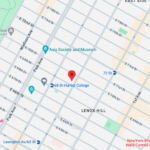
Upper East Side: Full Service Orthopedic Center & Walk-In
1198 3rd Avenue, Between 69th and 70th Street New York, NY 10021Physicians: Monday–Friday 8:00am–6:00pm, Saturday 8:00am–5:00pm
Physical Therapy: Monday–Friday 7:00am–7:30pm, Saturday 8:00am–3:00pm
Sunday: ClosedPhone: (212) 759-4553 -

Orthopedic Doctor Midtown Manhattan NYC — New York Bone & Joint Specialists
425 Madison Ave, Suite 200 (second floor) New York, NY 10017 (corner of East 49th Street)Physician appointments: Mon–Fri 8:00 am–6:00 pm
Physical therapy: Mon–Fri 7 am–7:30 pm, Sat 8 am–3 pmPhone: (212) 759-4553 -

Orthopedic Doctor Upper East Side NYC — New York Bone & Joint Specialists
130 E 67th St New York, NY 10065Tuesday & Thursday: 8:00am–6:00pm
All other days: ClosedPhone: (212) 759-4553