ACL Surgery Explained: What Happens on the Day of Surgery?
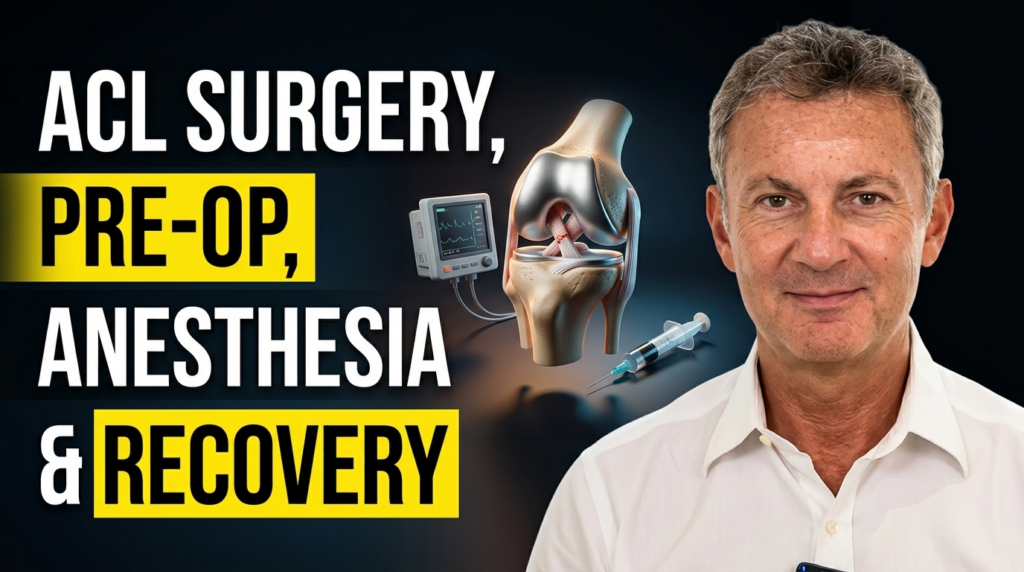
For many patients, the most intimidating part of ACL reconstruction isn’t the surgery itself—it’s not knowing what to expect.
Questions like “Will I be awake?” “Who will be in the operating room?” and “What actually happens during ACL surgery?” are incredibly common.
To help answer those questions, we sat down with Dr. Leon Popovitz, orthopedic surgeon and co-founder of New York Bone & Joint Specialists, to walk through the entire ACL surgery experience—from check-in to recovery.
Meet Dr. Leon Popovitz
Dr. Leon Popovitz is an orthopedic surgeon specializing in sports medicine, shoulder injuries, and knee injuries. For more than 20 years, he has focused on helping patients return to activity while preserving the structures that keep joints healthy long-term.
His treatment philosophy is simple:
“Preservation is the key to longevity.”
Whenever possible, Dr. Popovitz focuses on preserving the important tissues inside the joint to maximize long-term function and reduce future problems.
What Happens When You Arrive for ACL Surgery?
When patients arrive at the surgical center, they are greeted by the nursing staff and checked into the pre-operative area.
During this time:
- Vital signs are checked
- Medications are reviewed
- Medical history is confirmed
- Patients change into surgical attire
- The anesthesia team performs an evaluation
Before surgery begins, Dr. Popovitz personally meets with each patient to answer any last-minute questions and confirm the surgical plan.
How Does the Surgical Team Confirm the Correct Knee?
Patient safety is one of the most important parts of surgery.
Before entering the operating room, Dr. Popovitz performs multiple confirmations of the surgical site.
This includes:
- Asking the patient which knee is injured
- Having the patient physically point to the correct knee
- Marking the surgical side
- Confirming the location multiple times before surgery begins
According to Dr. Popovitz, this process involves several layers of verification to ensure absolute accuracy.
Will I Meet the Anesthesiologist Before Surgery?
Yes.
Before entering the operating room, patients meet with the anesthesiology team.
The anesthesiologist will:
- Review your medical history
- Discuss anesthesia options
- Explain the nerve block procedure
- Answer questions about pain management
This conversation helps create a personalized anesthesia plan based on your specific needs.
What Type of Anesthesia Is Used for ACL Reconstruction?
Most ACL reconstructions are performed using a combination of:
Light General Anesthesia
Patients are comfortably asleep and unaware during the procedure.
Regional Nerve Block
A nerve block is commonly administered near the upper thigh to temporarily numb the leg.
The benefits include:
- Reduced need for general anesthesia
- Better pain control immediately after surgery
- A smoother recovery experience
Many patients experience significant pain relief for several hours after surgery because of the nerve block.
What Is a Nerve Block and How Long Does It Last?
A nerve block is a regional anesthetic performed by the anesthesiology team.
For ACL reconstruction, medication is injected near specific nerves supplying sensation to the leg.
Benefits include:
- Less discomfort after surgery
- Reduced need for stronger pain medication
- Improved early recovery
The effects can last anywhere from several hours to, in some cases, the following day.
Dr. Popovitz advises patients to begin their prescribed pain management plan as sensation starts returning to the leg rather than waiting for severe pain to develop.
What Happens Inside the Operating Room?
Once anesthesia has been administered, the surgical team prepares the knee in a sterile environment.
The operating room team typically includes:
- The orthopedic surgeon
- Surgical assistant(s)
- Scrub nurse
- Circulating nurse
- Anesthesiologist
Before surgery begins, the team performs a mandatory safety procedure known as a “time-out.”
During the time-out, everyone in the room confirms:
- Patient identity
- Medical record information
- Correct surgical site
- Planned procedure
Only after every team member confirms the information does surgery proceed.
What Does the Surgeon Look at Before Reconstructing the ACL?
Many patients are surprised to learn that ACL surgery involves a complete inspection of the knee joint.
Using an arthroscope—a tiny camera inserted through small incisions—Dr. Popovitz carefully examines:
The ACL
The torn ligament is inspected and confirmed.
The Meniscus
Both the medial and lateral meniscus are evaluated for tears.
Articular Cartilage
The cartilage lining the knee joint is examined for damage.
Loose Fragments
Any loose cartilage or tissue fragments are identified.
Other Ligaments
Additional injuries may be discovered and addressed if necessary.
This comprehensive inspection ensures that all injuries are identified and treated appropriately.
Can There Be Surprises During ACL Surgery?
Yes.
While MRI technology is extremely helpful, it does not always show every injury.
Occasionally, Dr. Popovitz discovers:
- Previously undetected meniscus tears
- Cartilage damage
- Loose bodies within the knee
- Additional ligament injuries
If appropriate, these issues may be addressed during the same surgical procedure.
This is one reason why a thorough arthroscopic inspection is so important.
How Long Does ACL Surgery Take?
Most ACL reconstruction procedures take approximately:
60 to 90 minutes
The exact length depends on:
- Complexity of the injury
- Additional procedures performed
- Presence of meniscus or cartilage damage
Are Patients Awake During ACL Surgery?
Most patients are not awake.
Although the nerve block alone could theoretically provide anesthesia, ACL reconstruction is typically performed with light general anesthesia.
Patients are generally in a comfortable, sleepy state and have little to no memory of the procedure itself.
What Happens After ACL Surgery?
Once surgery is complete, patients are taken to the recovery area.
During recovery:
- Vital signs are monitored
- Light food and beverages are provided
- Crutch training is reviewed
- Brace instructions are provided
- Questions are answered
Before discharge, patients are taught how to:
- Use their crutches
- Navigate stairs safely
- Wear and adjust their brace
Dr. Popovitz also meets with patients after surgery to discuss how the procedure went and answer any remaining questions.
What Should You Bring on Surgery Day?
To help make the day go smoothly, Dr. Popovitz recommends:
- Comfortable clothing
- Loose-fitting sweatpants
- A list of medications
- Your knee brace (if provided beforehand)
- A responsible adult to accompany you home
Because anesthesia is used, patients cannot drive themselves home after surgery.
What Does Dr. Popovitz Tell Patients Who Are Nervous?
Many patients feel anxious before surgery, and that’s completely normal.
When asked what he tells nervous patients on surgery day, Dr. Popovitz’s answer is simple:
“I’m going to take very good care of you.”
It’s a message built on more than two decades of experience treating knee injuries and helping patients return to the activities they love.
Considering ACL Reconstruction?
If you’ve suffered an ACL tear and are considering surgery, understanding the process can make the experience far less intimidating.
At New York Bone & Joint Specialists, Dr. Leon Popovitz and the orthopedic team guide patients through every step of treatment—from diagnosis and surgical planning to rehabilitation and return to sports.
Schedule an appointment today to discuss your injury and determine the best treatment plan for your recovery.
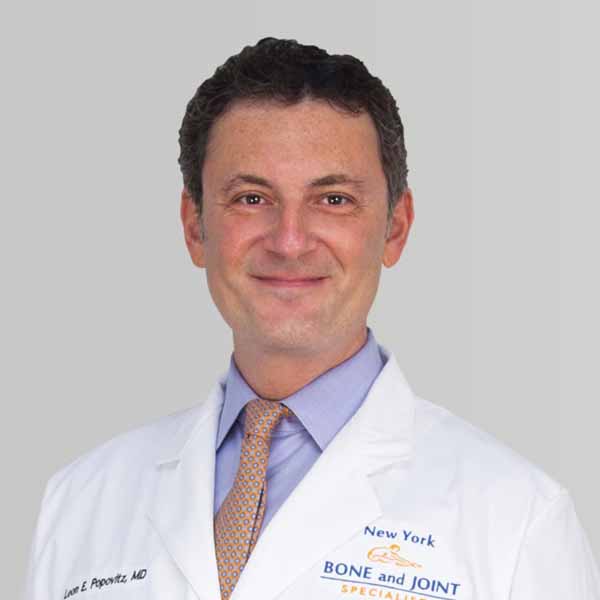
Board-Certified Orthopedic Surgeon (ABOS)
Fellow, American Academy of Orthopaedic Surgeons
Co-Founder, NY Bone & Joint Specialists
Team Physician, US Open Tennis Championships
Our Locations
-

Upper East Side: Full Service Orthopedic Center & Walk-In
1198 3rd Avenue, Between 69th and 70th Street New York, NY 10021Monday–Friday: 9:00am–6:00pm
Saturday: 8:00am–5:00pm
Sunday: ClosedPhone: (212) 759-4553 -

Orthopedic Doctor Midtown Manhattan NYC — New York Bone & Joint Specialists
425 Madison Ave, Suite 200 (second floor) New York, NY 10017 (corner of East 49th Street)Physician appointments: Mon–Fri 8:00 am–6:00 pm
Physical therapy: Mon–Fri 7 am–7 pm, Sat 8 am–2 pmPhone: (212) 759-4553 -

Orthopedic Doctor Upper East Side NYC — New York Bone & Joint Specialists
130 E 67th St New York, NY 10065Tuesday & Thursday: 8:00am–6:00pm
All other days: ClosedPhone: (212) 759-4553